
Lieferung heute & morgen

Qualitätsgarantie

Willkommens-Angebote freischalten: KOSTENLOSE Lieferung | Bis zu 80 % RABATT | Kostenlose 30-Tage-JoyPlus-Testphase
App herunterladen
A silicone baking mould can make baking easier, takes up little space and is usually straightforward to clean. At the same time, flexible moulds, unclear temperature guidelines or exaggerated non-stick promises often lead to disappointing purchases. If you're looking for a silicone baking mould for bread, cakes or small bakes, you shouldn't focus solely on the design.
Silicone is bendy. While this makes releasing your bakes easier, it can cause problems when transporting the mould to the oven: a soft silicone cake mould filled with runny batter can be tricky to lift safely. An integrated steel frame or a sturdy baking tray as a base provides much-needed stability.
Not every silicone baking mould is automatically suitable for the oven, microwave, freezer and dishwasher. Before buying, you should have clear information about temperature resistance and cleaning. For the 5five Silitop loaf tin, the product details state 220 °C for the oven and -20 °C for the freezer, for example.
Silicone can help release baked goods, but it doesn't replace greasing for every recipe. Low-sugar batters, caramelised mixtures or very delicate cake shapes can still stick. With a madeleine silicone mould or cannelé mould, it's also crucial that the indentations are fully baked and have cooled sufficiently before you try to release them.
Look for specific material information. Some silicone baking moulds are made entirely from silicone, while others combine silicone with steel. A combination can make handling more stable, whereas pure silicone is space-saving as it can be folded or rolled up.
For contact with food, manufacturer and responsible party details should be provided. Claims like "food-safe" should ideally be backed up by product information. If details are unclear, it's best to ask the retailer rather than relying solely on terms like "premium" or "professional".
The external dimensions must fit your oven rack. For a silicone loaf tin, length, width, height and volume are all important. The 5five Silitop model is listed with a capacity of 1.59 litres and a length of 26 cm.
For muffin tins, the number of cavities and their diameter matter. A 12-cup muffin tin with a cavity diameter of around 6.5 cm is ideal for classic muffins and cupcakes. Smaller indentations, on the other hand, can be more practical for mini bakes, chocolates or savoury snacks.
A dishwasher-safe baking mould reduces cleaning effort, but the manufacturer's statement should be explicit. Avoid using abrasive sponges on coated or textured moulds. Before moving the mould from the oven to the freezer, let it cool completely, unless the manufacturer advises otherwise.
Claims like "microwave-safe" or "freezer-safe" cannot be assumed for every silicone baking mould. Also, a metal mould with a non-stick coating is not the same as a silicone mould: the PURECOOK 8-piece set, for example, is made from carbon steel, is intended only for the oven according to the product details, and should be cleaned by hand.
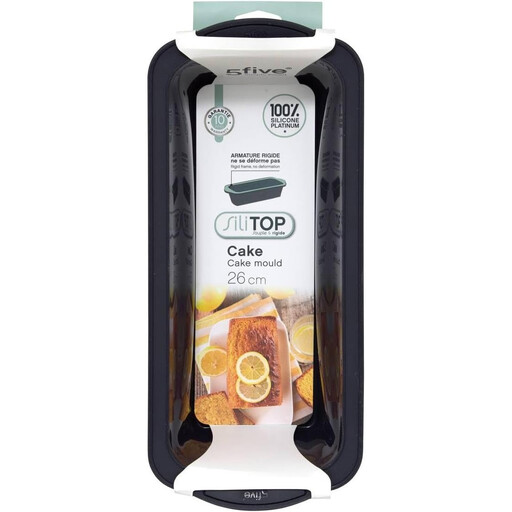
Why this product fits the profile: The 26 cm loaf tin is suitable for bread, sponge cakes and other oblong bakes. The integrated frame makes filling and carrying easier, which is handy for baking beginners.
The steel-silicone construction reduces the risk of the mould warping when lifted with runny batter. Temperature and dishwasher information is provided in the product data.
1.59 litre capacity, 26 cm length, steel-silicone construction, and according to product details suitable for oven, microwave and freezer.
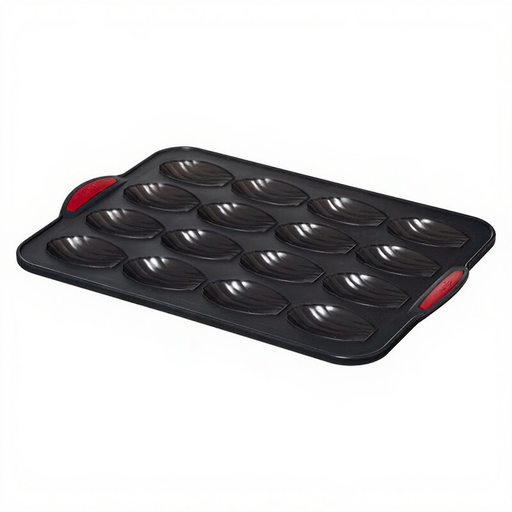
Why this product fits the profile: This mould is aimed at fans of French patisserie who want to bake several madeleines in one go.
The built-in frame is designed, according to the product description, to prevent bending when filling. This allows you to position the 16 cavities more controllably on the rack.
16 cavities, silicone material, integrated frame and, according to product details, dishwasher-safe. Also intended for small cupcakes or similar bakes.
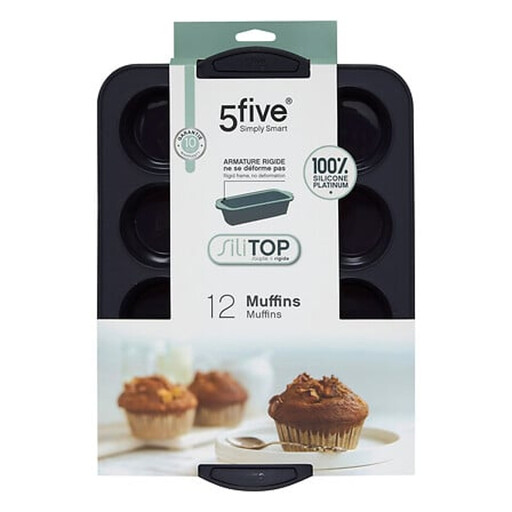
Why this product fits the profile: Twelve cavities are ideal for families, children's birthday parties and preparing multiple portions at once. The combination of silicone and steel aids handling.
The frame counteracts the sagging of a fully filled muffin tin. The product description also mentions dishwasher suitability.
12 cavities each with a 6.5 cm diameter, overall dimensions of 33.1 × 23.7 × 4.1 cm and, according to product details, suitable for the dishwasher.
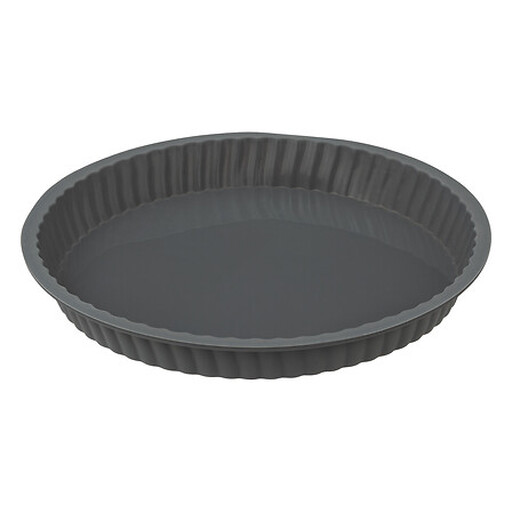
Why this product fits the profile: This shallow silicone tart mould is designed for tarts, quiches, flans and savoury pastry. It suits households that want to prepare both sweet and savoury bakes with one mould.
The shallow shape reduces the risk of using a deep cake mould for unsuitable tarts. According to product details, it is foldable, dishwasher-safe and intended for the oven, microwave and freezer.
Dimensions of 31 × 31 × 4 cm, 100 % silicone according to the product description and space-saving storage thanks to flexible material properties.
For madeleines, alongside the 16-cavity mould, there are also shallow models measuring 36 × 21.5 × 2 cm. For cannelés, a specially profiled cannelé mould is worthwhile, as the ridges are essential for the characteristic surface. If you need different formats, you can look for a silicone baking mould set, but you should check whether it actually contains silicone moulds or whether it is coated steel.
We have put together a complete, regularly updated list of products that fully meet these strict selection criteria and the safety regulations in force in the EU.
That depends on the intended use. Silicone is flexible, space-saving and can make releasing your bakes easier. Metal conducts heat differently and generally remains more shape-stable. For crispy tarts or well-browned bases, a sturdy base can be particularly important.
Not always, but with delicate or low-sugar recipes, a light greasing can be sensible. Follow the manufacturer's care instructions and only release the baked goods after a short cooling period. Do not use knives, as this could damage the silicone surface.
The lifespan depends on material quality, temperature, cleaning and storage. Avoid sharp objects, direct flames and exceeding the stated temperature. If the material becomes sticky, shows cracks or permanently retains odours, the mould should be replaced.