
Lieferung heute & morgen

Qualitätsgarantie

Willkommens-Angebote freischalten: KOSTENLOSE Lieferung | Bis zu 80 % RABATT | Kostenlose 30-Tage-JoyPlus-Testphase
App herunterladen
Silicone baking moulds are flexible, space-saving and available in a wide range of designs. But a soft baking mould won’t automatically give you great results. If you’re looking to buy a silicone baking mould, check the material information, stability and intended use rather than relying solely on claims such as ‘non-stick’ or ‘professional’.
A very soft mould is easy to store, but it can bend when you carry it to the oven. With runny batter, this could lead to spills or an uneven bake. For large cake moulds, silicone cake moulds or silicone quiche moulds, it’s best to place the mould on a sturdy baking tray.
Silicone can make it easier to release your bake, but the results also depend on the recipe, temperature, batter ingredients and allowing enough time to cool. Look for clear information such as food-grade silicone. If the material or recommended temperature range isn’t specified, the product description is incomplete.
A dishwasher-safe baking mould is convenient, but repeated bending, very high heat or sharp objects can put stress on the material. So check the care instructions. For moulds with metal reinforcement, the joins between the silicone and frame should be neatly finished.
For contact with food, the manufacturer should specify a suitable, food-grade material. It’s also important to check whether the mould is suitable for use in the oven, microwave or freezer. A mould that’s suitable for the freezer isn’t necessarily approved for every maximum oven temperature.
Descriptions such as 100% food-grade silicone come from the relevant product information and shouldn’t be confused with medical or therapeutic claims. When choosing a mould, look for clear, verifiable information about the material and its intended use.
The dimensions determine whether the mould will fit in your oven and how much batter it can hold. A shallow silicone tart mould is suitable for tarts, flans or quiches. A deeper silicone cake mould is better for sponge cakes, fruit cakes or compact layer cakes.
For a silicone muffin mould, the number and diameter of the cups matter. Twelve evenly sized cups make portioning easier. A Madeleine or Cannelé mould should have clearly defined indentations to create the characteristic shape.
For large or deep moulds, it’s best to place them on a rigid baking tray. An integrated frame can make filling and carrying the mould easier. A smooth surface and stated dishwasher suitability are practical features when it comes to cleaning. Even so, burnt-on sugar or sticky fruit fillings should be soaked as soon as possible.
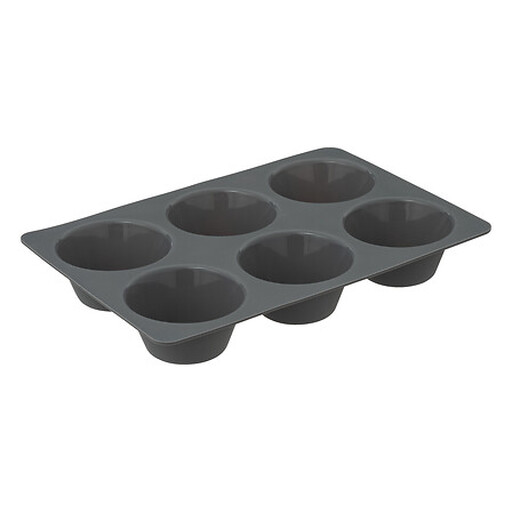
Why this product suits you: This silicone muffin mould has several cups for muffins and cupcakes and measures 35 × 20 × 4 cm. It’s a good choice for households that regularly bake individual portions.
The product information specifies food-grade silicone, a flexible design and dishwasher suitability. This makes it easier to check the key basics before you buy.
Several baking cups, compact dimensions and, according to the product information, a design suitable for the oven and freezer.
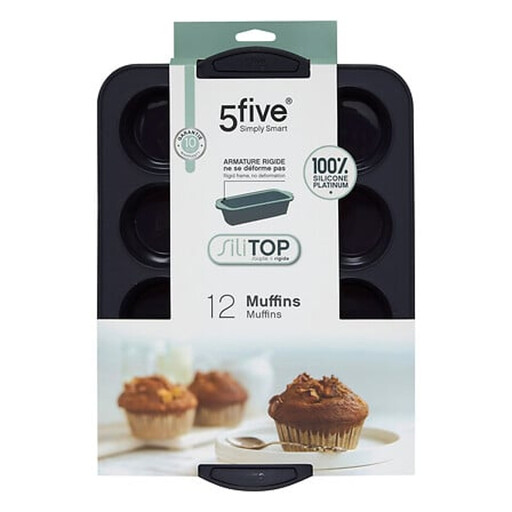
Why this product suits you: With 12 cups, this mould is designed for keen bakers who want to bake evenly sized muffins or cupcakes in one batch. According to the product description, a steel frame makes it easier to handle.
The stated steel frame reduces the risk of the filled mould bending significantly as you carry it to the oven. The number of cups and dimensions are clearly specified.
12 cups, steel reinforcement, a total volume of 0,85 l and stated dishwasher suitability.
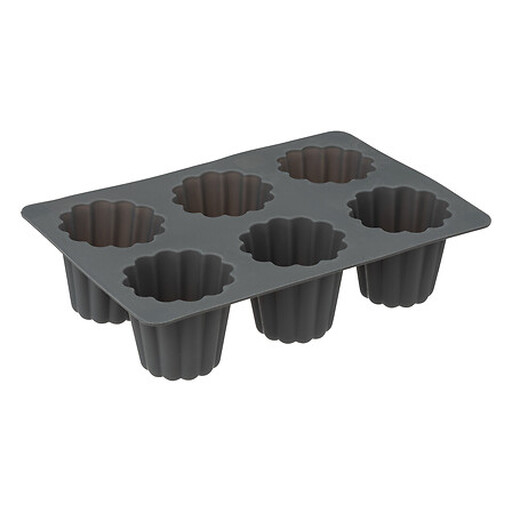
Why this product suits you: This Cannelé mould is designed to create the pastry’s characteristic ridged shape. Measuring 31 × 17 × 6 cm, it’s a good fit for baking enthusiasts who want to try specialist French pastries as well as everyday recipes.
Its clearly defined Cannelé shape means you won’t have to use a standard muffin or cake mould for a specialist recipe.
Ridged design, food-grade silicone and, according to the product information, suitability for the oven, microwave and freezer.
We’ve put together a comprehensive, regularly updated list of products that meet these strict selection criteria and fully comply with the safety regulations in force in the EU.
You often don’t need to grease a non-stick silicone baking mould. For recipes with a lot of sugar, little fat or delicate bakes, though, a thin layer of grease can still make them easier to release. Follow the recipe and the manufacturer’s care instructions.
There’s no single answer. Lifespan depends on material quality, temperature limits, cleaning and physical wear. Replace a mould if it develops cracks, sticky patches, lasting deformation or unusual smells.
Not every mould is designed for both. A deep cake mould is better for sponge or fruit cakes, while a shallow tart or quiche mould has the right edge and depth for these bakes. So check the mould type, dimensions and capacity before you buy.