
Lieferung heute & morgen

Qualitätsgarantie

Willkommens-Angebote freischalten: KOSTENLOSE Lieferung | Bis zu 80 % RABATT | Kostenlose 30-Tage-JoyPlus-Testphase
App herunterladen
Silicone baking moulds are flexible, space-saving and suitable for a wide range of bakes. However, not every silicone baking mould is right for every recipe or oven. If you focus only on claims such as ‘non-stick’ or ‘heat-resistant’, you can easily overlook important details.
A very soft silicone mould is easy to store. However, it can bend out of shape when you pour in runny batter, making it difficult to carry safely to the oven. For larger cake moulds, silicone loaf tins and silicone muffin moulds, a firm rim or built-in frame is therefore useful.
Not all silicone moulds have the same temperature limits. Information about use in the oven, microwave, freezer or dishwasher should be included in the product details. If specific temperatures aren’t given, it’s sensible to be cautious. For example, the product details for the 5five Silitop Silicone Loaf Tin 26 cm Long state that it can be used at temperatures of up to 220 °C in the oven and down to -20 °C in the freezer.
A round silicone cake mould with a diameter of 26 cm needs a different amount of batter from a shallow silicone tart mould. The depth also affects baking time and how much the batter rises. Before buying, compare the overall dimensions, internal dimensions, capacity and depth.
Look for a clear material description, such as food-grade silicone. In products made from a combination of steel and silicone, a firm frame can make the mould easier to handle, while the flexible inner surface helps release your bake. According to the product description, a smooth, non-porous surface retains fewer residues and is usually easier to clean.
The term ‘non-stick baking mould’ doesn’t automatically mean every recipe will turn out perfectly without preparation. For batters with a high sugar, fat or egg-white content, lightly greasing the mould may still be a good idea. Always follow the manufacturer’s care instructions and avoid using sharp-edged kitchen utensils.
When using a round mould with runny batter, placing it on a baking tray can make it easier to carry. This extra step is often less important with models that have a steel frame. Examples include the 12-cup muffin mould and Madeleine mould from 5five, which the product details say are supported by a firm frame.
A dishwasher-safe baking mould can make cleaning easier. Remove any large pieces of leftover batter before putting it in the dishwasher, and check the manufacturer’s instructions. According to the product information, the 5FIVE tart moulds, Cannelé mould, Manqué mould and Madeleine mould are all suitable for the dishwasher.
Depending on the design, silicone moulds are suitable for:
Always check the instructions for the specific product to find out how it can be used.
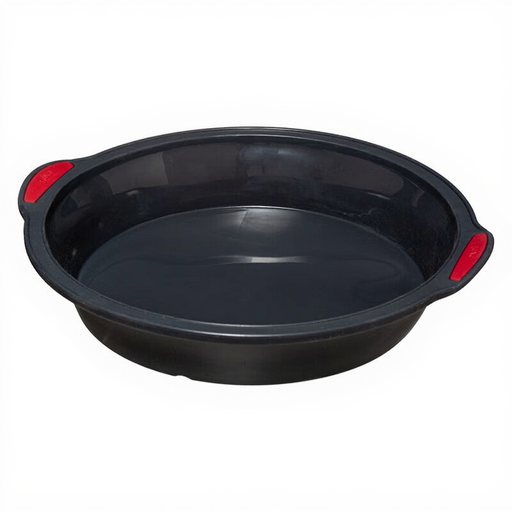
Why this product suits this profile: This round mould is suitable for classic cakes and cake bases, and is easy to store without taking up much space. It’s a straightforward way to get started with silicone bakeware.
The 26 cm diameter gives you a clear idea of the size. For runny batter, we still recommend placing the mould on a firm surface when carrying it.
A standard round shape made from flexible silicone, suitable for everyday cake recipes.
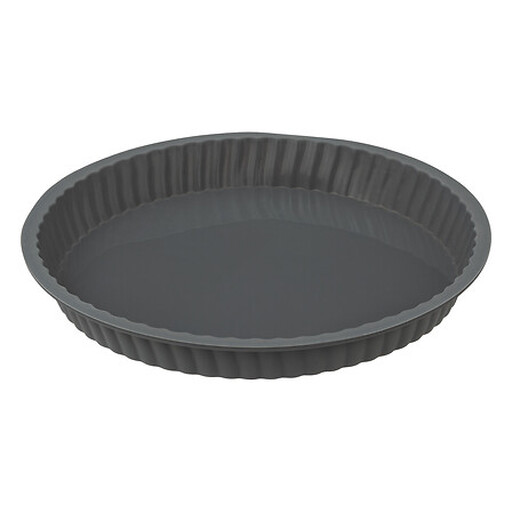
Why this product suits this profile: Measuring 31 × 31 × 4 cm, this shallow mould is suitable for tarts, quiches, flans and savoury bakes.
The precise dimensions and shallow depth make it easier to choose a model that suits your recipe, rather than relying on marketing claims alone.
According to the product details, it’s made from food-grade silicone, is flexible and dishwasher-safe, and can be used in the oven, microwave and freezer.
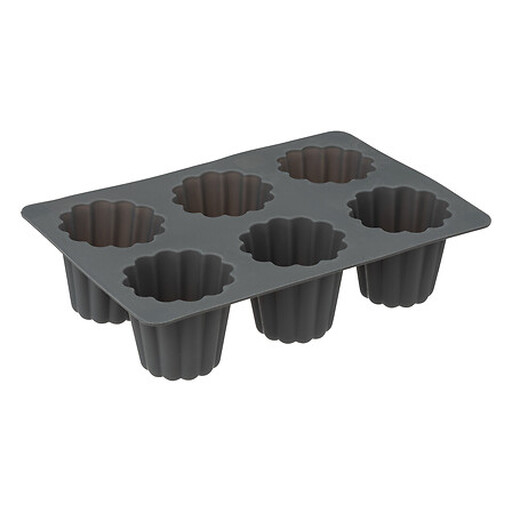
Why this product suits this profile: The fluted cavities and dimensions of 31 × 17 × 6 cm are designed for Cannelés and other small French bakes.
Its specialist shape helps you avoid buying a general-purpose muffin or cake mould for a recipe that needs a distinctive shape.
According to the product details, this flexible silicone mould has a fluted design, is dishwasher-safe and can be used in the oven, microwave and freezer.
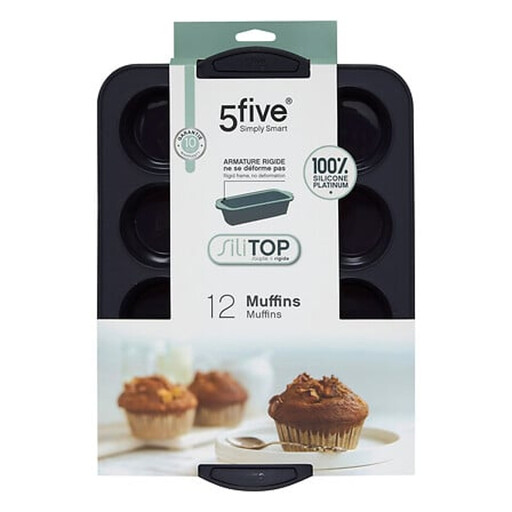
Why this product suits this profile: With twelve cavities, each 6.5 cm in diameter, you can bake several muffins or cupcakes in one batch.
The steel structure addresses the problem of silicone moulds that are unstable and difficult to carry. The product details give its capacity as 0.85 l.
Made from a combination of steel and silicone, with twelve individual cavities; according to the product details, it’s dishwasher-safe.
We’ve put together a complete, regularly updated list of products that meet these stringent selection criteria and fully comply with the safety regulations in force in the EU.
For Madeleines, a Madeleine mould with several small cavities is a good choice. According to the product details, the 16-Cavity Madeleine Silitop Silicone Mold has 16 cavities and a stabilising frame. For loaf cakes, sponge cakes or bread, a 26 cm-long loaf tin is a better option. The 5five Silitop Silicone Loaf Tin combines steel and silicone and has a stated capacity of 1.59 litres.
A shallow rectangular mould measuring 37 × 22 × 3 cm is suitable for long tarts, flans and quiches. A deeper round Manqué mould measuring 30 × 30 × 6 cm is better suited to taller cakes and certain savoury bakes.
It depends on the recipe and the manufacturer’s instructions. With many silicone moulds, the surface makes it easy to release your bake. However, lightly greasing the mould may be a good idea for sticky batters, delicate tarts or the first use.
Some models are described as dishwasher-safe in the product details. Always check this for the specific product. Remove any large pieces of residue first and follow the care instructions.
Their lifespan depends on the quality of the material, exposure to heat, cleaning and storage. Avoid using knives or metal spatulas on a mould. Prolonged overheating and incorrect storage can also affect its shape. Models with a frame are practical for frequent use, while moulds made entirely from silicone take up less space when stored.