
Lieferung heute & morgen

Qualitätsgarantie

Willkommens-Angebote freischalten: KOSTENLOSE Lieferung | Bis zu 80 % RABATT | Kostenlose 30-Tage-JoyPlus-Testphase
App herunterladen
Silicone baking moulds are flexible, space-saving and often easy to clean. However, not every mould is equally suitable for every type of bake. If you focus only on a promised non-stick effect or a low price, you may later find yourself dealing with unstable edges, unevenly browned bases or difficulties when filling the mould.
This guide explains which features matter before you buy and which mould best suits your everyday baking needs.
A flexible baking mould is easy to take out of the cupboard and store without taking up much space. However, when filling it with runny batter, it can warp or be difficult to carry safely to the oven. A stable edge or reinforcing frame is particularly useful for deep cake moulds and muffin moulds.
Whenever possible, place the mould on a baking tray or wire rack before filling it with batter. This reduces the risk of spilling.
In many cases, silicone has a smooth, low-adhesion surface. Even so, bakes can still stick if they are turned out too early, made with very sugary batters or have delicate details. A non-stick silicone baking mould should therefore be used according to the manufacturer’s instructions. For delicate recipes, applying a thin layer of grease may still be advisable.
It is also worth washing the mould before using it for the first time. This removes any residue from manufacturing and packaging.
Not every product description specifies the same areas of use. Terms such as ‘oven-safe’, ‘suitable for freezing’ or ‘microwave-safe’ should be checked carefully in the manufacturer’s information. The maximum permitted temperature is particularly important when preparing tarts, quiches or heavily browned bakes.
If no temperature information is shown on the product or packaging, the mould should not be used outside the expressly stated applications.
Look for the description food-grade silicone and clear, verifiable information from the manufacturer. According to the product description, the 5FIVE products presented here are made from 100% food-grade silicone. This is a material specification, not a promise of a particular baking result.
For UK households, care instructions, the manufacturer’s address and information about use in the oven, microwave, freezer and dishwasher are also helpful. According to the product description for the ‘MUFFINS 12 SILIC MOLD SILITOP’ muffin mould, it is manufactured by JJA SA in France and complies with EU standards.
The dimensions determine which bakes are likely to work well:
Before buying, also check whether the external dimensions fit your oven and the baking tray you have available.
A dishwasher-safe baking mould can reduce the effort involved in cleaning. Nevertheless, you should follow the product information, as intensive programmes, high temperatures or harsh cleaning products can affect the mould’s service life. Moulds with pronounced reliefs should be checked for residue after a dishwasher cycle.
The advantage of flexible moulds is that they are easy to store: many models can be rolled or folded. With moulds featuring a fixed metal or steel frame, this advantage is limited, but they offer greater stability when being filled and carried.
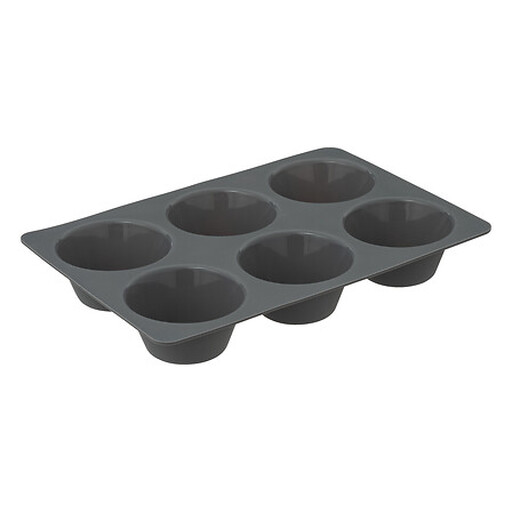
Why this product suits this profile: This mould is designed for muffins and cupcakes, while its 35 × 20 × 4 cm format is practical for regular baking.
The information states that it is made from food-grade silicone, offers flexible release and is dishwasher-safe. This makes care easier, but does not replace checking the specific temperature instructions.
Multi-cavity mould for evenly sized portions; according to the product description, it is flexible, stain-resistant and dishwasher-safe.
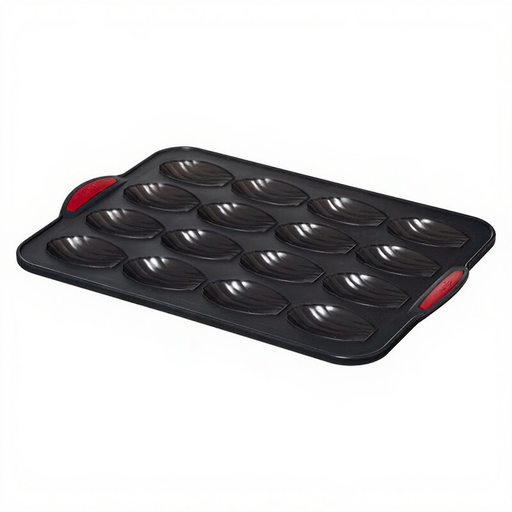
Why this product suits this profile: If you regularly bake Madeleines, you can make 16 at once. The rigid frame helps maintain stability when filling and carrying the mould.
The reinforcing frame helps prevent a fully soft mould from warping. The information also states that it has a non-stick surface and is dishwasher-safe.
16 cavities, dimensions of 35.9 × 24.3 cm and a stated weight of 0.31 kg; suitable for Madeleines, cupcakes and small cakes.
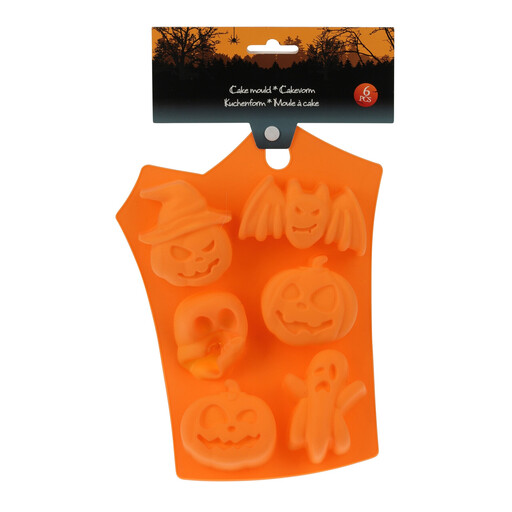
Why this product suits this profile: This mould makes six individual seasonal cakes and is suitable for families, parties and repeated Halloween baking.
According to the product description, the flexible design is intended to make release easy. The mould is said to be suitable for the oven, microwave and freezer; check the relevant limits before use.
Six shaped cakes in one mould; reusable silicone and, according to the product description, straightforward cleaning.
A classic silicone cake mould, such as the 5FIVE Manqué mould measuring 30 × 30 × 6 cm, is suitable for deeper cakes, fruit cakes and quiches. For shallower bakes, the 5FIVE models measuring 31 × 31 × 4 cm or 37 × 22 × 3 cm are more practical. The right depth affects baking time and how the batter is distributed more significantly than a general promise about material quality.
We have compiled a complete, regularly updated list of products that fully meet these strict selection criteria and the safety regulations applicable in the EU.
Not always. With smooth surfaces and suitable batters, bakes may release without additional grease. However, for very fine reliefs, dry batters or the first use, lightly greasing the mould can be advisable. The recipe and the manufacturer’s instructions are the key considerations.
There is no fixed service life that applies to every mould. It depends on the quality of the material, temperature, cleaning and storage. Cutting tools, sharp folds and consistently excessive temperatures can damage the material. If visible cracks or significant deformation appear, the mould should be replaced.
Many models are dishwasher-safe, but not all of them. Look for the relevant symbol or check the product description. After a dishwasher cycle, check the cavities and grooves for traces of detergent or batter.