
Lieferung heute & morgen

Qualitätsgarantie

Willkommens-Angebote freischalten: KOSTENLOSE Lieferung | Bis zu 80 % RABATT | Kostenlose 30-Tage-JoyPlus-Testphase
App herunterladen
Silicone baking moulds are lightweight, flexible and space-saving. They’re suitable for cakes, tarts, madeleines, canelés and many other bakes. However, the material alone won’t guarantee good results. Stability, temperature limits, dimensions and proper care all matter.
This buying guide from the Joybuy Product Recommendation Officer helps home bakers, families and semi-professional pastry chefs make an informed choice between a suitable silicone baking mould and a useful baking mould set.
Silicone can make it easier to release your bake, especially with soft cakes and desserts. However, recipes with little sugar or fat, or delicate bakes, may still need the mould to be greased. The shape of the bake matters too: the deep ridges of a canelé mould or the fine contours of a madeleine mould can be more delicate than those of a simple round cake tin.
So look for:
A flexible baking mould is easy to store, but can be unstable when you carry it to the oven. This is particularly true with runny batter, which could cause the mould to tip or warp. A firm base, such as a baking tray, helps prevent this.
Before filling a large quiche tin, tart tin or silicone cake tin, place it on a stable baking tray or a suitable oven rack. This also makes it easier to take the mould safely out of the oven.
Not every silicone mould is suitable for every heat source. Before buying, check the stated conditions of use:
An oven-safe baking mould can only be used safely within the stated temperature range. Information such as “dishwasher-safe baking mould” should appear in the product description; don’t assume it from the material alone.
Check that the manufacturer clearly describes the material as food-grade silicone and provides care and temperature information. For products sold in Germany, clear details of the manufacturer and responsible party are also useful.
A soft mould isn’t necessarily poor quality. It should return to its original shape after bending and shouldn’t stay distorted when filled. Reinforced construction or a firm base is especially important for larger diameters or heavier batters.
The external dimensions must fit your oven. Also compare the internal dimensions with the quantities in your recipes. A 31 cm diameter mould may need more room than a standard oven rack if it has handles or overhanging edges.
As a general guide, consider the following:
Silicone can usually be cleaned with warm water and a soft sponge. However, grease, chocolate or heavily caramelised sugar can leave odours and stains. Check whether the mould is described as dishwasher-safe.
Scourers and abrasive cleaners can damage the surface. Shallow drawers are ideal for storage, but only fold or roll flexible moulds as much as the manufacturer allows.
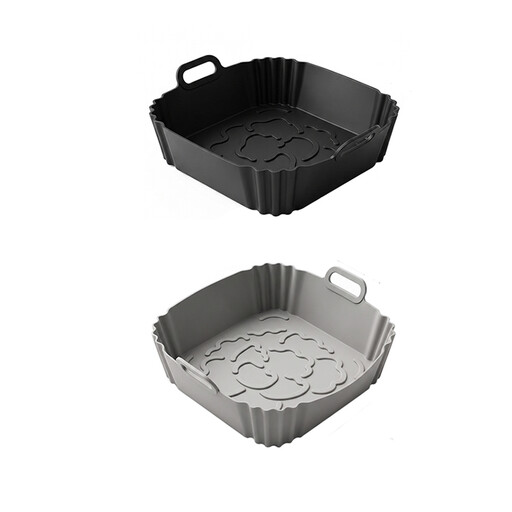
Why this product suits this profile: This set of two 21.5 × 21.5 cm square moulds is ideal for smaller households, brownies, cake slices or savoury bakes.
The two moulds are the same size, helping you avoid choosing the wrong dimensions. You should still use a sturdy baking tray when carrying them to the oven.
Two moulds in the set; square dimensions for cakes, brownies and smaller bakes.
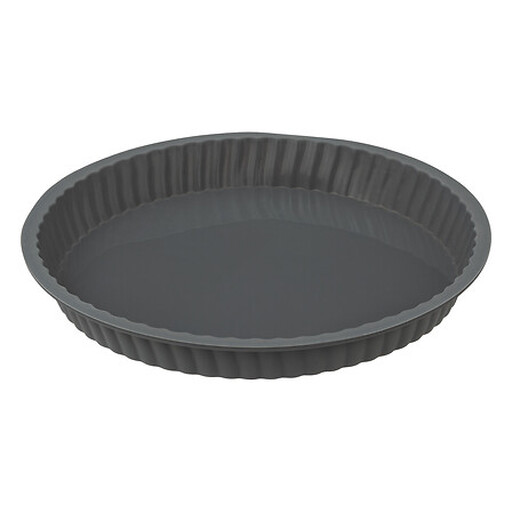
Why this product suits this profile: Measuring 31 × 31 × 4 cm, this tart tin is designed for shallow tarts, quiches, flans and savoury pastry.
The clearly stated dimensions make it easier to check that the tin suits your recipe and oven. Place the flexible mould on a baking tray before filling it.
Described as 100% food-grade silicone and dishwasher-safe in the product description.
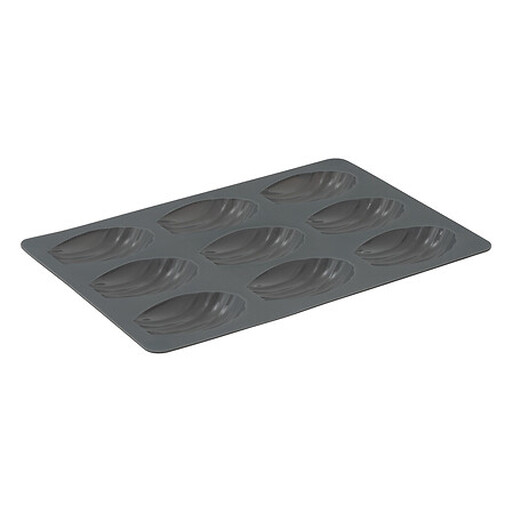
Why this product suits this profile: Measuring 36 × 21.5 × 2 cm, this mould has shell-shaped recesses for madeleines. According to the product description, it can also be used for small chocolate or baking creations.
The specially shaped recesses are designed for madeleine batter, so you won’t have to make do with a general-purpose cake mould for delicate bakes.
Shallow design; according to the product description, suitable for the oven, freezer and dishwasher.
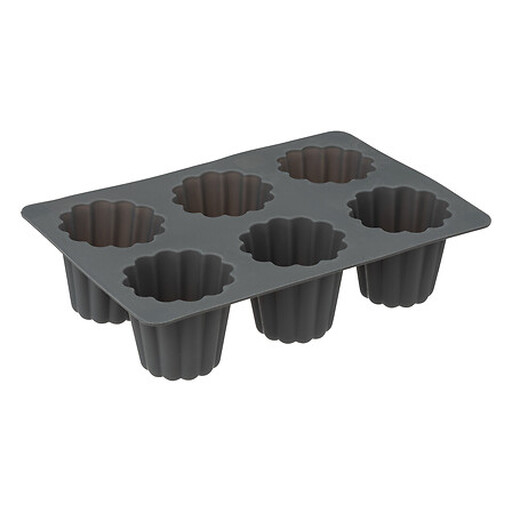
Why this product suits this profile: Measuring 31 × 17 × 6 cm, this canelé mould has deep, fluted recesses for French patisserie.
The depth and fluting are designed specifically for canelés, reducing the risk of using a mould that’s too shallow for this deep bake.
Deep, fluted recesses; according to the product description, suitable for the oven, microwave, freezer and dishwasher.
We’ve put together a complete, regularly updated list of products that meet these strict selection criteria and fully comply with the safety regulations in force in the EU.
Not always, but lightly greasing the mould can make it easier to release delicate batters, caramel-based recipes and bakes made in heavily fluted moulds. Follow the care and use instructions provided by the manufacturer.
A firm base is recommended when you’re using runny batter. A baking tray makes the mould more stable when filling it and putting it in the oven. The flexible mould itself shouldn’t be used directly on a hob or over an open flame.
Their lifespan depends on how they’re used, heated, cleaned and stored. Avoid sharp objects, scourers and heat sources that aren’t approved for the mould. Replace it if it develops cracks, sticky patches or permanent deformations.