
Lieferung heute & morgen

Qualitätsgarantie

Willkommens-Angebote freischalten: KOSTENLOSE Lieferung | Bis zu 80 % RABATT | Kostenlose 30-Tage-JoyPlus-Testphase
App herunterladen
Silicone baking moulds promise easy release, space-saving storage and quick cleaning. However, not every silicone mould is suitable for every recipe. Thin moulds can become unstable when filled, very soft edges can be difficult to transport, and unclear temperature information can make safe use more challenging.
Terms such as “non-stick” or “heat-resistant” should not be considered in isolation either. The specific material information, structural stability, dimensions and care instructions are what really matter. Checking these points before buying reduces the risk of making the wrong choice and helps you find a silicone baking mould that suits your baking routine.
Flexibility makes it easier to remove cakes or muffins from the mould. However, a very soft silicone mould can sag when it is being filled. A firm base is particularly useful for runny batter. A baking tray or oven rack with a suitable edge makes it easier to slide the mould into the oven.
An integrated reinforcement can also be helpful for muffin and cupcake moulds. The 12-cup Silitop muffin mould from 5FIVE combines flexible silicone cavities with a steel structure. This makes it safer and easier to carry from the kitchen table to the oven.
Silicone has a smooth surface and often allows for easy release. However, lightly greasing the mould can still be worthwhile for sticky batter, caramel-based recipes or very delicate shapes. The manufacturer’s instructions should always take priority.
With a silicone muffin mould, paper cases can also be useful when the baked goods need to be transported or served decoratively. With a Madeleine baking mould featuring pronounced ridges, careful preparation can help preserve the contours.
“Suitable for use in the oven” alone says little about the maximum permitted temperature. Buyers should check whether the manufacturer provides specific information for use in an oven, microwave, freezer and, where applicable, dishwasher. Switching between hot and cold temperatures should only be done if this is explicitly permitted.
For example, the 6-piece heart-shaped mould set is specified for a range of -40 °C to 230 °C. This information applies to the product and does not replace the usual safety rules: handle hot moulds only with a suitable oven glove and place them on a stable surface.
For direct contact with food, the mould should be identified as food-grade silicone. A product description containing material details, manufacturer information and care instructions makes it easier to assess the product. For products intended for the German market, information about the responsible person and intended use is also relevant.
A silicone baking mould should be free from visible cracks, sticky areas or a strong material odour. Before first use, washing it according to the manufacturer’s instructions is recommended. Although silicone absorbs fewer odours than some porous materials, using separate moulds for strongly seasoned and sweet foods may still be sensible.
The size of the mould affects the baking time, amount of batter and whether it fits in your oven. Before buying, you should check:
A silicone tart mould with a low edge is suitable for tarts, quiches and flat cakes. A deeper silicone cake mould is better suited to sponge mixtures, Genoise or compact fruit cakes. For small portions, a cupcake baking mould or individual moulds are more practical than a large mould.
A dishwasher-safe baking mould saves time, but it should still not be treated with sharp objects or aggressive cleaning products. Check whether dishwasher suitability is explicitly stated. Coated metal moulds often have different care requirements from silicone moulds.
One advantage of silicone is its flexible storage. Many moulds can be stacked, rolled or folded. However, they should only be put away once they are completely dry and cool. Moulds with steel reinforcement or rigid frames take up more space, but they are often more stable and easier to handle.

Why this product suits this profile: The six small moulds are suitable for individual cakes, cupcakes, jellies and frozen desserts. Measuring 8 × 7.5 × 3.1 cm per mould, the set is designed for small portions and occasional baking.
The stated temperature range of -40 °C to 230 °C makes the usage limits clear. The stackable design reduces the space needed for storage.
Six separate moulds, flexible handling, dishwasher suitability and versatile use in the oven, microwave and freezer.
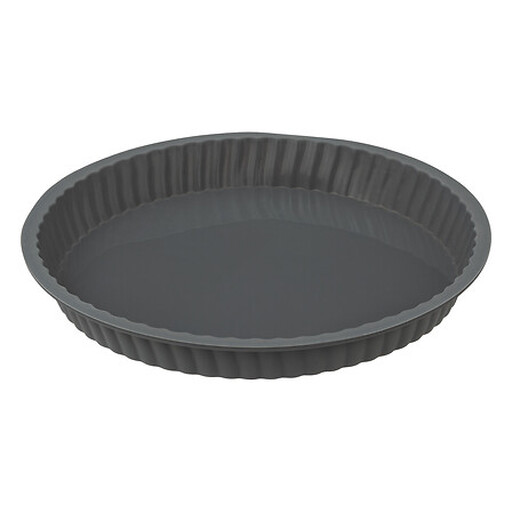
Why this product suits this profile: Measuring 31 × 31 × 4 cm, the square tart mould is designed for flat tarts, quiches, flans and savoury cakes.
The low profile and clearly stated dimensions help with recipe selection. The flexible material helps release delicate pastry edges.
100% food-grade silicone, foldable storage, stated suitability for the oven, microwave and freezer, as well as dishwasher suitability.
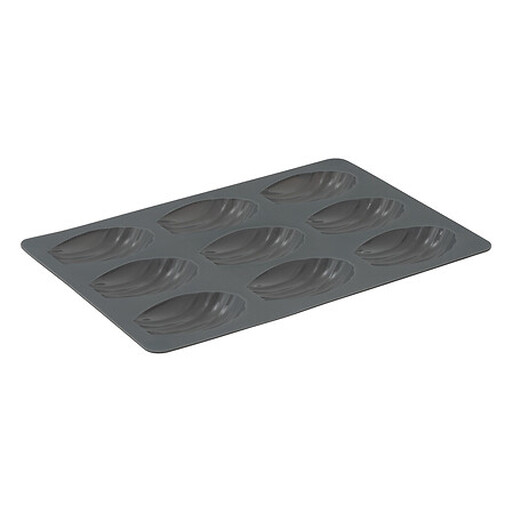
Why this product suits this profile: Measuring 36 × 21.5 × 2 cm, this mould is aimed at lovers of French petits fours and, thanks to its shallow shells, is also suitable for chocolate or small savoury bakes.
The shaped shells are designed for Madeleines, avoiding an unsuitable universal mould without defined contours. The shallow depth makes it easier to control small portions.
Food-grade silicone, flexible release, suitability for the oven and freezer, as well as dishwasher compatibility according to the product description.
We have put together a complete, regularly updated list of products that fully meet these strict selection criteria and the safety regulations applicable in the EU.
This depends on the recipe and the manufacturer’s instructions. With many smooth moulds, a thin layer of grease or no grease at all is sufficient. Delicate moulds, sugar-rich mixtures and very sticky batters may benefit from light greasing. Preparing a Madeleine baking mould is particularly important if you want the ridges to remain clearly defined.
There is no single fixed lifespan. It depends on the quality of the material, temperature, cleaning and storage. Visible cracks, sticky surfaces, deformation or persistent odours are reasons to stop using the mould for food. Sharp tools and exceeding the manufacturer’s specifications can shorten its service life.
Ongoing costs are generally low because silicone moulds are reusable and often do not require paper cases. With a silicone muffin mould, avoiding additional liners can save material. However, whether a recipe cooks more quickly or uses less energy depends on the oven, amount of batter, temperature and baking time, so broad promises are not meaningful.