
Lieferung heute & morgen

Qualitätsgarantie

Willkommens-Angebote freischalten: KOSTENLOSE Lieferung | Bis zu 80 % RABATT | Kostenlose 30-Tage-JoyPlus-Testphase
App herunterladen
A silicone baking tin can make baking easier: it can be stored in a space-saving way, is flexible and, with many models, is suitable for the dishwasher, oven, microwave and freezer. However, not every silicone baking mould is suitable for every purpose. A mould that is too soft can tip when being carried, thin walls can affect the baking time and unclear temperature specifications can make safe use more difficult.
This guide explains what home bakers, families and baking beginners should look for when buying a silicone baking mould – and which product shape is best suited to each type of use.
Flexibility makes it easier to release baked goods and store the mould. However, a completely soft mould can be unstable when filled with runny batter. It is harder to carry to the oven and may become misshapen. For large cakes, bread or a mould with several cavities, an integrated steel frame or a separate baking tray underneath is advisable.
Not every mould is automatically suitable for all temperatures. Check whether the manufacturer provides specific figures for use in the oven, microwave and freezer. These figures may vary. For example, according to the product description, the 5five Silitop loaf tin is designed for temperatures of up to 220 °C in the oven and down to –20 °C in the freezer.
Silicone surfaces often make it easier to remove baked goods, but they do not eliminate the need for every type of preparation. With sticky batter, very fine details or the first use, lightly greasing the mould may be advisable. Sharp knives and metal utensils should also not be used directly in the mould, as they can damage the surface.
Look for a clear material specification such as food-grade silicone. With a combination of steel and silicone, the flexibility of the surface is balanced by a more stable outer structure. This can be practical for a loaf tin or muffin mould.
A flexible baking mould should return to its original shape after being bent. Wall thickness is also relevant for particularly large or deep moulds. The higher you fill the batter, the more important it is that the mould can be handled securely.
Three questions are essential when choosing a mould:
A mould with a specified range of, for example, –20 °C to 220 °C can be used for baked cakes and chilled desserts. However, always check the manufacturer’s instructions before use. Deep moulds are suitable for bread, sponge cakes and quiches; flatter or multi-cavity moulds are a better choice for tarts, Madeleines or muffins.
Compare the external dimensions with your oven rack and check the volume of loaf tins. The 5five Silitop loaf tin is 26 cm long and has a capacity of 1.59 litres. A dishwasher-safe baking mould can make cleaning easier, but it should not be chosen based on this feature alone. Also check whether batter residue can be easily removed from fine grooves and cavities.
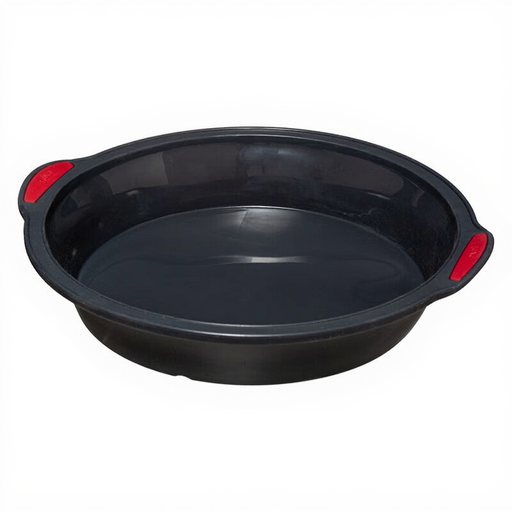
Why this product suits this profile: A round base shape is versatile enough for classic cakes, cake bases and a range of desserts, making it a good introduction to baking with silicone.
The round shape avoids unnecessarily restricting you to just one type of bake. Check the temperature and care instructions on the product page before buying.
Standard round shape; flexible silicone construction for easy storage.
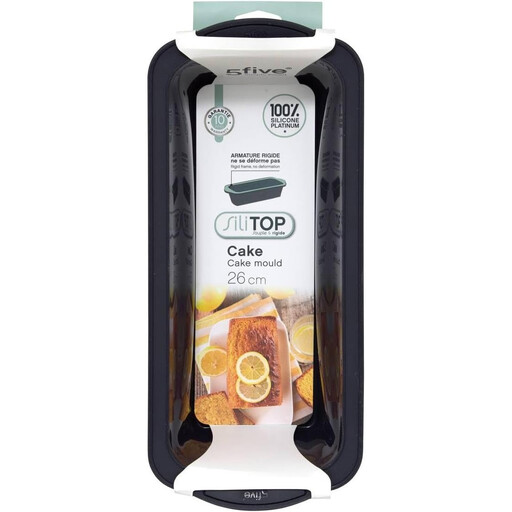
Why this product suits this profile: The combination of steel and silicone is designed for regular use. The loaf tin is suitable for bread, sponge cakes and other elongated baked goods.
The integrated rigid frame reduces the risk of the mould giving way significantly when being filled or carried. The stated temperature range provides clear guidance for use.
26 cm long; 1.59-litre capacity; dishwasher-safe according to the product information.
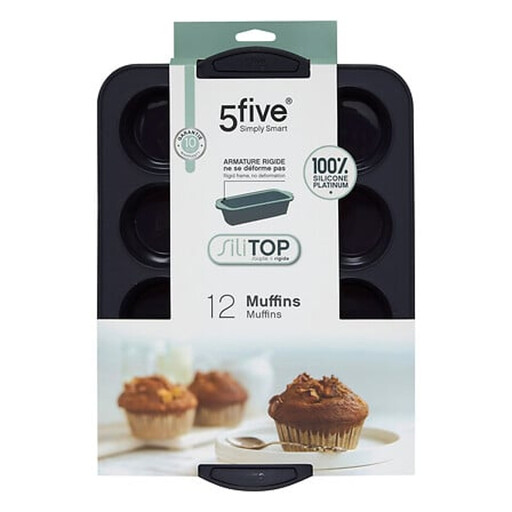
Why this product suits this profile: Families and frequent bakers can bake a full batch of muffins or cupcakes in one go thanks to the twelve cavities.
The steel structure addresses the typical instability of soft multi-cavity moulds. According to the product description, each cavity has a diameter of 6.5 cm.
Twelve baking cavities; dimensions of 33.1 × 23.7 × 4.1 cm; dishwasher-safe according to the supplier.
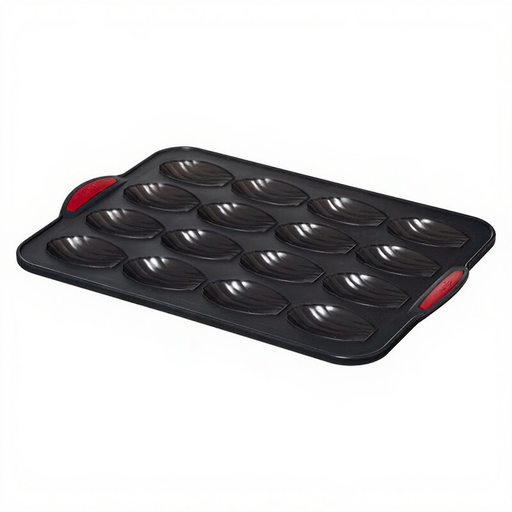
Why this product suits this profile: If you regularly bake Madeleines or small cakes, this mould provides 16 individual shell-shaped cavities and a stabilising frame.
The rigid frame helps the rectangular mould retain its shape when being filled and carried. The product description specifies a non-stick-coated surface and dishwasher suitability.
16 cavities; light weight of 0.31 kg; suitable for Madeleines and small cakes.
Place a soft mould on a baking tray before filling it. This allows you to put it safely into the oven. After baking, leave the bake to cool briefly before carefully loosening the edges. Even if a mould is labelled dishwasher-safe, cleaning it with warm water and mild washing-up liquid can help protect the surface with frequent use.
Avoid direct flames, grill functions unless approved, and sharp kitchen utensils. When moving a mould from the freezer to the oven, observe the manufacturer’s stated temperature approval for the relevant use.
We have put together a complete, regularly updated list of products that fully meet these strict selection criteria and the safety regulations applicable in the EU.
Not always. A smooth or explicitly non-stick-coated surface can make it easier to release baked goods. With fine details, sticky batter or the first use, lightly greasing the mould may still be advisable.
Its service life depends on the quality of the material, temperature range, cleaning and handling. It is not possible to give a general time frame. Regularly checking for cracks, deformation or sticky areas can help you decide whether the mould should continue to be used.
This depends on the individual product. If a mould is labelled dishwasher-safe, it can be cleaned in the dishwasher according to the manufacturer’s instructions. Check this information in the product details before buying. For moulds with a frame, also follow the care instructions for the combination of materials.