
Lieferung heute & morgen

Qualitätsgarantie

Willkommens-Angebote freischalten: KOSTENLOSE Lieferung | Bis zu 80 % RABATT | Kostenlose 30-Tage-JoyPlus-Testphase
App herunterladen
A good silicone baking mold promises a lot: effortless cake release, easy cleaning, and compact storage. In practice, however, many purchases end in disappointment. Instead of perfect baking results, users are frustrated by flimsy molds that can't hold the batter in the oven, or by materials that quickly absorb odours and discolour.
As a Joybuy Product Recommendation Officer, I analyse products daily and filter for the information that truly matters for an informed purchasing decision. In this guide, I'll show you the three most common pitfalls when buying silicone baking molds and what you need to look for to find a durable and functional product.
Marketing promises often sound convincing, but the devil is in the details. These three problems are the most common sources of frustration in the kitchen:
To avoid these issues, you should check three technical parameters before buying. These features separate functional baking tools from useless products.
The most important characteristic is the material quality. Look for products made from 100% food-grade silicone. A reliable indicator for the European market is the LFGB certification. This German and European test mark ensures that the material does not transfer any harmful substances to food and its requirements are often stricter than other international standards. While being BPA-free is a given for pure silicone, the LFGB seal is a true mark of quality.
A good silicone mold strikes the right balance between flexibility for easy release and stability for safe transport. Especially for larger molds or those for liquid batters, a reinforced rim—often with an internal steel ring—is a decisive advantage. For smaller molds like a silicone muffin tin or a Madeleine mold, a greater material thickness provides the necessary stability for the individual cavities. This ensures that delicate contours, as seen in a Cannelé mold, are rendered with precision.
High-quality silicone is designed for a wide temperature range, typically from -40°C to +230°C (-40°F to +446°F). This makes it suitable not only for the oven but also for the freezer. Another sign of quality is that the mold is dishwasher-safe without becoming porous or absorbing odours and grease. A good non-stick baking mold made of silicone will retain this property for many years, without any special coating that can wear off.
Based on these objective criteria, we have identified several products that offer a well-designed solution for specific user profiles.
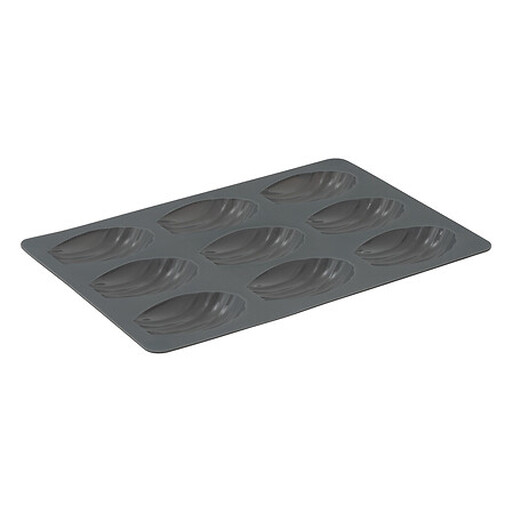
Why This Fits Their Persona: Ideal for home bakers who want to create authentic French pastries with the characteristic shell shape. The precise cavities are essential for successful Madeleines.
The high-quality, food-grade silicone is dimensionally stable enough to perfectly replicate the fine grooves of the shell shape, thus avoiding the problem of undefined shapes caused by overly soft material.
The material's high flexibility allows for damage-free release of the delicate Madeleines. The mold is designed for quick and even heat distribution.
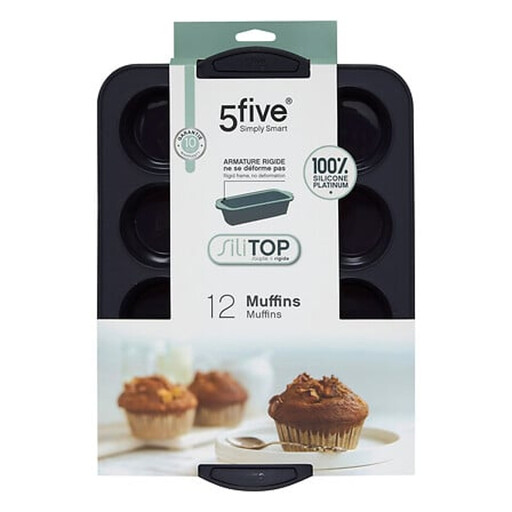
Why This Fits Their Persona: Perfect for families and anyone who regularly bakes muffins or cupcakes. This mold is a versatile and robust tool for daily use.
By combining silicone with an integrated steel frame, it bypasses the flimsy mold trap. The mold is completely rigid and can be handled safely even when full.
The sturdy construction ensures even heat distribution for consistent baking results. The mold is durable and an eco-friendly alternative to paper liners.
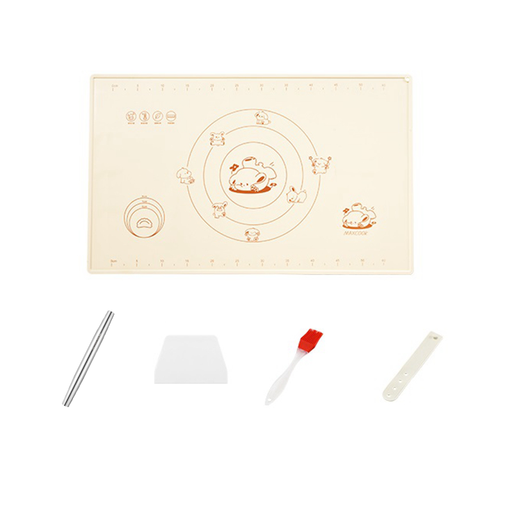
Why This Fits Their Persona: For anyone who doesn't just bake, but wants to prepare dough with precision. This silicone baking mat is a fundamental baking accessory for rolling out fondant, shortcrust pastry, or pizza dough.
It solves the problem of a messy and slippery work surface. The non-slip base adheres firmly to the countertop, preventing it from shifting during kneading and rolling.
Integrated measurement scales (rulers and circles) allow for precise portioning and rolling of dough. The material is heat-resistant, easy to clean, and dust-repellent.
We have compiled a complete, real-time updated list of products that fully meet these strict selection criteria and relevant safety standards.
For the first use, it is recommended to lightly grease the mold with oil or butter. With high-quality silicone molds, this is usually no longer necessary for subsequent uses as a natural non-stick patina develops. However, for very low-sugar or low-fat batters, a light greasing can still be helpful to guarantee a perfect result.
Rinse the mold immediately after use with hot water and mild dish soap. Most high-quality molds are dishwasher-safe. If a greasy film builds up over time or the mold absorbs odours, you can "bake it out" in the oven at 180°C (350°F) for about an hour. The heat causes grease residues and odour molecules to evaporate.
A simple clue is the smell: high-quality silicone is odourless. Another point is the feel: the material should feel smooth and sturdy, yet still flexible. Look for a uniform material thickness and, on larger molds, a reinforced rim. Check the packaging for information on temperature resistance and certifications like the LFGB seal.