
Lieferung heute & morgen

Qualitätsgarantie

Willkommens-Angebote freischalten: KOSTENLOSE Lieferung | Bis zu 80 % RABATT | Kostenlose 30-Tage-JoyPlus-Testphase
App herunterladen
A silicone spatula should turn food safely, protect coated cookware and perform reliably even at higher temperatures. In practice, however, some common purchasing decisions can lead to unnecessary expense: a spatula that is too soft may tip under the weight of potatoes or vegetables, a short handle brings your hand too close to the heat, and unclear material details make it harder to judge whether the utensil is suitable for everyday use.
This buying guide explains what keen home cooks, wok users and fans of Teppanyaki dishes should look out for. The product selection is based on clear details such as material, dimensions, care instructions and intended use.
The description “heat-resistant” alone tells you very little. What matters is whether a specific temperature limit is given and whether it applies to the entire spatula or only to the silicone head. A heat-resistant spatula should also not be left on a hot pan for prolonged periods or placed directly in an open flame.
A flexible head is practical when lifting pancakes or delicate foods. However, for wok dishes, fried potatoes or larger portions, a kitchen spatula needs to offer sufficient stability. Shape also matters: a narrow spatula works well in small frying pans, while a wide, slightly curved head can hold more food.
Wooden handles often feel comfortable in the hand, but they are not automatically dishwasher-safe. Some models are intended to be washed by hand. A BPA-free spatula with clearly stated materials can make your choice easier, but you should still check the care instructions, connection points and any visible signs of wear.
For a spatula for coated frying pans, the contact area should be made from a suitable material with sufficient flexibility. Silicone is often used because it does not have hard metal edges during normal use. This reduces the risk of scratches, provided the spatula is not used for cutting or scraping with excessive pressure.
Look for a clear material description. The COOKER-KING set, for example, is described as featuring BPA-free, heat-resistant silicone. The information should always be considered in relation to how the utensil will actually be used: a non-stick spatula is designed for coated surfaces, but not for contact with sharp knife edges or prolonged exposure to direct flames.
A specific temperature rating is more informative than general advertising claims. According to the product details, the STAUB Wok Turner is described as heat-resistant up to 220 °C. This suits many cooking situations on the hob, but should not be interpreted as approval for use over open flames or in cases of extreme overheating.
A long handle increases the distance between your hand and the hot pan. A longer model can be useful for wok dishes, while a short handle offers greater control when cooking with small frying pans. Also check whether the handle has a non-slip design and how the connection between the head and handle is constructed.
The following guidelines are useful for everyday cooking:
A wok spatula does not necessarily have to be made of metal. The STAUB Wok Turner combines a 31 cm length with a 9 cm-wide, curved silicone head. For flat griddles, on the other hand, a Teppanyaki spatula with a wide, rounded shape is better suited to the typical turning motion.
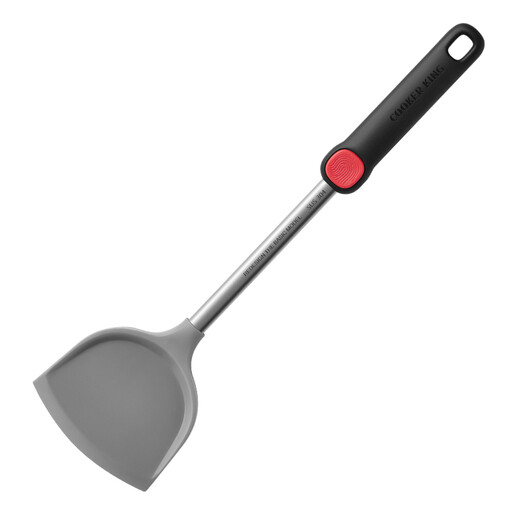
Why this product suits this profile: This single silicone kitchen spatula covers essential tasks such as turning, frying and serving, making it a suitable starting point for cooking with coated cookware.
The product description specifies silicone, suitability for non-stick surfaces and high heat resistance. This makes the key selection points clear before purchase.
Solid silicone head; designed for essential kitchen tasks and coated frying pans.
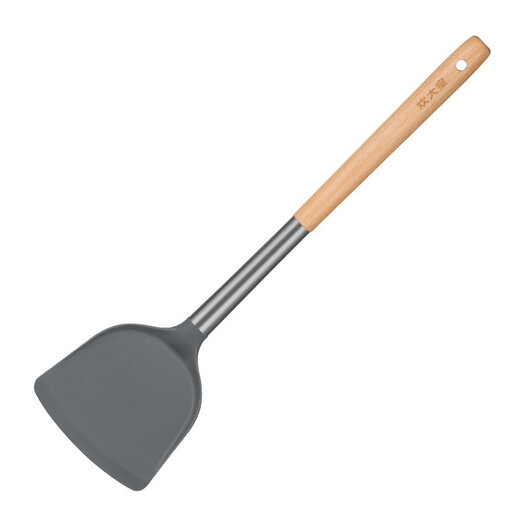
Why this product suits this profile: This spatula set combines a solid head with a slotted one. This gives you greater flexibility when preparing different foods in the frying pan.
The specifications mention BPA-free, heat-resistant silicone as well as a non-slip, water-resistant wooden handle. The instructions regarding flames and extreme overheating should still be followed.
Two head shapes; BPA-free silicone according to the product description; wooden handle with a non-slip surface.
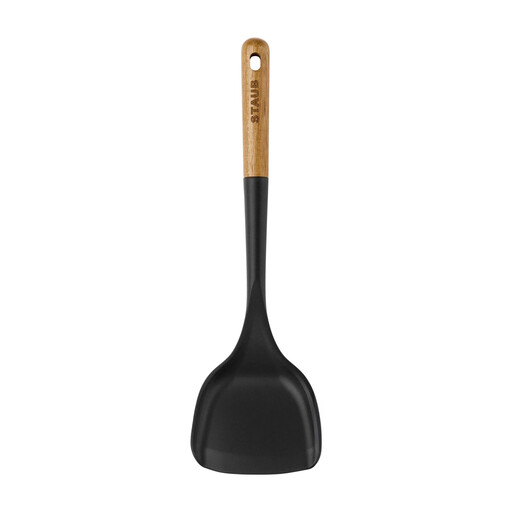
Why this product suits this profile: The wide, curved head is designed for woks, deep frying pans and larger portions. The 31 cm length keeps your hand at a safe distance from the cooking zone.
The specific temperature rating of up to 220 °C and clear hand-washing instructions help prevent uncertainty during use. According to the product details, open flames and prolonged soaking should be avoided.
31 cm overall length; 9 cm-wide, curved silicone head; ergonomic acacia wood handle.
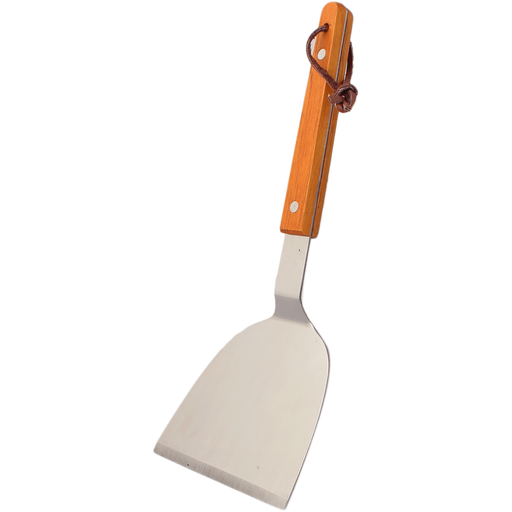
Why this product suits this profile: With its rounded 26.5 × 12 cm shape, this spatula is designed for flat griddles and turning larger foods in the Teppanyaki style.
Its intended use is clearly described rather than being presented as suitable for every frying pan. This helps you avoid confusing a specialist spatula with a narrow everyday model.
Rounded, wide shape; designed for flat griddles and Teppanyaki cooking.
We have put together a complete, regularly updated list of products that fully meet these strict selection criteria and the safety regulations applicable in the EU.
The lifespan depends more on temperature, cleaning method and mechanical stress than on the material description alone. A scratch-resistant spatula will therefore only remain gentle on surfaces if it is used as intended.
Yes, many models are designed for non-stick and coated surfaces. Look for a soft contact area, avoid cutting movements and check the manufacturer’s instructions regarding temperature and cleaning.
That depends on the individual product. A specific rating is the deciding factor. The STAUB Wok Turner is listed as suitable for temperatures of up to 220 °C in the product description. Open flames and prolonged direct heat should be avoided unless expressly approved.
A spatula set is useful if you regularly prepare a variety of dishes. A solid head is suitable for turning and serving, while a slotted head allows food to drain. For individual, clearly defined tasks, however, a suitable single model may be all you need.