
Lieferung heute & morgen

Qualitätsgarantie

Willkommens-Angebote freischalten: KOSTENLOSE Lieferung | Bis zu 80 % RABATT | Kostenlose 30-Tage-JoyPlus-Testphase
App herunterladen
The weaning stage brings new flavours, but also spills, sticky fingers and food remnants on clothes and floors. Silicone bibs for babies can reduce the amount of cleaning required – provided the material, fit and crumb-catching pocket are well designed.
Many products look very similar at first glance. However, some important differences only become apparent in everyday use. This buying guide helps parents avoid common purchasing mistakes and choose a suitable baby bib for weaning.
A baby bib with a crumb-catching pocket should genuinely be able to collect dropped food and liquids. A narrow, soft pocket may fold inwards when your baby sits or moves. Porridge, pieces of fruit and drinks can then still end up on their lap.
A wide, open crumb-catching pocket is practical, as is a bib that remains sufficiently stable across the chest. The term ‘crumb catcher’ alone says nothing about the pocket’s actual shape or depth.
‘Silicone’ is not a complete description of quality. Before buying, parents should check whether the product is made from food-grade silicone and whether it is stated to be BPA-, PVC- and phthalate-free. For babies from around six months, skin contact around the neck is another consideration.
A smooth, low-odour surface makes cleaning easier. Sharp edges, hard fastenings or poorly finished buttonholes, on the other hand, can be inconvenient during everyday use.
A bib that only fits in one position can quickly become too tight or stop providing sufficient protection. An adjustable silicone bib with several fastening positions can be used for longer. Even so, the fit should be checked every time: according to the product information, there should be room for approximately two fingers between the neck and the fastening.
For weaning, bibs with clearly stated materials are a good choice, such as 100% platinum silicone or food-grade silicone. The products mentioned describe platinum silicone as soft, flexible and low-odour. However, the name alone is not decisive; what matters is the product’s complete safety declaration.
A BPA-free bib can be an important selection criterion for parents. It is also worth checking the information on PVC and phthalates. For products made from several materials – silicone and polypropylene, for example – the individual components should be listed transparently.
A dishwasher-safe bib saves time in busy family life. Check whether the bib is intended for the top rack and whether the manufacturer specifies any restrictions. Some models can also be cleaned with warm water and mild soap.
Important: the bib should be completely dry before it is put away. Otherwise, residue in folds or the crumb-catching pocket can cause unpleasant odours. Knives and other sharp objects should be kept away from the silicone surface, as they can cause tears or punctures.
A waterproof bib protects clothing from liquids, but it does not replace suitable clothing during particularly messy meals. Look for sufficient coverage across the chest and shoulders, as well as a crumb-catching pocket that does not sit directly against the body.
The Kikka-Boo platinum silicone models are listed as suitable for temperatures from −40 °C to 230 °C. According to the product information, this makes them suitable for freezers, dishwashers and steam sterilisation. Such information should always be checked against the relevant care instructions.
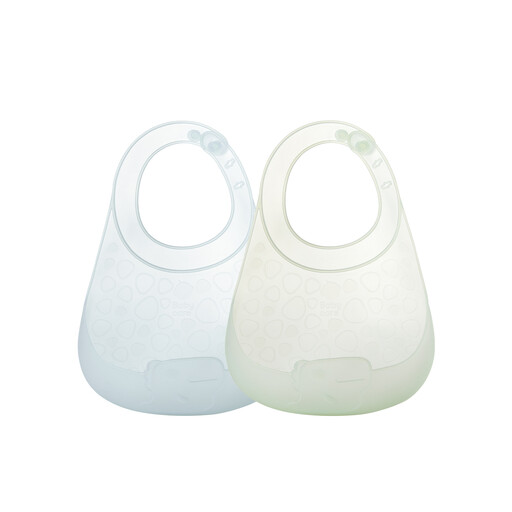
Why this product suits the profile: The 2-piece set is ideal for families who need a spare bib for changing and value a lightweight design.
Several fastening positions and a 3D structure are designed to prevent the bib from collapsing during meals.
According to the product information: food-grade, BPA-free silicone, dishwasher-safe and supplied with a storage box.
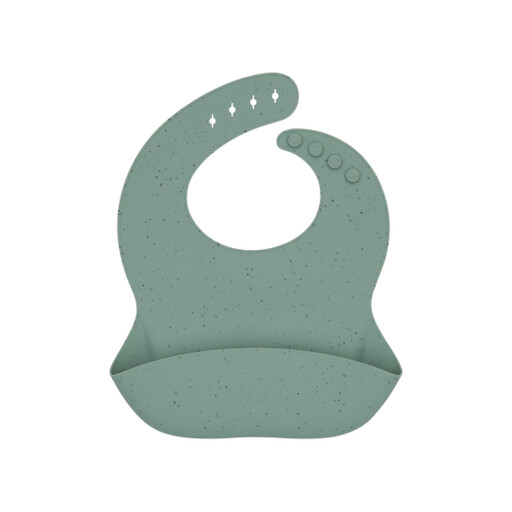
Why this product suits the profile: For regular meals at home, this model offers a wide front pocket and several adjustment options for babies from six months.
The deep, open pocket addresses the problem of a crumb-catching area that is too small, while the adjustable neck fastening helps achieve a good fit.
According to the product information, 100% platinum silicone, waterproof, low-odour and suitable for the top rack and sterilisation.
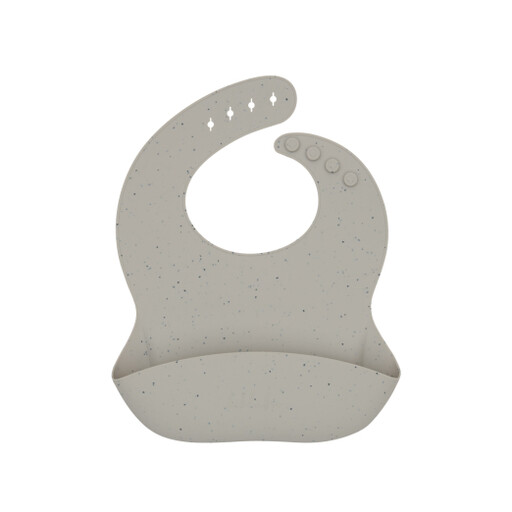
Why this product suits the profile: The flexible design is ideal for families who use a bib frequently when out and about, in restaurants or for several meals a day.
According to the product information, the foldable surface can be stored compactly in a changing bag and reshaped afterwards.
Deep crumb-catching pocket, adjustable neck fastening and cleaning in the dishwasher or with warm soapy water, according to the product information.
We have put together a complete, regularly updated list of products that fully meet these strict selection criteria and the safety regulations applicable in the EU.
Many models are labelled as bibs from 6 months. This age often corresponds to the start of weaning. However, the age recommendation from the relevant manufacturer and correct adjustment of the neck fastening remain decisive.
Silicone can usually be wiped clean with water and soap; selected models are also dishwasher-safe. This makes it easier to remove porridge and liquids. However, hygiene also depends on whether the bib dries completely after cleaning and is checked regularly for damage.
Its service life depends on the material, frequency of use, cleaning and storage. An adjustable fastening can allow the bib to be used across several sizes. Direct sunlight, sharp objects and damaged fastenings can shorten its lifespan. You should therefore check the bib before every use.