
Lieferung heute & morgen

Qualitätsgarantie

Willkommens-Angebote freischalten: KOSTENLOSE Lieferung | Bis zu 80 % RABATT | Kostenlose 30-Tage-JoyPlus-Testphase
App herunterladen
Faded jeans, unevenly coloured cotton tops or lacklustre home textiles can be refreshed with the right dark blue fabric dye. However, choosing the product alone won’t determine the result. The fabric, dry weight, wash programme and original colour all need to be taken into account.
When shopping for washing machine dye for cotton, linen and viscose, three common misconceptions often crop up:
According to the product description, Simplicol Fabric Dye Navy 150 g is intended for cotton, linen, wool, silk, viscose and certain blended fabrics. It isn’t suitable for pure synthetic fabrics such as polyester, polyamide or acrylic.
Check the care label before buying. For blended fabrics in particular, bear in mind that:
So, the term fabric dye for DIY projects doesn’t mean you can use it on every material without preparation.
According to the product information, one 150 g pack is designed for around 300 g of dry fabric. A shirt or two towels are given as a guide. You’ll need more packs for larger quantities.
The result also depends on the original colour. Navy will look different on white or light fabric than it will on a textile that’s already coloured. Dyeing very dark or strongly contrasting colours may produce a mixed shade. You should also expect colour differences around visible seams and appliqué details.
The product instructions describe the following method:
If you’re dyeing fabric in the washing machine, avoid loading the drum with significantly more textiles than recommended. Spreading them out evenly helps achieve a more consistent result. Before dyeing, empty pockets, fasten any closures and remove anything from the drum that doesn’t need to be there.
The options below are aimed at different uses. Check the product details and fabric limitations on the relevant product page before buying.
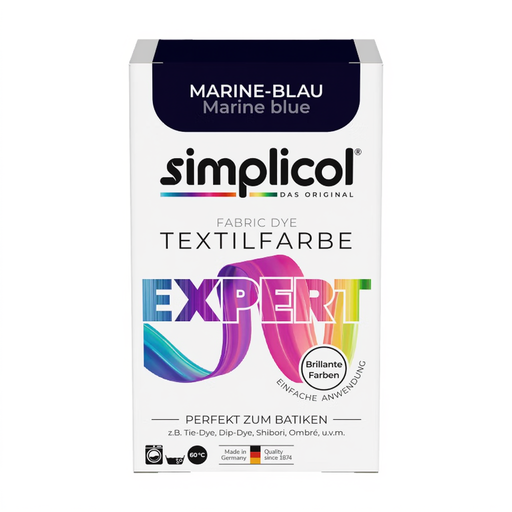
Why this product suits this type of shopper: The pack is designed for around 300 g of dry fabric, making it suitable for individual garments or smaller home textiles.
The stated fabric quantity helps prevent using too much textile for the amount of dye. The product is clearly marked as unsuitable for pure synthetics.
Navy shade 1708, suitable for use in the washing machine at 60 °C and for several of the listed natural fibres.
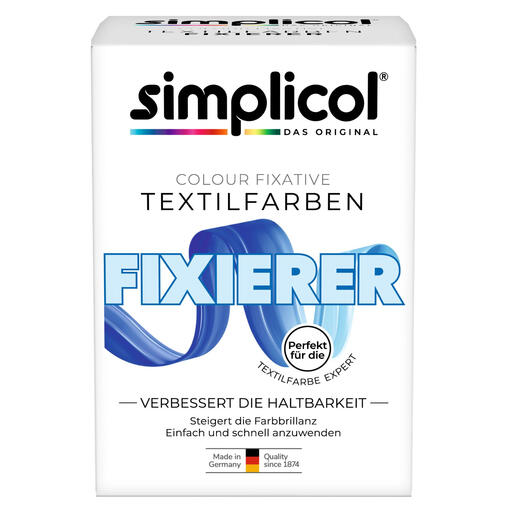
Why this product suits this type of shopper: This fixative is for anyone who wants to use the colour-fixing treatment described by the manufacturer alongside their dye.
It isn’t confused with a larger quantity of dye. Instead, as stated in the product description, it’s added separately to the fabric conditioner compartment.
90 ml pack; according to the product information, it’s intended for use alongside simplicol fabric dye.
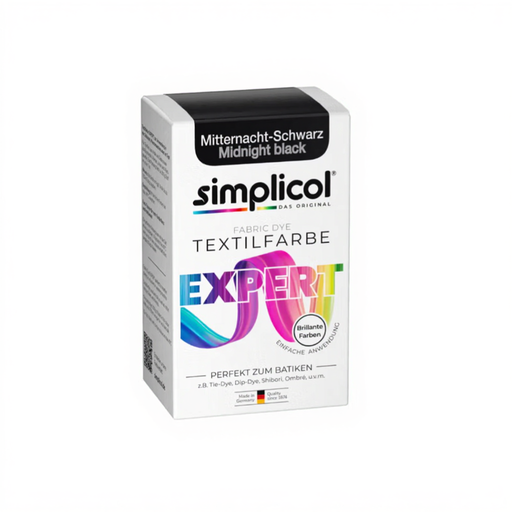
Why this product suits this type of shopper: An alternative for projects where you’re after a very dark black shade rather than Navy, or want to try creative techniques such as tie-dye and ombré.
The product description clearly states the fabric limitations and a maximum fabric quantity of around 300 g for an intense result.
Suitable for use in a washing machine, washing-up bowl or saucepan; according to the product information, it’s suitable for cotton, linen, wool, silk, viscose and blended fabrics.
When dyeing clothes, make sure the fabric is clean and hasn’t been treated with fabric conditioner. Large textiles need room to move freely in the drum. For a DIY project, it’s worth testing a spare piece of the same fabric first, if you have enough material.
The colour may look more intense straight after dyeing. A separate wash at no more than 40 °C, together with the textile’s care instructions, helps rinse away any excess dye. For long-lasting fabric dye, you’ll also need to wash the garment according to its care label. Frequent washing at high temperatures can generally cause colours to change more quickly.
We’ve put together a complete, regularly updated list of products that meet these strict selection criteria and fully comply with the safety regulations in force in the EU.
According to the product description, a 150 g pack is enough for around 300 g of dry fabric. Larger quantities may need more dye. The actual result also depends on the fabric, its original colour and the intensity you want.
Yes. According to the product information, add the powder directly to the drum and use an easy-care programme at 60 °C. Then run a separate wash at no more than 40 °C. Check the care label and make sure the fabric is suitable before you start.
According to the product description, it isn’t suitable for pure synthetic fabrics such as polyester, polyamide or acrylic. With blended fabrics, the natural fibres may take up more dye than the synthetic ones. So, you can’t expect every blend to produce a completely even Navy shade.