Measure out the right amount of decaf
If you switch between regular and decaffeinated coffee, you’ll want to measure out just the right amount for your cup. A portafilter machine lets you add a measured dose.


If you want to measure out decaf for one cup and froth the milk yourself, a portafilter machine with a steam wand suits that routine. Automatic milk texturing saves you a step; a bean-to-cup machine with a flat white programme offers more convenience, but you should check how the specific model handles decaf. No machine removes the caffeine from coffee.
If you switch between regular and decaffeinated coffee, you’ll want to measure out just the right amount for your cup. A portafilter machine lets you add a measured dose.
Want fine-textured milk without spending ages practising with a steam wand? Then the difference between manual frothing and automatic texturing is an important factor in your choice.
If you prefer a pre-selectable drink and straightforward milk preparation, also check how the specific model handles decaf.
A good fit if: You want to measure out the decaf yourself and control the milk texture.
The trade-off: Measuring, brewing, frothing and cleaning are all manual tasks.
A good fit if: You want to make the espresso yourself but simplify the frothing process.
The trade-off: The automatic function doesn’t measure out the decaf for you or provide a suitable grinding solution.
A good fit if: Convenience and a pre-selectable drink are your priorities.
The trade-off: Check how the specific model lets you switch between beans and decaf.
For a single cup, the key things to consider are how you add the decaf, how much control you want over frothing, and how much cleaning and maintenance you’re happy to do.
| What matters to you | What to look for when buying | Who it matters most to |
|---|---|---|
| Using decaf one portion at a time | Check whether you can use a single portion of ground coffee and how easy it is to switch between types. | If I switch between regular and decaffeinated coffee, I want to measure out just the right portion for my brew. For around 36% of consumers, getting the decaf portion right is the main priority. |
| Fine-textured milk | Compare a manual steam wand with automatic texture settings, and check how to clean the parts that come into contact with milk. | I want the milk in my flat white to have the right texture, without having to spend too much time practising. Around 29% of consumers focus mainly on milk texture. |
| Effort involved in making one cup | Check every step, from adding the coffee to cleaning the machine. A flat white programme alone doesn’t tell you how decaf is added. | When I’m making just one cup, I want to keep the number of steps to a minimum. Around 21% of consumers prioritise a simple brewing process. |
| Cleaning and maintenance | Check which parts need cleaning after making your drink and how the model handles descaling. | After making a single milk-based drink, I want to know which parts need cleaning and how much maintenance is involved. For around 14% of consumers, maintenance is the main concern. |
A pre-set drink doesn’t tell you how decaf is added to that specific model.
Before buying, check the manual to see whether and how the model handles ground decaf or decaffeinated beans.
The stated width of 15 cm for the Dedica Duo EC890.M doesn’t include space for a grinder and accessories.
Allow space for your entire coffee-making routine, and check whether you’ll use ground coffee or need to grind it separately.
A separate grinder and accessories may take up extra worktop space.
Automatic steam wands and milk systems still have parts that come into contact with milk and need cleaning.
Check the cleaning instructions for the exact model rather than relying on the drinks programme alone.
The Dedica Duo EC890.M is a compact portafilter option for single espresso portions and manual milk frothing.
The Bambino Plus SES500BSS4EEU1 offers automatic milk texturing, while the standard Bambino SES450BSS4EEU1 uses manual frothing.
The Classic E24 is aimed at anyone who wants to make their own espresso and froth their own milk, using ground coffee one portion at a time.
The LatteGo EP3347/90 is a bean-to-cup machine with a dedicated flat white drink option.
The Joybuy models below offer different ways to make a single cup. Check that each one is compatible with the type of decaf you want to use.
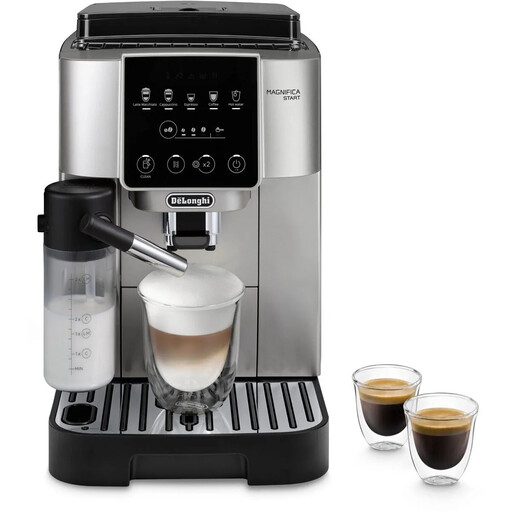 No image available
The separate compartment for ground coffee may be useful for a single portion of decaf; check the manual for how to switch between beans and ground coffee.
15 bar; 1,450 W; water tank: 1.8 l; bean hopper: 250 g.
 No image available
If you want to prepare a single portion and froth the milk yourself, this portafilter machine suits a routine with more hands-on steps.
20 Bar; water tank: 1.1 l; steam wand and pressure gauge.
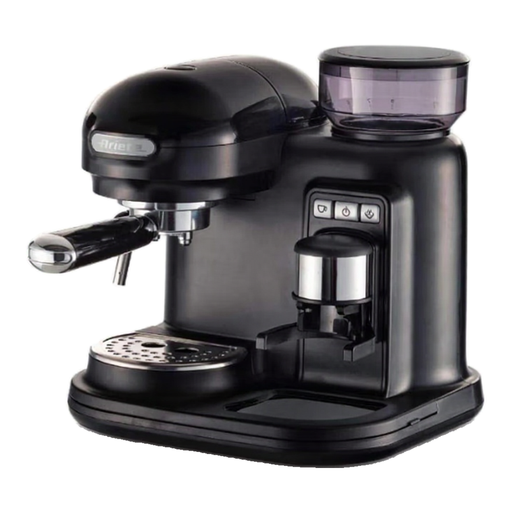 No image available
The one-cup filter option may be useful when making a single drink; check how to add decaf when switching between coffee types.
Built-in grinder; filters for 1 or 2 cups; bean hopper: 250 g; automatic shut-off.
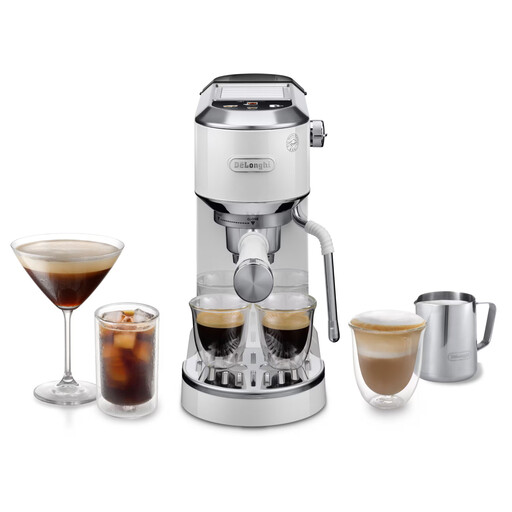 No image available
This portafilter machine suits a manual routine using ground decaf and milk you’ve frothed yourself.
No built-in grinder; use ground coffee or allow space for a separate grinder.
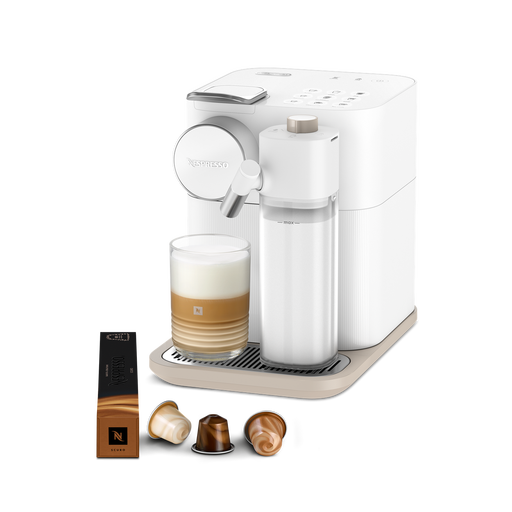 No image available
The flat white programme and one-touch milk preparation may suit you if you want fewer steps; check that the available capsules meet your decaf needs.
Automatic milk system; according to the instructions, designed exclusively for Nespresso Original capsules.
No, you need to use decaffeinated coffee to make your espresso. The German Coffee Association states that decaffeinated coffee can contain no more than 0.1% residual caffeine.
No. Nespresso Germany publishes different recipes: one uses 40 ml of espresso and 90 ml of milk, while another uses around 80 ml of espresso and 70–80 ml of finely textured milk. These recipe quantities aren’t minimum requirements for a machine; choose what suits your cup and taste.
Clean the parts that come into contact with milk according to your model’s instructions. For the Dedica and Dedica Arte, De’Longhi explains that descaling depends on the local water hardness and is due when the machine indicates it. This isn’t a set schedule that applies to every machine.
According to the European Commission, for products covered by the relevant EU rules, the manufacturer is responsible for assessing conformity and affixing the CE marking. The mark isn’t an independent assessment of espresso quality; when considering a specific listing, also check the product identity and documentation.