One-pot cooks
If you’ll mainly be making stew and want to put the appliance away after use in a small holiday-home kitchen, a portable single-zone hob could be a good fit.


A portable single-zone hob is enough for a seafood stew if you’re only using one pot. A double hob is worth considering if you want to heat a side dish at the same time and have enough space and a suitable connection. Check that the base of your pot is suitable for induction and falls within the size range specified for the model. Mains-powered appliances newly placed on the market in Germany and covered by the EU Low Voltage Directive must meet the relevant conformity requirements, including CE marking. The CE mark is a manufacturer’s declaration, not an independent quality mark.
If you’ll mainly be making stew and want to put the appliance away after use in a small holiday-home kitchen, a portable single-zone hob could be a good fit.
If you plan to use a pot you’ve brought with you or found in the holiday home, check that it’s suitable for induction and that its base size is compatible with the specific hob.
If you want a second pot on the hob alongside your stew, take into account the extra space it will need and the property’s connection requirements.
A good fit if: you’re making stew in one pot and want to put the hob away after use.
Worth bearing in mind: A single cooking zone doesn’t give you a second place to cook at the same time.
A good fit if: you want to heat stew and a side dish in two pots at the same time, and have enough worktop space and a suitable connection.
Worth bearing in mind: According to the manufacturer, the Rommelsbacher CT 3420/IN example reviewed is 56 cm wide and has a total rated output of 3,400 W.
| What you need | What to check before buying | Who is this most important for? |
|---|---|---|
| Control when simmering | Compare the power settings, controls and timer on the exact model, and keep an eye on how vigorously your food simmers. | If I want to turn the heat down and continue cooking my stew after bringing it to the boil, I look for clear, easy-to-follow settings. Around 36% of consumers say simmer control is their top priority. |
| A suitable stew pot | Check that the base is suitable for induction and compare its relevant size with the specifications for the specific hob. Bosch Home Appliances explains that induction cookware needs a ferromagnetic base. | If I want to use my existing pot for the stew, I first check that its base is magnetic and compatible with the hob. Around 29% of consumers put pot compatibility first. |
| Connection and worktop space | Check the model’s overall dimensions and rated output, and confirm the connection requirements at the property. The Institute for Loss Prevention and Loss Research warns against overloading extension leads with high-powered appliances. | If I’m cooking in a holiday-home kitchen with unfamiliar facilities, the appliance needs to fit on the worktop and have a safe connection. Around 21% of consumers prioritise connection and worktop space. |
| Second cooking zone | If you genuinely need to cook two things at once, consider the size of both pots, the appliance dimensions and the total output. | If I want my side dish to be ready at the same time as the stew, I need two usable cooking zones. Around 14% of consumers say a second cooking zone is their top priority. |
A pot needs a base that’s suitable for induction and compatible with the size range of the specific hob. Diameter alone doesn’t tell you either of these things.
Check the pot base and the model specifications separately. If you don’t already have a suitable pot, you may need to buy induction-compatible cookware too.
A double hob takes up more space. For the Rommelsbacher CT 3420/IN, the manufacturer specifies a width of 56 cm and a total output of 3,400 W; these figures don’t tell you what facilities are available in a particular holiday-home kitchen.
First decide whether you really need to heat two pots at once. Then check the available space and connection requirements, and don’t plug high-powered appliances into the same extension lead without careful consideration.
Manufacturer specifications for power levels or preset temperatures don’t, by themselves, show how steadily a dish will simmer over a low heat.
Keep an eye on how vigorously your food simmers after bringing it to the boil, and adjust the setting if needed.
The manufacturer describes the ProMenu 2100 as a portable single-zone hob for pots and pans measuring 12 to 24 cm.
The manufacturer offers the CT 2020/IN single-zone hob and the CT 3420/IN double hob to suit different space and simultaneous-cooking needs.
Steba describes the IK 35 as a portable single-zone hob.
The DK 1031 is a portable double hob for when you need to use two cooking zones at the same time.
WMF describes the Kult X Mono as a portable single-zone hob.
This selection includes portable single- and double-zone induction hobs for making stew on its own or alongside a side dish heated at the same time.
 No image available
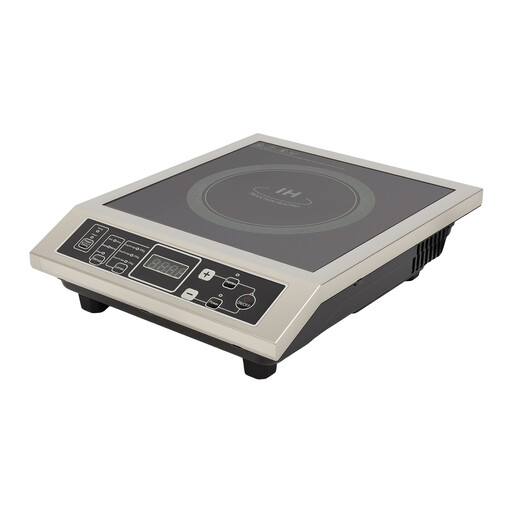
A single-zone hob that could suit a stew, provided your pot is within the specified size range.
Specifications include nine heat settings, an 8-hour timer and a 28 cm glass surface. The product description states that it is designed for magnetic cookware measuring 12 to 26 cm. The appliance is listed as 35 × 28 × 4.4 cm and 1.9 kg. These settings don’t demonstrate a consistent simmering temperature.
 No image available
Worth considering if you want to heat stew and a side dish at the same time, and have enough space and a suitable connection where you plan to use it.
The product description specifies two independently controlled zones rated at 1,500 W and 1,000 W, five temperature settings and dimensions of 48 × 23.5 × 7.5 cm. Check the property’s connection requirements in advance.
 No image available
Designed as a single-zone hob for one pot. Before choosing it, compare its rated output with the connection requirements in your holiday home.
The product specifications list ten power levels, timer and reservation functions, a ceramic-glass surface and an EU plug. Its stated output is 3,500 W; this doesn’t confirm that every socket is suitable or guarantee a particular level of simmering consistency.
 No image available
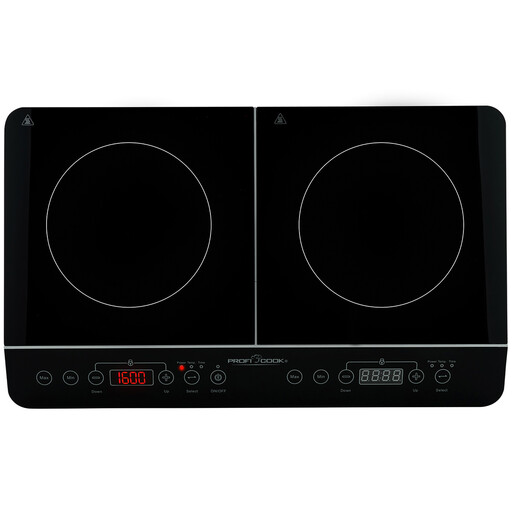
Described as having two cooking zones for when you want to heat stew and a side dish at the same time.
The product description specifies six power settings and ten temperature settings for each zone, as well as a 180-minute timer. It also lists a temperature range of 60 to 240 °C and a maximum total output of 3,500 W. Check the available space and connection requirements at the property.
 No image available
Described as a single-zone hob for making stew. Use only cookware with a suitable magnetic base.
The product specifications list ten heat settings, six functions and touch controls. These settings don’t show independently measured temperature stability when simmering.
Check that the pot base is suitable for induction and magnetic, then compare its relevant size with the specifications for the specific hob. The material of the pot itself isn’t enough to determine compatibility.
The single- and double-zone models reviewed are described by their manufacturers as portable. Follow the instructions for your chosen appliance and check the available space, cable route and connection at the property. Portable doesn’t mean it’s suitable for every location.
Keep raw ingredients separate from food that’s ready to eat, and avoid spreading germs via worktops and utensils. The German Federal Institute for Risk Assessment describes this as preventing cross-contamination; the hob’s timer or temperature settings don’t replace these hygiene measures.
When you buy as a consumer from a trader, your statutory rights against the seller are separate from any voluntary manufacturer’s guarantee. Check the specific offer to find out who the seller is and what guarantee terms apply. If there’s a fault, your first option may be to ask for it to be repaired or replaced.
Mains-powered appliances covered by the EU Low Voltage Directive must meet the relevant conformity requirements, including CE marking. The German Federal Network Agency explains that the manufacturer uses the CE mark to declare conformity on its own responsibility; it isn’t an independent quality mark. The European Commission does not list hobs as requiring an energy label.