What should you look for when buying?
Portable single induction hob
Right for you if: Your pan has a suitable magnetic base and its size matches the appliance’s specifications.
Things to consider: An unsuitable or too-small pan may not work with the hob. Keep an eye on the compote as it simmers rather than relying on a temperature setting alone.
Traditional solid hotplate
Right for you if: You want to keep using a pan that isn’t suitable for induction and adjust the heat continuously. Severin’s KP 1091 is one example, with continuously variable temperature control.
Things to consider: The hotplate gets hot, so you’ll need a safe place for it to cool down after cooking.
Radiant ceramic-glass hob
Right for you if: You’d like a smooth cooking surface and continuously variable heat control, but your pan isn’t suitable for induction. The Rommelsbacher CT 1800/E datasheet specifies a cooking zone with a diameter of 180 mm.
Things to consider: This type of cooking surface can also retain heat after it’s switched off.
The percentages show how the main considerations when buying a portable hob for making one portion of apple compote are split.
| Consideration |
What to check before buying |
Who should pay particular attention? |
| Adjusting the heat while simmering |
Check how the power settings work and whether the specific model has a timer. |
If I want to let the compote simmer gently after bringing it to the boil, easy-to-understand controls are important. Around 36 % of consumers prioritise control while simmering. |
| Using an existing small pan |
For induction, check that the base is magnetic and compare the pan’s diameter with that of the cooking zone. |
If I don’t want to buy a new pan, I’ll choose the right heating technology based on the one I already own. Around 29 % of consumers put pan compatibility first. |
| Space for a hob |
Allow for the appliance’s dimensions, the cable route, and space for the pan and safe cooling. |
If there’s only room for one hob on the worktop, the appliance and pan need to sit safely. Around 21 % of consumers prioritise the available space. |
| Cleaning and ongoing costs |
Check the cleaning and residual-heat guidance, as well as your existing pans and the model’s service terms. |
If I want to wipe away splashes easily and take any extra purchases or service terms into account, I’ll factor these points into my choice. Around 14 % of consumers mainly consider maintenance and ongoing costs. |
Joybuy products
These products are portable single induction hobs with one cooking zone. All models require a pan that’s suitable for induction.
 No image available
IsEasy induction hob, 2100 W, 28 cm
Nine heat settings give you options for adjusting the heat while simmering.
Specified for magnetic cookware measuring 12–26 cm; features touch controls, a glass surface and an 8-hour timer.
View at Joybuy
 No image available
Portable induction hob, 5 power settings, 1000 W
Five power settings let you adjust the heat manually on a single portable hob.
The pan must be suitable for induction and fit the cooking zone.
View at Joybuy
 No image available
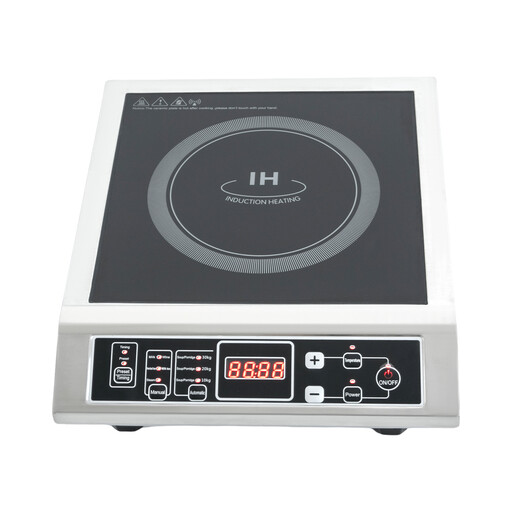
Portable induction hob, 3500 W, timer
The description lists ten temperature settings and ten power levels for controlling the portable hob.
Features a three-hour timer and preset function; induction requires compatible cookware with a suitable magnetic base.
View at Joybuy
 No image available
Microcrystalline glass induction hob, 3500 W, 10 temperature settings
The temperature control offers ten settings for adjusting the heat.
The description lists an automatic shut-off if no compatible cookware is detected. A suitable magnetic pan base is still required.
View at Joybuy
 No image available
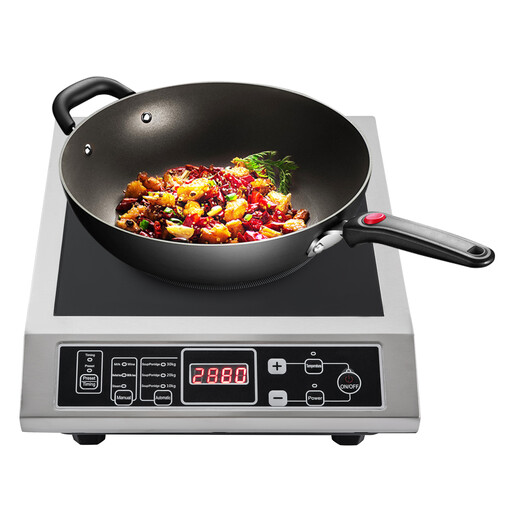
Microcrystalline glass induction hob, 3500 W, 8 temperature settings
This model is specified with eight temperature and power settings, as well as a timer of up to three hours.
The induction hob requires compatible cookware with a suitable magnetic base.
View at Joybuy
Frequently asked questions
Do I need to buy a new pan for an induction hob?
Not necessarily. An existing pan may be suitable if its base works with induction and its size matches the specifications of the appliance. Check both before choosing a heating technology.
How should I use and clean a hob when making a small portion of compote?
While cooking, check whether you need to turn down the power once the compote comes to the boil; the Verbraucherzentrale describes apple compote made with apple pieces and a little water. Follow the instructions for your specific appliance on set-up, hot surfaces and cleaning, and let the hob cool before cleaning it.
In Germany, what’s the difference between a guarantee and the statutory warranty?
The statutory warranty is set out by law and covers faults; a guarantee is an optional extra promise with its own terms. The Verbraucherzentrale recommends understanding the difference and checking the terms of any guarantee offered separately.
What should I check for when it comes to hob safety?
The Bundesnetzagentur lists several checks as part of market surveillance, including correct CE marking, an identifiable product, accurate manufacturer details and German instructions with the necessary warnings. Also follow the set-up and use guidance for the specific model.
Can I put an old hob in my household rubbish?
No. The Umweltbundesamt explains that old electrical appliances must be collected separately. Check with your local authority to find out about collection and return options.


