Anyone cooking with limited worktop space
Consider the appliance dimensions, pan and room to operate it together, so you can position and use the single hob safely.


When worktop space is limited, choose a single hob that fits alongside your pan and leaves room for operation, while meeting the ventilation requirements in the instructions. Induction is only suitable if your pan’s base and diameter are compatible. For pans that aren’t induction-ready, a cast-iron or compatible radiant hob is an alternative, but you’ll also need to allow for its footprint and residual heat. If you’re using fresh green beans, the hob must be able to bring them to the boil: the Federal Institute for Risk Assessment recommends boiling fresh pulses for at least 30 minutes as a rule of thumb.
Consider the appliance dimensions, pan and room to operate it together, so you can position and use the single hob safely.
If you want to keep using your existing pan, its base material and diameter will determine which type of heating is suitable.
Choose a hob that can bring the beans to the boil for the required length of time, then let you turn the heat down for the rest of the stew.
For fresh green beans, the Federal Institute for Risk Assessment (BfR) recommends boiling fresh pulses for at least 30 minutes as a rule of thumb. A keep-warm or low setting is no substitute for boiling them.
| What matters | What to check when buying | Who is this especially important for? |
|---|---|---|
| Space and stability | Compare the appliance’s width and depth, and allow room for the pan and controls. | If I have limited worktop space, I want to know whether the hob and a full pan will fit safely; roughly 33% of consumers put this concern first. |
| Boiling effectively | Choose a suitable cooking zone with easy-to-use heat settings; what matters is the actual boiling time. | Anyone cooking fresh beans wants to boil them for long enough and then adjust the heat; roughly 27% of consumers prioritise this cooking stage. |
| Compatibility with your existing pan | Check the pan’s base and diameter against the specifications for the appliance you’re considering. | If I want to keep using my stew pan, the heating type needs to suit its base; roughly 27% of consumers share this concern. |
| Controls, cleaning and ongoing costs | Check the controls and cleaning instructions, and consider whether you might need to buy a different pan. | Anyone who wants to turn down the heat after boiling the stew and keep the appliance easy to care for should consider the controls and any additional purchases; roughly 13% of consumers prioritise these points. |
A low-profile hob can still take up a lot of depth. Steba lists the 4 cm-high IK 65 SLIM as having a footprint of 28 × 36 cm.
Compare the width and depth of the specific model with the space available, and allow room for the pan, controls and the ventilation requirements in the instructions.
A pan without a suitable magnetic base won’t work on an induction hob.
Check the base material and the stated diameter range. If your pan isn’t compatible, consider a cast-iron or suitable radiant hob.
An appliance setting doesn’t tell you whether fresh green beans in your stew have actually boiled for long enough.
As a rule of thumb, the Federal Institute for Risk Assessment recommends boiling fresh pulses for at least 30 minutes. Only then should you turn the heat down to continue cooking the stew.
The KP 1091 is a single cast-iron hob for use with a compatible pan.
The CT 2020/IN is a portable induction hob, while the CT 2203/TC is a radiant glass-ceramic hob.
The S-Line 2100 is a portable single induction hob for use with a suitable pan, with enough room to set it up safely.
The IK 65 SLIM is a portable single induction hob for use with a suitable pan.
The SIKP 2200 B1 is a portable single induction hob.
This selection includes single electric hobs for cooking stew, including induction and infrared models. With an induction hob, the pan base must be compatible with the appliance.
 No image available
A single cooking zone with stepless temperature control, suitable for flat-bottomed cookware.
1,500 W; 18 cm-diameter heating ring; footprint 25 × 28,5 cm.
Remember to leave the required clearance around the appliance.
 No image available
For anyone looking for a portable induction hob with a rotary control and several power settings.
1,000 W; five power settings; footprint 21,5 × 21,5 cm.
Induction requires a suitable magnetic pan base.
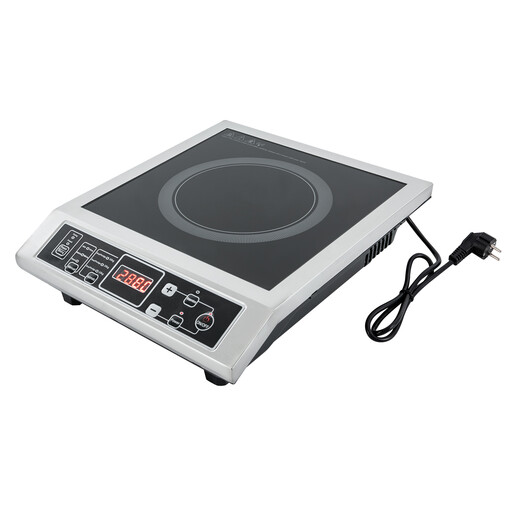 No image available
For making stew in an induction-compatible pan. Before buying, check that the appliance’s requirements suit the space where you plan to use it.
The product description lists 800–3,500 W, eight power settings and a timer of up to three hours.
According to the description, the hob is designed for iron or stainless-steel cookware.
 No image available
An infrared hotplate for heat-resistant cookware, if you’re not set on using induction.
The product description lists touch and rotary controls, a timer and automatic shut-off.
Check that your cookware is suitable for use on the ceramic surface.
 No image available
For cooking stew in a suitable induction pan; the description lists a soup function and several power settings.
2,000 W; ten power settings; touch controls and a safety lock.
Keep the ventilation openings clear and check that your pan base is suitable for induction.
Not instead of boiling the beans if you’re using fresh green beans. The Federal Institute for Risk Assessment warns about phasin and recommends boiling fresh pulses for at least 30 minutes as a rule of thumb; gently simmering or steaming isn’t a reliable alternative. There’s no general additional cooking time that applies to beans that have already been parboiled.
Check the footprint, room for your pan and ease of use, and follow the setup and ventilation instructions for your chosen model. For example, the Rommelsbacher CT 2203/TC has a footprint of 30,50 × 41,00 cm.
Your statutory rights and a voluntary guarantee are separate. Check the guarantee terms and the specific repair service available; Severin doesn’t list a repair service for the KP 1091 on its product page.
The Federal Network Agency lists correct CE marking, manufacturer identification and German-language instructions with usage and safety information as important checks. CE marking is the manufacturer’s declaration that the product meets the applicable requirements. End-of-life electrical appliances should be taken to a separate collection point for waste electrical and electronic equipment, not put in household rubbish.