Cooking for one with a small pan
If you’re making broth and noodles in one pan, check that the hob can detect the base of your pan and that it’s compatible with the stated cooking zone size.


For a single portion of noodle broth, a single hob is a natural starting point. Induction is suitable if the base of your pan is magnetic and compatible with the cooking zone; otherwise, consider radiant-heated ceramic glass or another type of hob. As well as checking the power, look at how easily you can turn the heat down after bringing the broth to the boil, whether the pan and available space are suitable, and how to handle residual heat. Power or temperature settings do not guarantee a particular broth temperature.
If you’re making broth and noodles in one pan, check that the hob can detect the base of your pan and that it’s compatible with the stated cooking zone size.
If you want to keep using your existing pan, also compare hob types that don’t require a ferromagnetic base.
If you need a portable hob, check the appliance dimensions, pan and intended safe location together.
For a single portion, it’s worth first checking that the hob type suits your pan. Then consider whether the hob will fit your available space and whether you can easily adjust the heat while the broth is simmering.
| What you need | What to check before buying | Who should consider this? |
|---|---|---|
| Bringing to the boil and simmering | Controls and low power settings; a timer is no substitute for measuring the temperature in the pan. | If you want to turn the heat down after bringing the broth to the boil, easy-to-use controls matter more than maximum power alone. Around 33% of consumers prioritise being able to adjust the heat for both stages. |
| Pan compatibility | For induction, check that your pan is magnetic and compare its base diameter with the specifications for the specific model. | If you want to use your existing pan, check that its base size is compatible with the hob type. Around 25% of consumers put pan compatibility first. |
| Available space | Compare the appliance’s width and depth with the safe space available. | If space is limited, the hob and pan must both fit in the intended spot. Around 25% of consumers prioritise the space required by the hob. |
| Power connection and safe use | Check the rated voltage and power consumption. Follow the instructions and check the appliance and cable before use. | If you want to check the power connection and how to handle a hot hob first, look at the specific appliance details and make sure the cable is undamaged. Around 17% of consumers prioritise connection and operating safety. |
Maximum power doesn’t tell you how well a small portion will simmer after it comes to the boil.
Compare the controls and lower power settings on the specific model. Keep an eye on the broth as you turn the heat down, and adjust the setting as needed.
Ceramic glass describes the surface, not necessarily the heating technology underneath. The ROMMELSBACHER CT 2010/IN uses induction, while the CT 2200/E is a radiant-heated ceramic glass hob.
Check the stated heating technology and make sure it’s compatible with your pan. The CT 2010/IN requires a ferromagnetic pan base.
A hob can remain hot after use. Damaged appliances or cables can pose a safety risk.
Follow the model’s cooling and cleaning instructions, and don’t continue using a damaged appliance. The VDE advises against continuing to use appliances that malfunction or have defective parts.
The portable ProSlim 2000 induction hob is an example of a single hob with stated pan size compatibility and appliance dimensions.
The CT 2010/IN and CT 2200/E represent different heating technologies within the models listed.
The KP 1091 is a single cast-iron hob for anyone who doesn’t want to assume their pan is induction-compatible.
The SIKP 2200 B1 is a portable single induction hob. The model is specified with a 10–22 cm cooking zone and touch controls.
The PC-EKI 1062 is a single induction hob with touch controls and a timer.
The Joybuy products below include single hobs for one pan, as well as a ceramic glass hob with two cooking zones. Before buying, check that the hob type, pan and available space suit your needs.
 No image available
For one pan, with continuously adjustable heat.
1,500 W; 18 cm diameter heating ring; variable temperature control.
The cooking surface gets hot during use and must cool before cleaning.
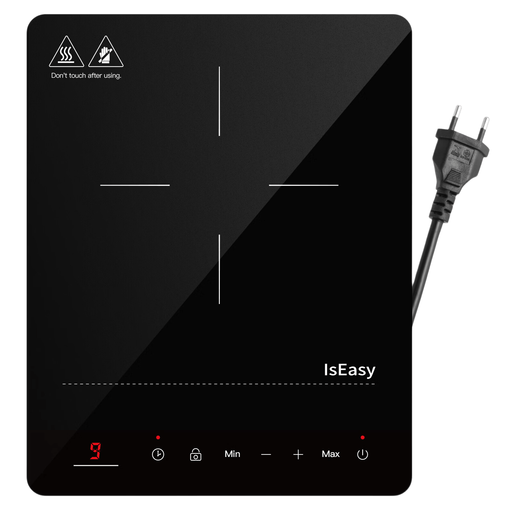 No image available
An option if your pan is induction-compatible and you want to choose between different heat settings.
2,100 W; 28 cm hob; nine heat settings; 8-hour timer; child lock; Max/Min function.
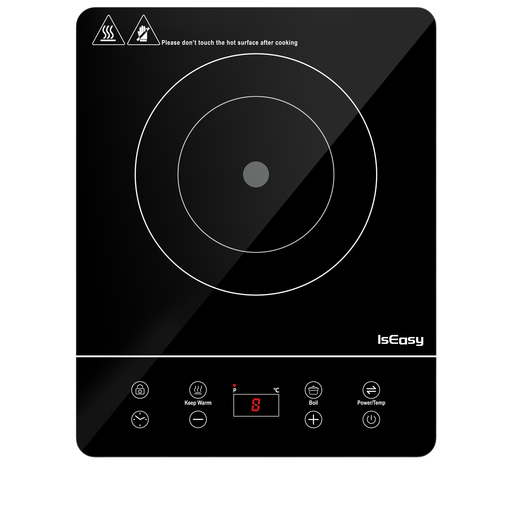 No image available
For a magnetic pan, provided its diameter is within the stated range.
2,100 W; nine power levels and nine temperature settings; 28 cm; 8-hour timer; child lock; glass surface; 220–240 V.
The product description states that it’s suitable for magnetic cookware measuring 12–26 cm in diameter.
 No image available
For an induction-compatible pan, with adjustable heat across five power levels.
One cooking zone; 1,000 W; five power levels.
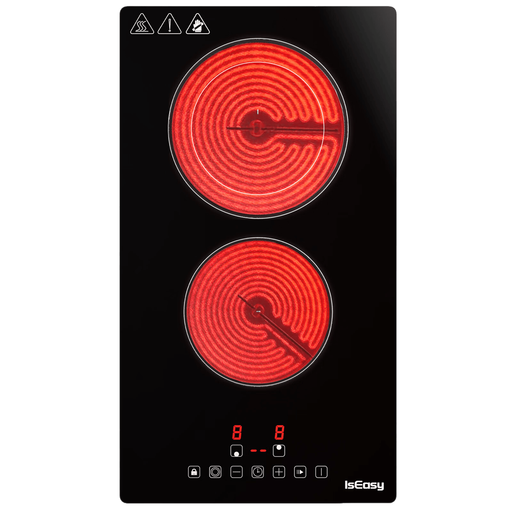 No image available
An option if you’re looking for ceramic glass rather than a single induction hob; use one cooking zone for a single portion.
Two cooking zones; 3,200 W; nine power levels; pause function; child lock; overheating protection; residual heat indicator.
No. Check the pan base and the diameter specified for the particular model first. CASO gives a range of 12–22 cm for the ProSlim 2000; ROMMELSBACHER specifies a 120–230 mm cooking zone for the CT 2010/IN.
Turn the heat down after the broth comes to the boil, keep an eye on the pan and adjust the setting if needed. For the models mentioned here, a timer or preselected temperature doesn’t prove that the broth will be regulated to a particular temperature.
Follow the instructions and let hot surfaces cool before cleaning. According to the manufacturer, the ROMMELSBACHER CT 2200/E has a residual heat indicator. The VDE advises against continuing to use appliances that malfunction or have defective parts.
CE marking is required for electrical appliances covered by the relevant EU regulations. By applying the marking, the manufacturer declares that the product complies with those requirements; it isn’t a product approval issued by a central EU body. Check the marking and identifiable manufacturer details on the specific product listing.
No. The Verbraucherzentrale explains that an EU energy label for a cooker refers to the oven, not the hob. So don’t compare supposed energy-efficiency ratings for single hobs.