First, check whether your saucepan is induction-compatible and whether its base diameter matches the specific hob. If it isn’t, a cast-iron or radiant-heated ceramic glass hob could be an option. Also compare the controls, footprint and residual heat. Having lots of power settings or a timer doesn’t, by itself, mean your plum compote won’t catch while simmering.
Which hob is right for you?
If you have a small saucepan you want to keep using
If you’d like to carry on using your saucepan, check before buying whether its base is induction-compatible and suits the cooking zone on your chosen model. For example, CASO gives a pan size range of 12 to 24 cm for the Touch 2000.
If you want good control over the heat when making compote
Once the mixture has come to the boil, you’ll want to turn down the heat and be able to reach the controls easily while stirring. Power settings, dials and timers can all be useful, but none of them guarantees that the compote won’t catch.
If you’re short on worktop space
Even if you only need one cooking zone, consider the appliance’s dimensions and leave enough room to handle the hot saucepan. Compare the measurements of the specific model with the space where you plan to use it.
What should you look for when buying?
Induction
A good fit if: Your saucepan is induction-compatible and falls within the size range for your chosen model.
Things to consider: Unsuitable or undersized cookware won’t work as intended; a cooling fan may also be part of the appliance.
Cast iron
A good fit if: You want to use an existing saucepan, whether or not it’s induction-compatible, and adjust the heat with a dial.
Things to consider: Rommelsbacher says cast iron heats up and cools down more slowly; bear in mind that it retains heat when you remove the saucepan.
Radiant-heated ceramic glass
A good fit if: Your saucepan isn’t induction-compatible and you prefer a smooth cooking surface.
Things to consider: The cooking surface stays warm after you switch it off. At 30.5 × 41 cm, the Rommelsbacher CT 2200/E takes up a relatively large amount of worktop space.
| Criterion |
What to check before buying |
Who it matters most to |
| Saucepan and cooking zone |
Check that your saucepan is induction-compatible and compare its actual base diameter with the requirements for the specific model. |
If I want to keep using my small saucepan, I want to know in advance whether it’ll work on the hob. Around 33% of consumers make cookware compatibility their top priority. |
| Heat control when simmering |
Check the type of controls and whether there’s a timer; appliance settings don’t measure the temperature of the compote. |
When simmering, I want to be able to turn the heat down easily once the mixture has boiled, and adjust it without fuss while stirring. Around 27% of consumers prioritise having good control when simmering. |
| Footprint and ease of use |
Compare the appliance’s dimensions with the space where you’ll use it, and allow room for the saucepan and controls. |
If my worktop space is limited, I need room for the hob and to handle the hot saucepan safely. Around 20% of consumers make footprint and ease of use their top priority. |
| Cost and service |
Consider your existing saucepan, how you’ll use the hob and the service information for the specific model; wattage alone won’t tell you the electricity cost per portion. |
If I’m taking possible extra purchases and future repairs into account, I want to check the running costs and service options too. Around 20% of consumers prioritise overall cost and service. |
Common buying mistakes
-
Assuming ‘ceramic glass’ means ‘induction’
Ceramic glass describes the surface, not the heating technology. The Rommelsbacher CT 2200/E uses radiant heat, so it isn’t an induction hob.
Check the heating technology and cookware requirements separately for each model.
Confusing the heating technology could leave you with a hob that doesn’t suit your existing saucepan, or mean you need to buy extra cookware.
-
Thinking lots of settings or high power will stop food catching
An appliance setting doesn’t measure the temperature of your compote. Even a temperature sensor doesn’t prove that a particular dish will cook in a certain way unless it has been tested accordingly.
Choose controls you find easy to use, and keep an eye on the compote while it simmers, stirring as needed.
-
Underestimating residual heat and space requirements
Rommelsbacher says cast iron retains heat. The radiant-heated CT 2200/E has a residual heat indicator and measures 30.5 × 41 cm.
Measure the space where you’ll use it, and follow the instructions when switching off and cleaning the hob.
Brands to consider
CASO Design
The portable Touch 2000 single induction hob is an option if you have a small, compatible induction saucepan.
- The manufacturer gives a pan size range of 12 to 24 cm, ten power settings and a timer from 1 to 180 minutes.
- This doesn’t confirm that a saucepan smaller than the stated range will be suitable; the features don’t guarantee a particular result when making compote.
Rommelsbacher
Its documented single hobs include cast iron, radiant-heated ceramic glass and induction with a temperature sensor.
- The manufacturer specifies a 145-mm cast-iron plate for the AK 1599/E, switchable 140 and 210 mm heating zones for the CT 2200/E, and a sensor for the CTS 2000/IN.
- The manufacturer’s claims that food won’t catch haven’t been independently verified for plum compote. Cast iron and radiant heating differ from induction in how they handle heat and how they’re cleaned.
Severin
The KP 1071 is a portable induction hob, while the KP 1092 is a cast-iron hob.
- For the KP 1071, the manufacturer lists pan detection, a 180-minute timer and repair service availability; the KP 1092 has a variable control dial.
- The manufacturer doesn’t list repair service for the KP 1092. These details apply to the individual models, not to the brand as a whole.
Clatronic
The EKI 3569 is a portable single induction hob with touch controls.
- Clatronic lists ten power settings, ten temperature settings and pan detection.
- The advertised time saving compared with other hobs hasn’t been substantiated for small portions of plum compote.
Joybuy products for cooking small amounts
This selection includes portable single hobs with induction and radiant-heated cooking surfaces. Check cookware compatibility and appliance dimensions for each specific model.
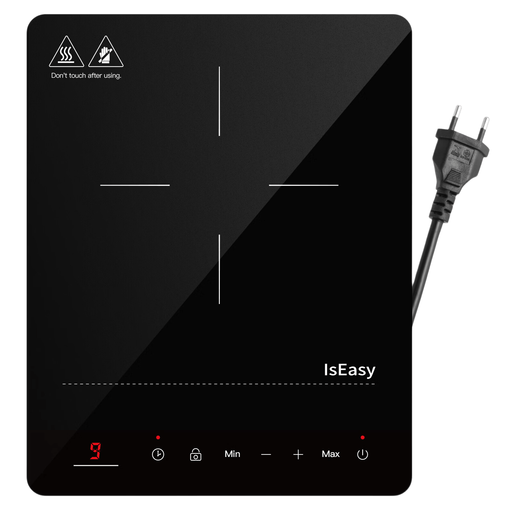 No image available
IsEasy induction hob, 2100 W, 28 cm
A good fit if your saucepan is induction-compatible and its diameter matches the model specifications.
Nine heat settings, Max/Min function and an 8-hour timer; the product description also mentions a child lock and overheat protection.
The description gives a suitable cookware diameter of 12–26 cm.
View at Joybuy
 No image available
Portable induction hob, 1000 W
A single induction cooking zone for small dishes, provided your cookware is induction-compatible.
Five heat settings and a control dial; the stated appliance dimensions are 21.5 × 21.5 × 4.7 cm.
View at Joybuy
 No image available
dtl06 infrared hob, 3500 W
A radiant-heated alternative if your saucepan isn’t induction-compatible.
The description lists a ceramic surface, four cooking modes, a control dial, touch controls and a timer. It says the hob is suitable for heat-resistant cookware made from various materials.
View at Joybuy
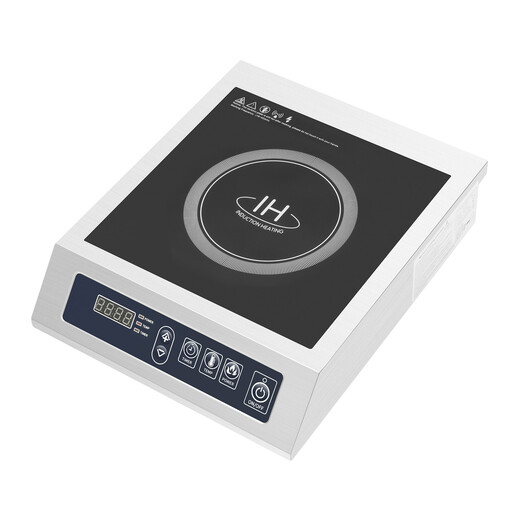 No image available
Tabletop induction hob, 3500 W, EU plug
For a compatible induction saucepan; the product description specifies a flat iron base.
Eleven power settings and a 24-hour timer. The stated power range is 400–3500 W; the cookware diameter is given as 4.72–11.81 inches.
View at Joybuy
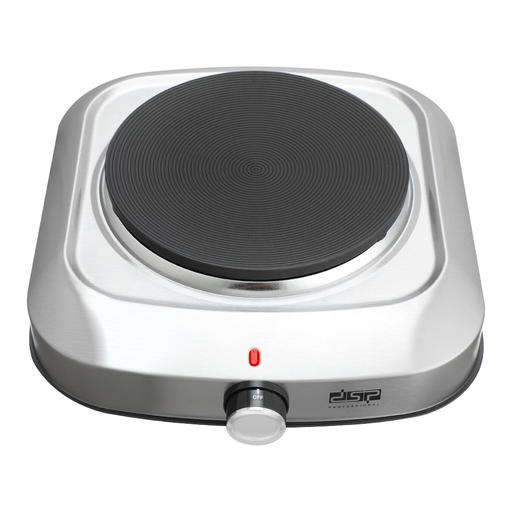 No image available
DSP KD4056 single hob, 1500 W
A portable single hob with a temperature control and several settings.
The heating plate has a stated diameter of 185 mm. The product description notes that there may be an odour and a little smoke the first time it’s used; follow the instructions on use and ventilation.
View at Joybuy
Frequently asked questions
Can I use my small saucepan on an induction hob?
Only if the base is induction-compatible and meets the size requirements for the specific hob. The manufacturer gives a range of 12–24 cm for the CASO Touch 2000; this range doesn’t apply to other models.
How should I set up and clean a portable hob?
Follow the setup and cleaning instructions for the specific model, and allow enough room for the saucepan and controls. Let hot surfaces cool before cleaning; automatic pan detection doesn’t make the surface safe to touch in all circumstances.
Are wattage or temperature settings a reliable way to compare electricity costs per portion?
No, those figures alone aren’t enough to calculate a reliable cost per portion. You’d also need to take into account cooking time, actual energy consumption and your electricity tariff. The German Environment Agency describes induction as the most efficient of the three heating technologies, while also noting the need for special cookware and the higher purchase cost.
What applies if there’s a fault: a guarantee or your statutory rights?
Your statutory rights for faulty goods are against the seller; a guarantee is an additional voluntary service with its own terms. Check the repair service and guarantee terms for the specific model rather than assuming they apply to the brand as a whole.
What legal requirements should I consider when buying a new electric hob in Germany?
Relevant safety requirements apply to mains-powered electrical equipment covered by the German regulations. For the specific product, check for the required CE marking, identifiable manufacturer details and German instructions with any necessary warnings. A CE marking isn’t an independent test certificate.


