For cooks with limited space
You need a single cooking zone that fits in your kitchen, along with your soup pot and a safe place to set it up.


If your soup pot has a suitable ferromagnetic base, a single induction hob is an obvious choice for bringing it to the boil and then simmering. For cookware that isn’t suitable for induction, consider a cast-iron hotplate or a radiant ceramic-glass hob. For every model, check the space it needs, the diameter of your pot’s base and the setup instructions.
You need a single cooking zone that fits in your kitchen, along with your soup pot and a safe place to set it up.
You want to check that your pot’s material and base diameter are compatible with the hob before you buy.
You’re looking for a portable hob to bring soup to the boil and then simmer it, and don’t want to judge how easy it is to control by wattage alone.
A good fit if: Your soup pot has a ferromagnetic base and is within the pot-size range supported by the model.
Consider: You’ll need compatible cookware, and induction models require an internal fan.
A good fit if: You want to keep using a pot that isn’t suitable for induction and prefer a simple thermostat.
Consider: The cooking zone stays hot after cooking. The Clatronic EKP 3582 also has specific setup requirements.
A good fit if: You want a ceramic-glass surface without needing an induction-compatible pot.
Consider: The Rommelsbacher CT 2200/E needs more space than some compact single hobs.
When you’re making pumpkin soup with limited worktop space, the key considerations are not just the size of the hob. You’ll also need to check that your pot is suitable, that you can control the heat while simmering, and what’s involved in using your chosen type of hob.
| What matters | What to check before buying | Who it matters to |
|---|---|---|
| Space and setup location | Compare the appliance’s width and depth, the position of the socket, and the model-specific clearances from furniture and flammable objects. | If worktop space is limited, you’ll need room not only for the hob but also for the pot and the required clearance. Around 36 % of consumers put safe, usable space first. |
| Whether your soup pot is suitable | For induction, check the pot’s material and base diameter against the model’s specifications. For a cast-iron hotplate, compare the pot’s base with the heating ring. | If you want to keep using your existing soup pot, its base and the size of the cooking zone matter. Around 29 % of consumers prioritise compatibility with their pot. |
| Heat control while cooking | Compare the power settings or thermostat, controls and, where applicable, timer. Check the instructions for low heat settings. | When you turn the heat down from bringing soup to the boil to simmering, having the right heat setting matters more than wattage alone. Around 21 % of consumers prioritise heat control. |
| Purchase price and ongoing costs | Check whether your existing pot is suitable and whether you’ll need another one. Don’t assume the wattage tells you how much electricity a cooking session will use. | If you’re weighing up the initial cost and any additional expense, take your cookware and how you’ll use the hob into account. Around 14 % of consumers focus on cost and effort. |
Ceramic glass describes the surface. The heating element underneath may use induction or radiant heat, and each type has different requirements for your pot.
Check the type of hob first, then check the specific model’s requirements for cookware.
The pot, the appliance’s depth and its setup requirements could mean that a hob won’t fit safely in the space, even if the width seems right.
Measure the usable worktop space and check the model-specific instructions on clearances from furniture and flammable objects before you buy.
The rated power alone doesn’t tell you how much electricity a complete cooking session will use. Hobs also don’t have an EU energy label like ovens do.
Choose a cooking technology and level of heat control that suit how you’ll use it, rather than relying on wattage or an oven energy label.
The CT 2020/IN and CT 2200/E models show how one brand offers two different cooking technologies.
The Touch 2000 is a single induction hob for compatible magnetic soup pots.
The KP 1071 is a portable single induction hob with a timer and pan detection.
The EKP 3582 is a straightforward single cast-iron hotplate with a rotary thermostat rather than induction.
The SIKP 2200 B1 is a portable single induction hob.
This selection includes portable single hobs for soup pots, including induction and infrared models.
 No image available
A single cooking zone with continuously adjustable temperature is a good choice if you want to control the heat when bringing soup to the boil and simmering it.
Heating ring: 18 cm; appliance dimensions: 25 × 28,5 × 8 cm; use a pot with a flat, stable base.
 No image available
This portable induction hob is worth considering if your soup pot has a suitable ferromagnetic base and you can make sure its dimensions fit your worktop.
Appliance dimensions: 35 × 28 × 4,4 cm; nine heat settings; 8-hour timer; cookware size range: 12–26 cm.
 No image available
This single induction cooking zone is an option if your pot is induction-compatible and you want to check that its compact footprint will fit in your available space.
Five heat settings; appliance dimensions: 21,5 × 21,5 × 4,7 cm.
 No image available
A radiant heating element is an option if you don’t want to be limited to induction-compatible pots. The product description also mentions a soup function.
Touch and rotary controls, plus a timer; the product name states that it’s suitable for heat-resistant pots.
 No image available
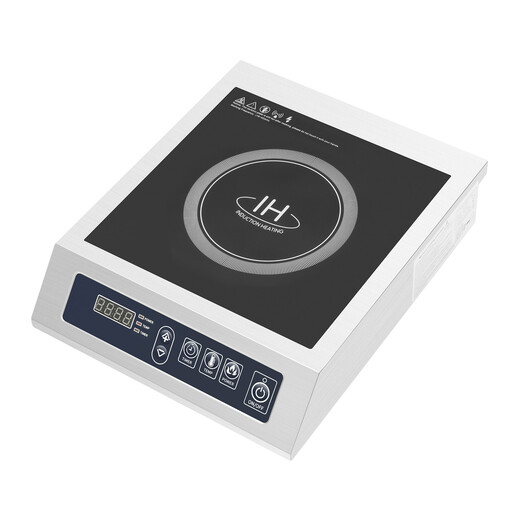
This induction hob is worth considering if your soup pot is induction-compatible and the power settings suit the way you want to use it.
Eleven power settings; 24-hour timer; stated cookware size range: 4,72–11,81 inches.
Check that the base of your pot is suitable for induction, then compare its diameter with the cooking zone of the specific model. The stated pot-size ranges can vary from one hob to another.
It depends on the setup instructions for the model. The Clatronic EKP 3582 instructions prohibit use under wall units because of the rising heat and steam.
Follow the cleaning instructions in the manual and let the cooking zone cool before putting the hob away. The Clatronic EKP 3582 manual specifically warns that the cooking zone reaches high temperatures after use.
No. The rated power alone doesn’t tell you how much electricity a complete cooking session will use; how you use the hob and for how long also matter. So don’t compare wattage directly with the cost of the electricity used to make soup.
You can’t assume it’s safe for everyone. The Federal Office for Radiation Protection points out that electric and magnetic fields can affect electronic implants. Ask your doctor for advice about your individual circumstances.