
Lieferung heute & morgen

Qualitätsgarantie

Willkommens-Angebote freischalten: KOSTENLOSE Lieferung | Bis zu 80 % RABATT | Kostenlose 30-Tage-JoyPlus-Testphase
App herunterladen
A portable single hot plate is a versatile solution for many situations: for a first apartment, as a handy camping hot plate on holiday, as a stopgap during a kitchen renovation, or as an extra cooking station in the office. But the market is crowded, and not every appliance lives up to its claims. Misleading power specifications and inferior materials often lead to frustration and wasted money.
As your Joybuy Product Recommendation Officer, I'm here to help you separate the wheat from the chaff. In this guide, I'll highlight the most common pitfalls and explain the key technical features to look for, enabling you to make a well-informed decision.
Many buyers focus on price, but in doing so, they overlook critical flaws that complicate everyday use. Pay close attention to these three points:
To avoid these issues, you should evaluate three core parameters before making a purchase. These factors define the performance, longevity, and safety of your future hot plate.
The power, specified in watts (W), is crucial for heating speed. While basic models often offer only 1000W, a 1500W hot plate is a good benchmark for rapid cooking. This allows you to bring water to a boil quickly and sear meat without any issues. Also, look for a continuously variable thermostat. This allows for precise heat control, which is just as important for simmering sauces as it is for high-heat searing. A simple on/off function is not sufficient here.
An electric hot plate is only as good as its materials. A stainless steel housing is not only robust and durable but also particularly easy to clean. The cooking surface itself is usually a solid cast-iron plate. This retains heat well and distributes it evenly. The diameter of the plate should match your usual cookware. A diameter of approx. 180 mm to 185 mm is a versatile standard that is suitable for most pots and pans.
If you're looking for a portable hot plate or travel hot plate, compact dimensions and low weight are important. Additional cool-touch handles that don't heat up during operation make transport much easier. Indispensable safety features include integrated overheat protection, which automatically shuts off the device at excessive temperatures, as well as high stability thanks to non-slip feet. An indicator light that shows whether the device is on should also be standard.
Based on the criteria above, we have identified a few models that are well-suited for different user profiles.
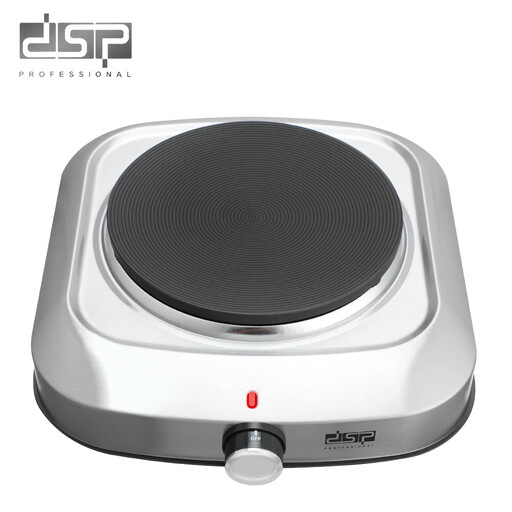
Why This Fits Their Persona: Ideal for students or as an auxiliary cooktop in the kitchen. This model focuses on the essentials: reliable performance and simple operation. It's a solid choice for everyday use without unnecessary frills.
The 1500W output ensures fast, stable heating, thus avoiding the pitfall of unstable performance. The stainless steel housing counteracts the problem of low-quality, hard-to-clean surfaces.
Powerful 1500W output for rapid cooking; durable and easy-to-clean stainless steel housing; variable temperature control.
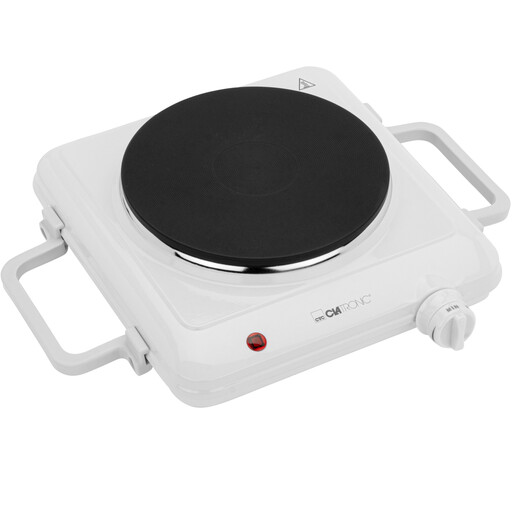
Why This Fits Their Persona: Perfect for campers, truck drivers, or for use in a garden shed. The attachable handles and robust construction make this an excellent camping hot plate.
This model directly addresses the safety trap. The overheat protection and cool-touch handles minimise risks during mobile use. Its high stability prevents it from tipping over.
Includes attachable cool-touch handles for safe transport; overheat protection and high stability; heat-resistant coating.
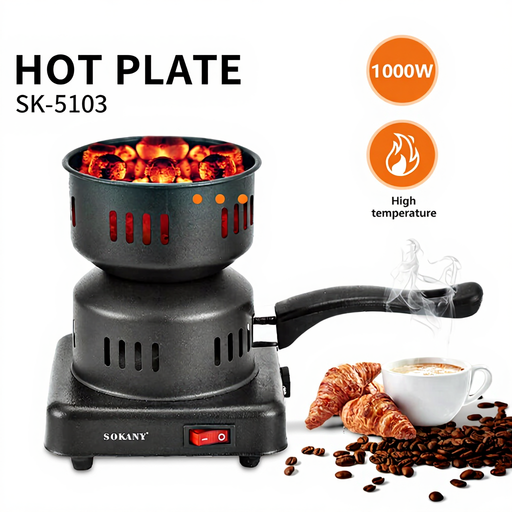
Why This Fits Their Persona: The perfect mini hot plate for the office or a student dorm. This all-in-one device is ideal for preparing soups, pasta, or stews right at your desk, with no extra cookware needed.
As a self-contained system with an integrated pot, it bypasses problems with incompatible cookware. The non-stick coating inside solves the difficult-to-clean trap, making washing up straightforward.
Multifunctional design as both a cooking pot and a heater; compact build and easy to transport; simple cleaning thanks to a non-stick coating.
We have compiled a complete, up-to-date list of products that fully meet these strict selection criteria and German safety standards.
Power consumption depends on the wattage and duration of use. A 1500W hot plate (1.5 kilowatts) uses 1.5 kilowatt-hours (kWh) when operated at the highest setting for one hour. Based on an average electricity price of around 35 cents per kWh, the cost for one hour of cooking would be approximately 53 cents. Compared to a full-sized stove, this is often more energy-efficient, especially for small meals.
For optimal heat transfer, the base of the pot or pan should be as flat as possible. A warped base leads to energy loss and uneven cooking. The diameter of the cookware should also closely match the diameter of the hot plate to use heat efficiently.
Before any cleaning, unplug the appliance and let it cool down completely. The housing, especially if it's stainless steel, can be wiped with a damp cloth and mild detergent. The cast-iron plate should not be treated with abrasive scouring agents. After cleaning, it's important to dry the plate thoroughly to prevent rust. For stubborn stains, a special hot plate cleaner can be used.