
Lieferung heute & morgen

Qualitätsgarantie

Willkommens-Angebote freischalten: KOSTENLOSE Lieferung | Bis zu 80 % RABATT | Kostenlose 30-Tage-JoyPlus-Testphase
App herunterladen
A storage bench combines a place to sit with handy storage, but choosing the right one takes care. Many models look similar in product photos, yet can differ considerably in their dimensions, lid mechanism, weight capacity and internal storage space. If you focus only on the colour or upholstery, you could end up with a bench that’s too deep for your hallway, difficult to open or unsuitable for the way you plan to use it.
A high weight figure often refers to the static weight capacity. This means the bench is standing on a firm, level surface and the weight is distributed evenly. Jumping on it, sitting down heavily or placing weight unevenly may not be covered. The lid should also be fully closed and correctly in place before you use the bench as a seat.
A storage bench that’s 110 cm wide may look roomy from the outside, but supports, internal walls and padding all reduce the usable space. Check whether bedding, shoes or toys will actually fit inside. In a hallway, the depth and the distance from the door are also important.
A folding bench is easy to store away and handy for occasional use. For everyday use, however, look for sturdy MDF panels, reinforced corners, durable hinges and a stable base. A low price alone doesn’t tell you whether a bench is suitable for regular use.
Measure the available space, including room to move around, before you buy. Compact models work well in an entrance hall, where they won’t get in the way of opening doors. A hallway bench should also be at a comfortable height for putting on and taking off shoes. In the bedroom, a longer bench can sit at the foot of the bed, as long as its depth and height suit the bed frame.
Common sizes include:
Check the maximum static weight capacity stated by the retailer. Reinforced MDF panels, metal corner protectors or solid wood legs can help make a bench more stable. An upholstered storage bench with a firm lid can provide an extra seat, but always follow the safety instructions for the product.
Safety or soft-close hinges are worth considering in homes with children or older people. Depending on the design, they can hold the lid in position or slow it as it closes, helping to reduce the risk of it slamming shut.
Linen-look fabric, velvet, faux leather and other upholstery materials vary in feel and care requirements. Wipe-clean surfaces can be useful in a hallway, while upholstered designs are often preferred in bedrooms. Some footstools are available with removable or washable covers.
Internal dividers help keep smaller items organised. For larger blankets, a single open compartment is more practical. Also check whether the lid rests loosely on top, is hinged or can be removed completely.
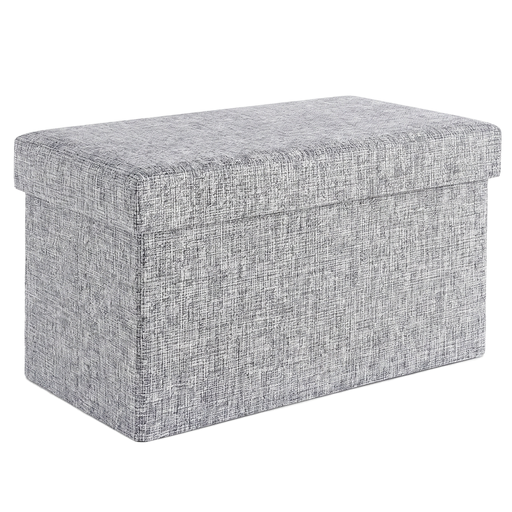
Why it suits this need: This compact model provides a seat and 25 litres of stated storage space, and folds flat when you’re not using it.
The stated dimensions and storage capacity make it easier to plan for a small hallway. Its foldable design means you won’t be left with a bulky piece of furniture when it’s not in use.
Linen-look finish, rectangular shape and fold-flat storage when not in use.
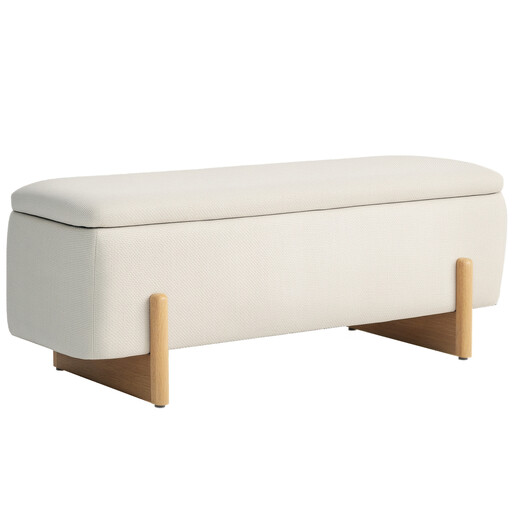
Why it suits this need: This upholstered bench has a seat height of 44.5 cm, storage space beneath the seat and safety fittings on the lid.
According to the product description, the safety fittings prevent the lid from slamming shut unexpectedly. The stated weight capacity is 150 kg.
Wooden legs, upholstered seat, soft-close safety fittings and easy assembly.
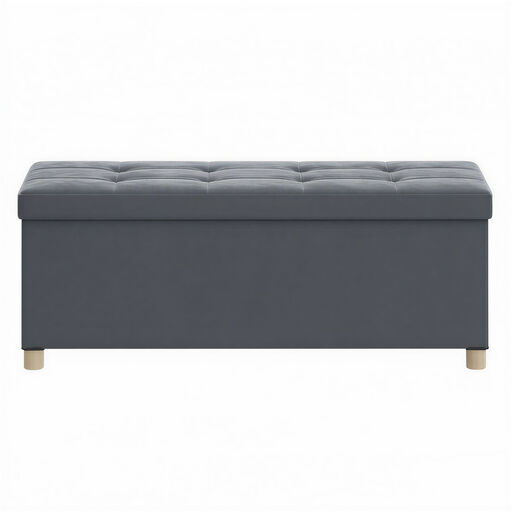
Why it suits this need: This long bench works well in a bedroom, living room or hallway when you regularly need to store blankets, clothes, toys or cushions.
The product details specify an internal capacity of 112 litres, reinforced 9 mm MDF panels and a foldable design. This makes it easier to plan how much you can store and where to put it.
112 litres of storage, stated weight capacity of up to 300 kg, padded seat and solid wood legs.
We’ve put together a complete, regularly updated list of products that meet these strict selection criteria and fully comply with the safety regulations in force in the EU.
The terms overlap, but each describes a slightly different type of furniture:
A longer upholstered bench at the foot of the bed is a practical choice for the bedroom. In a hallway, a narrower shoe bench with an easy-clean surface may be more useful. What matters most is whether you’ll use the furniture regularly as a seat or mainly for storage.
Many models are around the same height as a standard chair. A seat height of about 40 to 45 cm can make it easier to put on your shoes. Before buying, consider your height, shoe cabinet and existing furniture.
Its lifespan depends on the construction, how it’s used and how well it’s cared for. Regularly exceeding the weight limit, jumping on the lid or storing the bench somewhere damp can put strain on the materials and hinges. Placing it on a level surface, following the stated weight limit and opening it carefully all help you use it as intended.
That depends on the model. Check the stated static weight capacity, panel thickness, lid construction and instructions for use. A foldable bench may be suitable for occasional seating. If you plan to use it every day, check that its construction is stable and that it has suitable hinges.