
Lieferung heute & morgen

Qualitätsgarantie

Willkommens-Angebote freischalten: KOSTENLOSE Lieferung | Bis zu 80 % RABATT | Kostenlose 30-Tage-JoyPlus-Testphase
App herunterladen
A bean bag for adults can provide flexible seating in your living room, bedroom, home office or reading nook. Options range from classic XXL bean bags to bean bag sofas with backrests, armrests or footstools. Differences in filling, cover and dimensions can have a direct impact on how practical a bean bag is for everyday use and how much care it needs.
The overall dimensions alone don’t tell you how much space there is to sit. A model with a pronounced backrest or wide sides may have a smaller seating area despite its large dimensions. So check the seat height, seat depth and seat width too.
Compact models around 90 to 100 cm wide are often easier to place in a room if they’re for one adult. A large bean bag or bean bag sofa that’s 120 cm wide or more needs enough floor space and room to move around it.
A bean bag with a foam filling may contain foam cubes, foam flakes or a single foam core. These options differ in how much you sink into them, how well they hold their shape and how easily they can be plumped up.
Look for a specific description of the filling. Details such as foam flakes, memory foam cubes or a high-resilience foam core are more informative than a general comfort claim. They don’t, however, indicate any therapeutic or medical benefit.
A teddy fleece or faux fur cover feels soft, but depending on its colour and how it’s used, dirt may show up more easily. Corduroy and chenille give a bean bag in the living room or gaming room a textured finish. For families with children, a removable, machine-washable cover is particularly practical.
Also check whether the cover has a zip, whether the inner bag is protected separately and whether the base has an anti-slip finish.
Measure the space you have in mind, including doorways and walkways. If you’re choosing a bean bag with a backrest, leave some extra room behind it so the backrest isn’t pushed against the wall.
Important details include:
A model designed for adults isn’t automatically suitable for more than one person. If two adults need to sit on it, a wide bean bag sofa with a clearly stated weight limit is a better choice than a round, single-seat model.
A classic, flexible bean bag adapts more to your sitting position. A bean bag sofa with a backrest and armrests, on the other hand, keeps a more defined armchair or sofa shape. A shaped backrest can be more practical if you’ll be reading, watching TV or gaming for longer periods.
An ergonomic bean bag isn’t a standardised product category. What matters are the features actually listed, such as a reclined backrest, a specific seat height or a shape-retaining foam core. If you work at a desk regularly, don’t assume a bean bag can replace an adjustable office chair.
Corduroy, chenille, teddy fleece and flannel covers all feel and care for differently. If you’re considering a light-coloured or heavily textured material, check the cleaning instructions carefully. Many models are delivered vacuum-compressed. Depending on the product, they may need 48 to 72 hours, or sometimes longer, to regain their intended shape after unpacking. Airing the bean bag, gently shaking it and loosening the filling by hand can help.
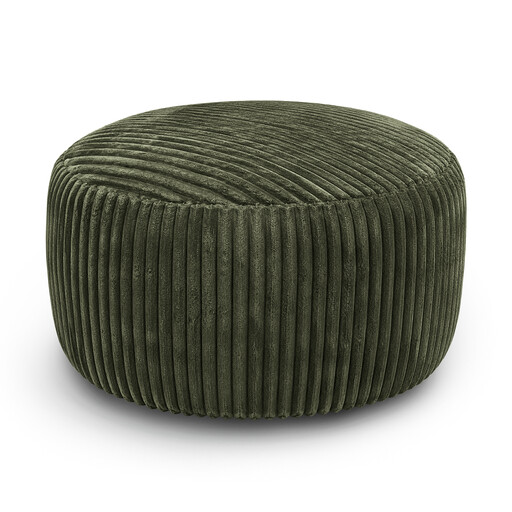
Why this product suits this type of buyer: At 100 × 100 × 50 cm, it’s a compact option for a living room, bedroom or reading nook. The green corduroy cover adds a distinctive touch of texture.
The product description specifies memory foam cubes as the filling and notes that it’s delivered vacuum-compressed.
Corduroy cover, concealed zip and rounded seat shape; allow up to 72 hours for it to expand after unpacking.
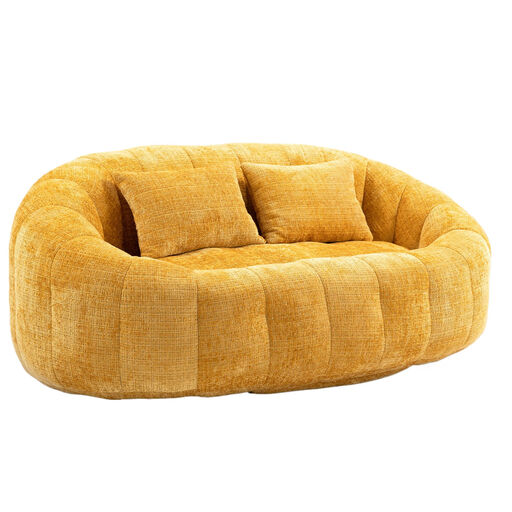
Why this product suits this type of buyer: This 150 cm-wide two-seater is ideal for watching TV together or stretching out in the living room.
The product specifications clearly state the width, seat height, seat depth and maximum weight capacity of 150 kg.
High backrest, padded armrests, high-density foam and a yellow chenille cover; no assembly required.
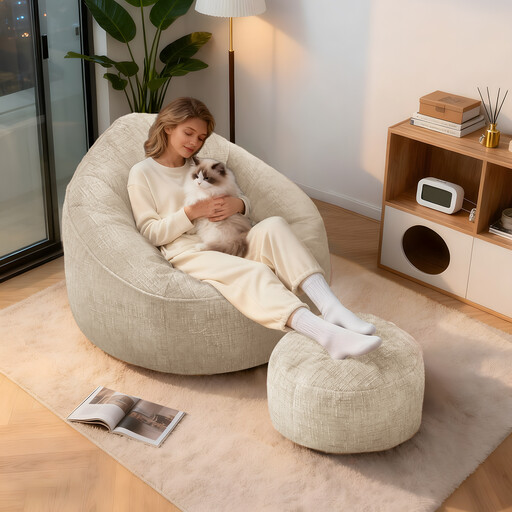
Why this product suits this type of buyer: A bean bag with a footstool for gaming, watching TV or reading. The product specifications give dimensions of 97 × 93 × 77 cm for the seat and 50 × 50 × 35 cm for the footrest.
This version specifies the filling material, dimensions and static weight capacity of 135 kg, rather than relying on general comfort claims.
Granulated memory foam filling, chenille cover and a separate footstool; a good choice if you like to put your feet up while sitting.
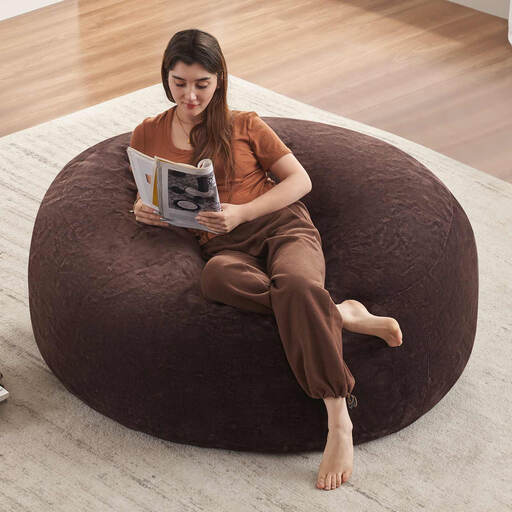
Why this product suits this type of buyer: Measuring 130 × 120 × 60 cm, this brown bean bag offers plenty of room. The product description says the removable cover is machine washable.
The care instructions for the outer cover are clearly stated, making everyday spills and dirt easier to deal with.
Generous dimensions, a soft teddy fleece surface and foam filling; the cover can be removed using the zip.
Depending on the model, allow 48 to 72 hours. Put the bean bag in a well-ventilated room and gently loosen the filling. Always follow the instructions on the relevant product page.
Its lifespan depends on the filling, how heavily it’s used, the cover and how it’s cared for. A removable cover makes cleaning easier. With frequently used models, check regularly that the seams, zip and base are still in good condition. It isn’t possible to give a reliable general lifespan without knowing how the bean bag will be used and what it’s made from.
A traditional bean bag doesn’t use electricity. Ongoing costs may include cleaning, replacement covers or topping up or replacing the filling. An inflatable model also needs a pump; the foam models described here don’t require a regular power supply.