
Lieferung heute & morgen

Qualitätsgarantie

Willkommens-Angebote freischalten: KOSTENLOSE Lieferung | Bis zu 80 % RABATT | Kostenlose 30-Tage-JoyPlus-Testphase
App herunterladen
A six-bottle case of red wine is ideal for keeping in stock, entertaining, serving with meals or giving as a gift. However, a larger pack is not automatically the right choice. Taste, bottle size, storage and occasion should all match before you buy. Anyone who focuses only on familiar names, eye-catching labels or a low price per bottle could end up with six bottles in the cupboard that rarely get opened.
A case of six bottles may look attractive at first glance. What really matters, however, is whether the wine suits your eating habits. A full-bodied Cabernet Sauvignon can pair well with beef, game or mature cheese, but it is not the right choice for every light evening. For more flexible use, fruit-forward Merlot wines or well-balanced blends are often more practical.
Dry red wine contains comparatively little residual sugar and often tastes more savoury or structured. Medium-dry red wine can seem softer and more approachable. The description should not be judged solely on the basis of marketing claims. Also check the grape variety, alcohol content, origin and specific tasting notes.
A red wine from Europe can offer a wide range of styles: French red wine from Languedoc, Italian red wine from Trentino or Abruzzo, and Spanish red wine from Catalonia differ in terms of grape varieties, maturation and serving temperature. The case size also matters: a six-bottle case with 0.75-litre bottles contains 4.5 litres, while six 1-litre bottles contain 6 litres in total.
The alcohol content of the wines featured here, for example, ranges between 11 and 15 % vol. A higher figure does not automatically mean a more suitable wine. Check whether the wine is right for the planned occasion. Many dry red wines are served at 16 to 18 °C. According to the product information, a full-bodied La Clape wine can be served at 16 to 20 °C, while a medium-dry red sparkling wine such as Freixenet Mederano Tinto is served at 6 to 8 °C.
Wine often contains sulphur dioxide and sulphites. These must be identified in the product information. If you are looking for organic red wine, check for a specific control number. For example, FR-BIO-01 is given for Gérard Bertrand Change. General sustainability terms without a control reference are less meaningful when making a purchase decision.
Store unopened bottles in a cool, dry place, protected from direct light wherever possible. Once opened, red wine should be drunk within a few days, depending on the product and storage conditions. Wines sealed with natural cork are best stored horizontally; bottles with screw caps can be stored upright.
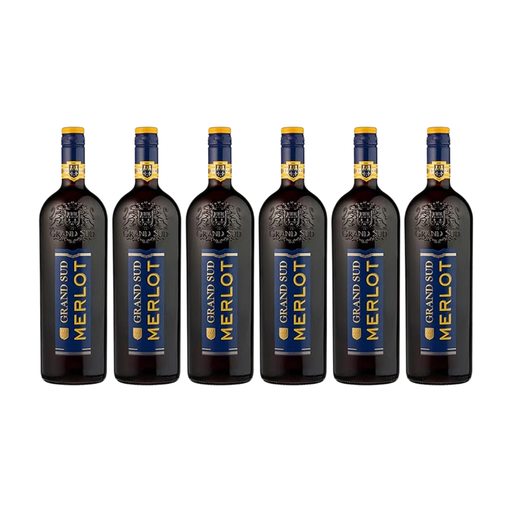
Why this product suits this profile: The six-bottle case with 1-litre bottles offers a total volume of 6 litres and is suitable for regular meals or larger gatherings. This dry Merlot is described as having red berry and blackcurrant notes with soft tannins.
The clear information on grape variety, origin, volume and serving temperature makes it easier to assess the wine before buying.
6 x 1 litre, 13 % vol., dry style, French origin and stated food pairings.
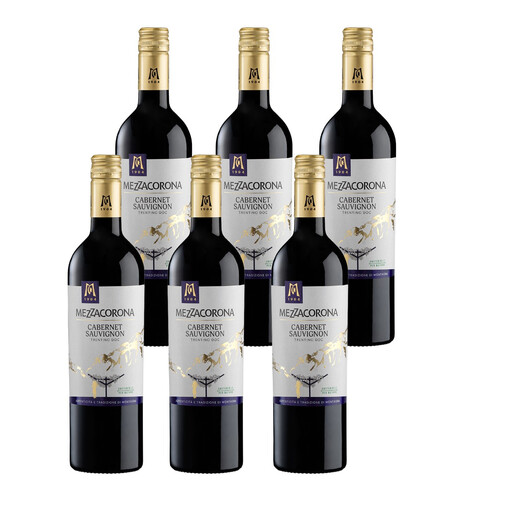
Why this product suits this profile: The DOC designation identifies Trentino in Italy as the wine’s origin. This dry Cabernet Sauvignon is described as having notes of pepper, nutmeg, mint and ripe red fruit, and is served at 16 to 18 °C.
The grape variety, protected designation of origin, alcohol content and food recommendations are all clearly stated.
6 x 0.75 litres, 13 % vol., dry style and recommendations for red meat, game and strong cheese.
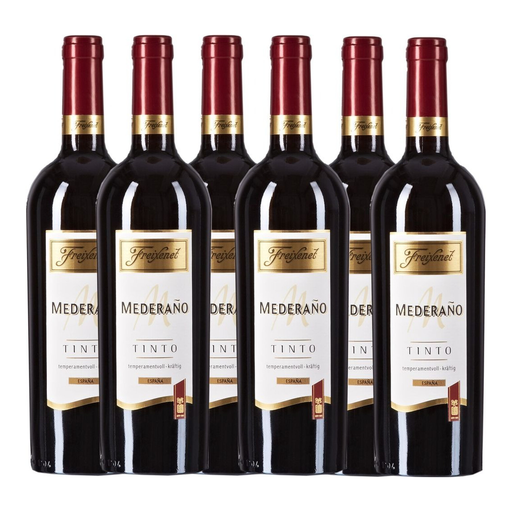
Why this product suits this profile: This medium-dry red sparkling wine from Spain is aimed at buyers looking for a less astringent style to enjoy with tapas, grilled dishes, pasta or desserts.
The product information explicitly states “medium-dry”, 11 % vol. and recommends chilling to 6 to 8 °C.
6 x 0.75 litres, Spanish origin, sparkling wine style and specific nutritional information per 100 ml.
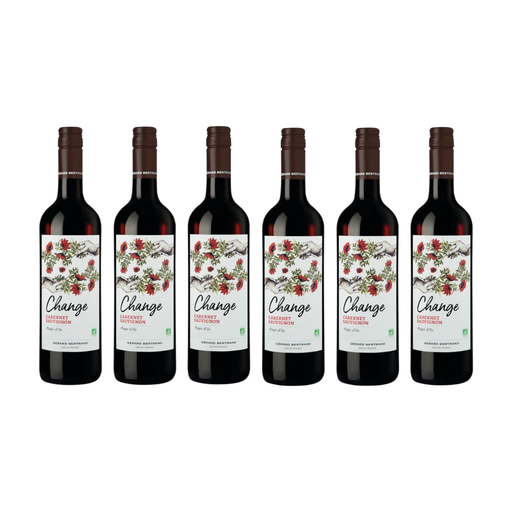
Why this product suits this profile: The product details list an organic control number, Cabernet Sauvignon, 13.5 % vol. and a case containing six 0.75-litre bottles.
The organic claim is backed up by the stated control number FR-BIO-01, making it traceable.
Organic control number FR-BIO-01, six 0.75-litre bottles and screw cap.
A wine set does not necessarily have to include several glasses and a decanter. To begin with, suitable wine glasses with a sufficiently large bowl are all you need. The Enric’eau glass holds 28 cl and is dishwasher-safe. The Lina glass offers a capacity of 41 cl, with plenty of room for swirling. As a rule, fill red wine glasses only about one-third full so that the aromas can develop more effectively.
A wine decanter with a capacity of 1,250 ml can be useful for fuller-bodied wines. Look for a stable base, a secure grip and an opening that makes pouring easier. Glass is fragile and should not be exposed to sudden changes in temperature.
We have put together a complete, regularly updated list of products that fully meet these strict selection criteria and the safety regulations applicable in the EU.
This depends on the grape variety, alcohol content, amount left in the bottle and storage conditions. As a practical guide, consume opened bottles within a few days and seal them in a cool place with as little air as possible. The relevant product information may provide different guidance.
A six-bottle pack of red wine usually contains six bottles. With 0.75-litre bottles, this amounts to 4.5 litres. A case containing six 1-litre bottles, on the other hand, holds 6 litres. This affects both the amount you have in stock and the price per litre.
Dry, structured varieties such as Cabernet Sauvignon often pair well with beef, lamb and grilled dishes. Merlot can be enjoyed with poultry, white meat and many types of cheese. For tapas or sweeter dishes, a medium-dry red wine can be a suitable alternative. Personal preference and the specific food pairing remain decisive.