
Lieferung heute & morgen

Qualitätsgarantie

Willkommens-Angebote freischalten: KOSTENLOSE Lieferung | Bis zu 80 % RABATT | Kostenlose 30-Tage-JoyPlus-Testphase
App herunterladen
When choosing Size 5 nappies, the weight guide isn’t the only thing that determines whether you’re making the right choice. For babies and toddlers weighing around 11 to 17 kg, body shape, activity levels, how long the nappy will be worn and how often it needs changing all matter too. A nappy may look right on paper but still dig in around the legs, leak overnight or slip out of place when your little one crawls.
That’s why it’s worth looking closely at the design before you buy, rather than relying on bold marketing claims. The criteria below can help you compare baby nappies for 11–16 kg or nappies for 11–17 kg more objectively.
Weight ranges are a guide. Two children of the same weight may have different thigh widths, tummy measurements or body lengths. If a nappy is too loose, gaps can form around the back and legs. If it’s too tight, it may cause pressure marks and chafing.
After putting the nappy on, check the following:
Claims such as “up to 12 hours” or “up to 100% leak protection” describe the manufacturer’s claims under certain conditions. They aren’t a guarantee for every sleeping position, amount of liquid or length of wear. For longer nights and active little ones in particular, put on a fresh nappy before bedtime.
An absorbent core, leak guards around the legs and a back pocket can help reduce the risk of leaks. They don’t replace regular nappy changes, though. Change your baby’s nappy promptly after a poo.
A value pack may look like a bargain at first glance. For a fair comparison, divide the pack price by the number of nappies inside. Also consider whether the nappy needs changing frequently in day-to-day use, or whether some will go unused because the fit isn’t right.
If you’re buying value packs of nappies, make sure you have enough storage space too. Store unopened packs somewhere dry and clean, away from direct heat.
Traditional nappies have side fasteners and can be adjusted around the tummy. Size 5 nappy pants, on the other hand, pull on over the legs like underwear. They’re often a good choice for active children who won’t lie still during a nappy change.
For nappy pants, look for a flexible 360-degree waistband and stretchy leg cuffs. For traditional nappies, check for flexible side panels and an easily adjustable waistband.
A multi-layer absorbent core soaks up liquid and locks it inside. Leak guards around the legs help protect against leaks at the sides. An extra pocket at the back can be useful when your baby is lying on their back, but it can’t prevent every leak.
For overnight use, absorbent nappies in the right weight range are a sensible choice. Check whether the specific product is designed for 11–16 kg or 11–17 kg. A bigger nappy isn’t automatically more absorbent if it doesn’t fit snugly around the legs.
According to the manufacturer, several Pampers products are dermatologically tested, certified to OEKO-TEX STANDARD 100 and contain 0% intentionally added EU perfume allergens, in line with the EU cosmetics regulation cited. These claims apply to the individual product description, so check them against the packaging.
A certification or test can’t replace keeping an eye on your child’s individual skin reaction. If you notice redness, itching or ongoing irritation, stop using the product and seek medical advice if needed.
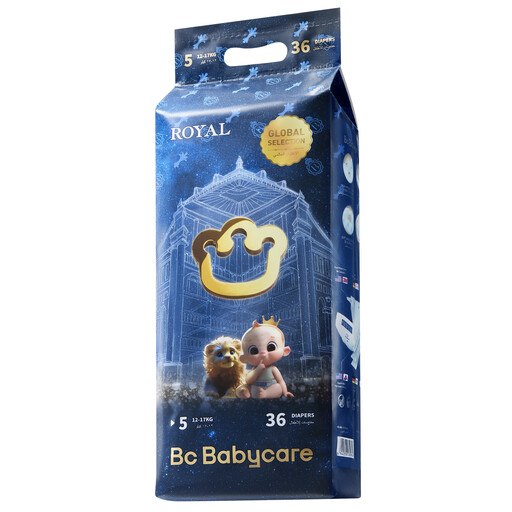
Why this product is a good match: The stated range of 12 to 17 kg covers much of the 11–17 kg nappy range. With 36 nappies in the pack, you can try them out in everyday use and check the fit and how well your baby’s skin tolerates them.
The smaller pack reduces the risk of having lots of unused nappies if the fit isn’t right.
According to the product description: 360-degree leak protection, a wetness indicator and an absorbent core with superabsorbent material.
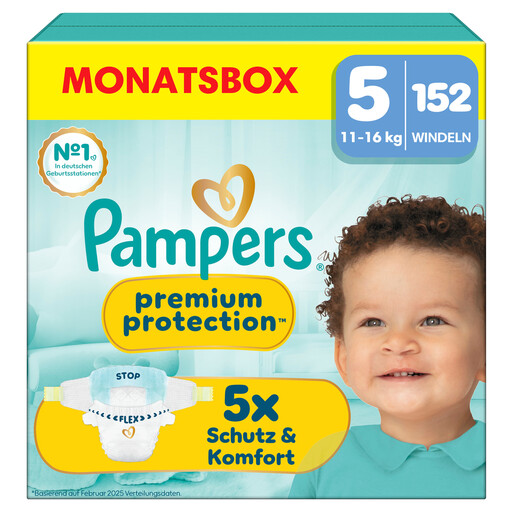
Why this product is a good match: This traditional nappy is designed for families who prefer a clearly stated weight range, soft materials and a wetness indicator.
The stated weight range and information about the leg cuffs make it easier to choose than a vague “one-size-fits-all” option.
According to the manufacturer: over 1,000 pores in the inner layer, a Stop-&-Protect pocket, a wetness indicator and OEKO-TEX STANDARD 100 certification.
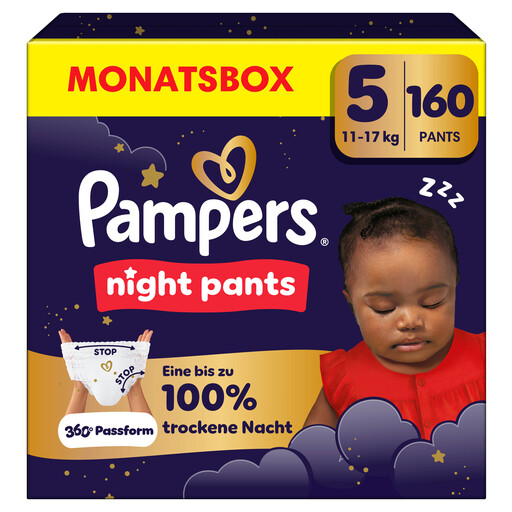
Why this product is a good match: These nappy pants are designed for active children and longer periods of rest. Pull them on over the legs, then open the side seams when it’s time for a change.
The 360-degree waistband and leak guards at the sides help tackle the gaps that can form when your child twists and moves.
According to the manufacturer: absorbent core, Stop-&-Protect pocket, disposal tape and a weight range of 11 to 17 kg.
If you prefer traditional Pampers Size 5 nappies, you can also compare Pampers Baby-Dry Size 5, with 174 nappies and a stated weight range of 11 to 16 kg. According to the manufacturer, it has a fast-absorbing core, double leg cuffs and a wetness indicator.
We’ve put together a complete, regularly updated list of products that meet these strict selection criteria and fully comply with the safety regulations in force in the EU.
Depending on the brand, Size 5 is often suitable for babies weighing around 11 to 16 kg or 11 to 17 kg. Fit matters too. If leaks keep happening or you notice visible pressure marks, it may be worth trying a different size or model.
How long a nappy can be worn depends on the amount of liquid, how much your child moves and whether they’ve done a poo. Check it regularly during the day, and change it if it’s wet or dirty. Night nappies may be designed for longer periods of rest, but this shouldn’t be taken as a guarantee that you won’t need to change them.
The only fair way to compare is by price per nappy. Nappy pants can be more practical for active children, but the price per nappy varies depending on the offer. Work out the cost per nappy and consider how many changes you actually need each day.