
Lieferung heute & morgen

Qualitätsgarantie

Willkommens-Angebote freischalten: KOSTENLOSE Lieferung | Bis zu 80 % RABATT | Kostenlose 30-Tage-JoyPlus-Testphase
App herunterladen
Choosing a helmet, whether for skateboarding, inline skating, or cycling, can be a challenge for many. Safety is paramount, but fit and design are also crucial to ensure the helmet is worn willingly—especially by children. This guide serves to provide orientation and presents objective criteria to help you find a suitable skate helmet for yourself or your children. We will highlight key features like safety certifications, fit, and materials, and present a selection of models for various needs.
To make an informed decision, several technical aspects are important. The following points will help you better compare the features of different helmets.
The most important feature of a protective helmet is its certification. The CE EN 1078 standard is a European benchmark that specifies the requirements and testing methods for helmets for cyclists and for users of skateboards and roller skates. A helmet certified under this standard has been tested for its shock-absorption properties, construction, field of vision, and the features of its retention system (chin strap). This means a CE EN 1078 certified helmet can generally be used as a bike helmet, inline skate helmet, and skateboard helmet, offering tested protection.
A helmet can only protect effectively if it fits correctly. It should sit level on the head and not shift during movement. To determine the right size, measure the circumference of the head at its widest point, about one centimetre above the eyebrows and ears. Many modern helmets, both kids' protective helmets and helmets for adults, are adjustable helmets. They feature a dial-fit system at the back of the head, which allows the inner ring to be precisely adjusted to the head's circumference. This ensures a secure and comfortable fit.
Skate helmets typically consist of a hard outer shell and a shock-absorbing inner liner.
Here you will find a selection of helmets that cover different needs and age groups. The descriptions are based on manufacturer specifications.
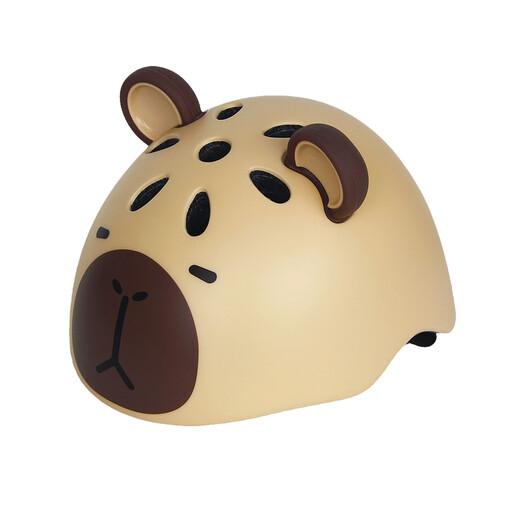
Why it stands out: This kids' helmet combines safety with an appealing animal design. The in-mould construction merges a lightweight PC outer shell with a shock-absorbing EPS inner liner. The design, featuring a capybara print and soft 3D ears, makes wearing a helmet fun for children.
Advantages:
Who is it for? This helmet is an excellent choice for parents looking for a safe and visually appealing kids' protective helmet for activities like cycling, skating, or scootering.

Why it stands out: This model is distinguished by its robust out-mould construction with a colourful PVC outer shell. It offers reliable protection for various roller sports and is also equipped with a practical adjustment system.
Advantages:
Who is it for? This helmet is suitable for children and teenagers who need a functional and colourful helmet for cycling or inline skating and value a sturdy construction.

Why it stands out: This helmet for adults and teens is designed as a versatile multi-sport helmet. It features a reinforced ABS shell and a thickened, shock-absorbing EPS core. A special feature is the two removable inner liners, which allow for adjustment to different head sizes and are easy to wash.
Advantages:
Who is it for? This helmet is a fitting option for teens and adults from a recommended age of 5 years and up who are looking for a durable and adaptable helmet for various sports.
Haven't found the right model yet, or would you like to compare more designs and sizes? Discover a wider selection in our Skate Helmet category and find the helmet that meets your needs.
1. Can you use a skate helmet as a bike helmet? Yes, if the helmet meets the CE EN 1078 standard. This certification applies to helmets for both cyclists and users of skateboards and roller skates. Always check the product description for this information.
2. How do I measure the correct helmet size for my child? Use a flexible measuring tape and wrap it around the widest part of your child's head, about a finger's width above the eyebrows and ears. The measured circumference in centimetres corresponds to the required helmet size. An adjustable helmet offers additional room for a precise fit.
3. When should a skate helmet be replaced? A helmet should be replaced after any significant impact, even if there is no visible damage. The inner EPS foam may have been compressed by the impact and might not provide adequate protection in a subsequent fall. Replacement is also necessary if there are visible cracks or signs of material fatigue.