
Lieferung heute & morgen

Qualitätsgarantie

Willkommens-Angebote freischalten: KOSTENLOSE Lieferung | Bis zu 80 % RABATT | Kostenlose 30-Tage-JoyPlus-Testphase
App herunterladen
Dry, tight or sensitive-feeling skin does not automatically need as many skincare products as possible. With skin barrier care, the focus is instead on adding moisture, reducing water loss from the skin’s surface and avoiding unnecessary irritation. So, if you want to buy a barrier-repair cream, serum or face cream for dry skin, you should not focus solely on terms such as “Repair”, “Glow” or “deep hydration”.
A hyaluronic acid serum can add moisture to the skin. However, without a cream or lotion applied afterwards, the moisturising effect may quickly fade depending on your skin’s condition and the surrounding environment. For a balanced routine, two steps are therefore useful: a lightweight hydrating product followed by a cream containing nourishing or barrier-supporting ingredients.
The description “for sensitive skin” does not automatically indicate a standardised formulation. Fragrances, essential oils, alcohol or certain acids may be problematic for some people. Checking the full INCI list is therefore more important than relying on the front of the packaging. If your skin is irritated or damaged, you should also avoid applying products to open areas.
A very rich cream can feel pleasant on dry skin, but may feel heavy on combination or blemish-prone skin. When choosing a product, consider its texture, how it feels on your skin and when you plan to use it: a lotion is often better under sun protection or make-up, while a cream may offer greater comfort in the evening.
Look for clearly identified ingredients such as ceramides, cholesterol, lecithin, panthenol, glycerin, squalane or hyaluronic acid. A ceramide cream may be particularly appealing if you want to keep your routine focused on straightforward support for the skin’s surface. However, the number of active ingredients alone says nothing about how well a product will suit you.
Glycerin and hyaluronic acid are moisture-binding ingredients. Silicones, oils, fatty acids or certain lipids can also help improve the skin feel and leave the surface feeling smoother. With intensive moisturising care, combining different groups of ingredients is often more practical than focusing on the concentration of just one ingredient.
50 ml of cream and 100 ml of serum cannot be compared directly. What matters is how much product is needed per application and whether it is used in the morning, evening or twice a day. A serum is generally applied after cleansing and any lighter skincare steps. The cream usually follows as the final or penultimate step. For products containing acids or fragrances, it is advisable to test them on a small area first.
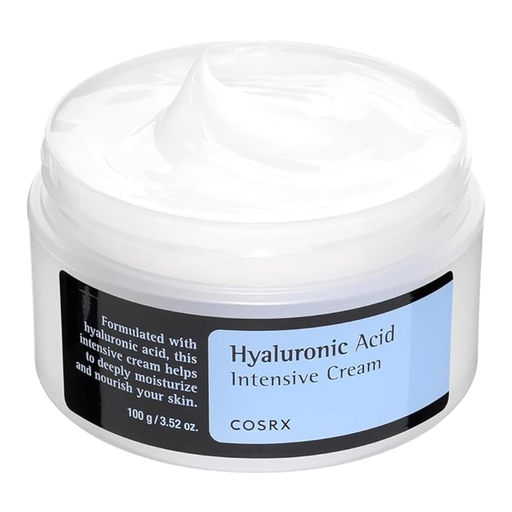
Why this product suits the profile: This cream is aimed at people looking for uncomplicated moisturising care for dry skin who want to keep their routine to a single cream product.
The emulsion-like texture is described as lightweight, making it an alternative to very heavy creams.
Sea buckthorn water and moisture-binding ingredients; 50 ml cream for daily facial care.

Why this product suits the profile: Suitable for users of Korean skincare who want to combine a cream containing ceramides, cholesterol and several forms of hyaluronic acid in their routine.
The formula does not rely solely on a humectant. Instead, it combines hyaluronic acid with ceramides and other lipid ingredients.
Seven listed forms of hyaluronic acid; ceramides NP, AS, AP, NG, NS and EOP in the INCI list.
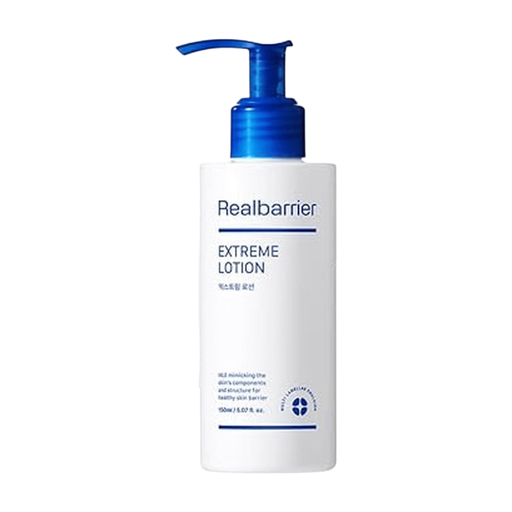
Why this product suits the profile: The larger 150 ml size is ideal for people who want to use a lotion on their face and neck in the morning and evening.
The lightweight lotion texture is an alternative to thicker creams when sticky residue is bothersome in everyday use.
150 ml contents; according to the product details, a triple-ceramide complex, panthenol and a mildly acidic pH.
If redness, itching or burning occurs, stop using the product. If symptoms persist, seek medical advice. Cosmetic skin barrier care is not a substitute for treating skin conditions.
We have put together a complete, regularly updated list of products that fully meet these strict selection criteria and the safety regulations applicable in the EU.
A combination of a gentle serum and a low-irritant cream may be beneficial. Pay particular attention to fragrances, essential oils and alcohol in the INCI list. Ceramides, glycerin, panthenol and hyaluronic acid are common ingredients in these types of products, but on their own they do not indicate how well a product will suit you.
Many creams are intended for daily use in the morning and evening. With combination skin, applying a thinner layer or using the cream only on dry areas may feel more comfortable. Always follow the instructions on the packaging and pay attention to how your skin feels after application.
A serum is usually formulated to be lighter and primarily provides moisture-binding or conditioning ingredients. Whether it is sufficient on its own depends on your skin type, the time of year and the indoor climate. For dry skin, applying a final cream is often the more practical way to complete your routine.