
Lieferung heute & morgen

Qualitätsgarantie

Willkommens-Angebote freischalten: KOSTENLOSE Lieferung | Bis zu 80 % RABATT | Kostenlose 30-Tage-JoyPlus-Testphase
App herunterladen
A skin-tone marker set should offer more than a collection of similar beige and brown shades. Whether you are creating portraits, figures, fashion illustrations or calligraphy, you need graduated colours, controllable tips and ink that suits the paper you are using. However, many disappointing purchases are not caused by the number of colours alone, but by unclear product descriptions and an inaccurate assessment of your own drawing style.
The claim “36 colours” sounds impressive. However, what really matters is whether the set actually includes different light, medium and dark skin tones, as well as suitable colours for shadows. A set containing lots of very similar shades offers less variety than expected when drawing skin tones.
So check the colour chart and make sure the following groups are represented:
A colour chart included with the set is useful, because the colour names on the cap and ink do not always reflect how the colour appears on paper.
A fine marker may be suitable for outlines, but it can take a long time to cover larger areas. Conversely, a broad tip can quickly cover small facial features. Dual-tip markers are particularly versatile when they combine a fine tip with a brush-style or chisel tip.
The following tips are typically useful for portraits and illustrations:
The measurement in millimetres should be specific. For example, the Ohuhu set with 36 colours is described as having a fine tip measuring 0.4 mm and a soft brush tip measuring 1–2 mm.
Water-based and alcohol-based markers behave differently. Water-based markers are often suitable for paper types where controlled lines and subtle watercolour effects are desired. Depending on the paper, however, they may spread more at the edges or dampen the paper fibres when layered.
Alcohol-based ink usually dries quickly and can be layered on suitable marker paper. However, it may bleed through the paper and requires a well-ventilated working environment. With both types, you should test the marker on the same paper before starting the actual portrait.
A marker set with 36 colours can be appealing to beginners and for versatile illustrations if the colours are logically graduated. For a smaller workspace or occasional portraits, 24 specialised skin tones may be sufficient. The number alone is therefore only meaningful when considered alongside the actual colour selection.
If you want to work on both details and larger areas, look for two different tips. A brush pen marker offers variable line widths with skilful handling. An additional fine tip is helpful for precise facial outlines. Children and teenagers should use these products under supervision, particularly if they contain small caps or solvent-based inks.
Marker paper, watercolour paper and mixed-media paper can produce different results depending on the ink. For water-based colours, the product listing for the 36-colour set specifically recommends suitable watercolour or mixed-media paper to reduce bleed-through. Caps should be closed securely after every use. Alcohol markers are best stored in the supplied case, while many water-based pens benefit from being stored horizontally.
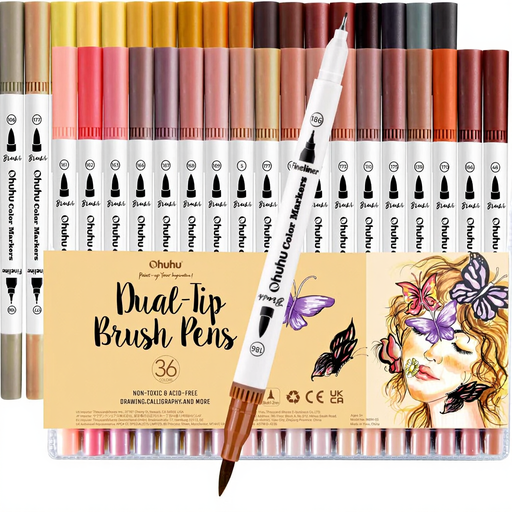
Why this product suits this profile: The set offers 36 skin tones and two tips per pen. This allows beginners to experiment with colour gradients, simple portraits and their first calligraphy exercises without having to assemble several types of marker individually.
The colour chart makes it easier to identify the 36 shades. The combination of a 0.4-mm fine tip and a 1–2-mm Brush Tip reduces the need for separate detail and broad-area pens.
36 water-based shades, a dual-tip design and a brush tip suitable for sketches, illustrations and calligraphy. No independent safety certification is listed in the product details.
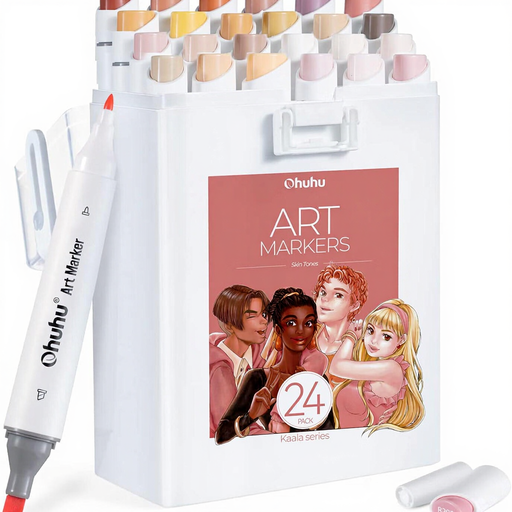
Why this product suits this profile: For illustrators and designers who work specifically with layering and blending, this set combines 24 portrait markers with alcohol-based ink and compact storage.
The ink type and tips are clearly specified: an alcohol base, plus Slim Chisel and Fine Tip. This makes it easier to assess before buying whether you will need paper with a protective underlay.
24 specialised skin tones, fast-drying alcohol-based ink and a case. Use in a well-ventilated room is recommended.
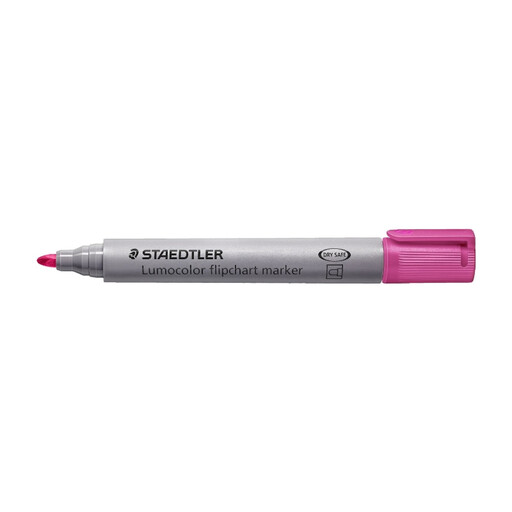
Why this product suits this profile: This marker is not a skin-tone set, but an addition for presentations, labelling and large sketches on flipchart paper. It suits frequent users who want to expand their drawing materials according to the task at hand.
Its intended use is clearly stated: a 2-mm round tip for paper flipcharts. This prevents it from being mistakenly classified as a portrait marker or skin-tone pen.
According to the product details, it is refillable and features odourless, fast-drying ink, as well as a barrel made from 97% recycled plastic. Intended for flipchart paper.
We have put together a complete, regularly updated list of products that fully meet these strict selection criteria and the safety regulations applicable in the EU.
Start with a light base tone and allow the first layer to dry briefly. Then apply darker markers selectively along the hairline, under the chin, around the nose and at the edges of the face. For a softer transition, you can layer the lighter colour over it again, provided the ink and paper allow this technique.
A sheet of test paper helps you identify bleed-through at an early stage. With markers that release more ink, place an additional sheet underneath your artwork. Store the pens with their caps fully closed, and do not rush to replace dried-out markers with a new set if only one tip is initially affected.
A combination of several graduated skin tones, a fine tip for details and a Brush Tip for broad areas and shading is a good choice. The Ohuhu set with 36 water-based colours is designed for skin tones, hair, illustrations and calligraphy. For alcohol-based blending techniques, the 24-colour set with Fine and Slim Chisel tips is a suitable option.
This depends on the child’s age, the type of ink and the product labelling. Small caps pose a choking hazard, and sets containing such components are not suitable for children under three. Teenagers and older children should use markers under supervision, avoid ingesting the ink and avoid contact with the eyes. Adequate ventilation is also important when using alcohol-based ink.
It is not possible to give a reliable fixed lifespan. It depends on the amount of drawing, the paper, the pressure applied to the tip and whether the cap is securely closed. Keeping caps tightly closed, storing the markers correctly and using them on suitable paper can help extend their working life. With frequent drawing, the Brush Tip will generally wear out before the fine tip.