Homes with dusty skirting board crevices
If you want to clear dust from narrow gaps and corners after having guests over, check that the specific model variant comes with a suitable crevice tool.


When skirting board crevices are dusty after a family gathering, the right attachment is what matters most. A crevice tool is designed for narrow gaps, while a soft brush may be a better choice for delicate, visible surfaces. The consumer advice centre points out that a high wattage alone is no guarantee of particularly good cleaning; the nozzle and airflow also play a part. Whether a bagged or bagless model suits you best depends, among other things, on how you feel about contact with dust when emptying the vacuum, replacement bags and filter care.
If you want to clear dust from narrow gaps and corners after having guests over, check that the specific model variant comes with a suitable crevice tool.
For delicate, visible surfaces, a suitable soft brush is useful alongside a crevice tool. Check that it is compatible with your vacuum, too.
If you want to limit contact with collected dust, consider how the vacuum is emptied and its filter maintained when choosing between a bag and a dust container.
A good choice if: you want to handle as little loose dust as possible when emptying the vacuum and plan to clean other rooms after the gathering.
Bear in mind: bags must be compatible with the specific model and will need replacing; attachments and reach vary between versions.
A good choice if: you would rather not buy replacement bags and find emptying the container and maintaining the filter manageable.
Bear in mind: you will need to empty the dust container and maintain the filter as instructed in the manual. Check how it is emptied before buying.
| Priority | What to check before buying | Who is it important to? |
|---|---|---|
| Reaching crevices | Check that the exact model variant comes with a crevice tool; if needed, also check for a brush attachment for visible skirting boards. | If I want to clear dust from the narrow gap first, I look for a suitable attachment. Around 29% of consumers prioritise reaching the crevice. |
| Protecting delicate skirting boards | Soft bristles and compatibility of the attachment with the vacuum you have chosen. | For delicate, visible skirting boards, I look for a suitable soft brush. Around 23% of consumers put protecting the surface first. |
| Limiting contact with dust | Check the filter information and emptying process separately; for a bagged model, also check which bag type it takes. | If I want to handle as little loose dust as possible when emptying the vacuum, I consider the seal and how it works. Around 18% of consumers prioritise contact with dust while vacuuming and emptying. |
| Cleaning several rooms | Check the operating radius and how easy the tube and attachments are to handle in your own home. | After the party, I want to clean several rooms without having to change sockets frequently. Around 18% of consumers prioritise coverage across rooms. |
| Ongoing costs and maintenance | Check which replacement bags and filters are compatible, along with the care instructions for the exact model variant. | If I want to keep ongoing costs and maintenance manageable, I check the consumables and instructions. Around 12% of consumers prioritise running costs and maintenance. |
Wattage alone does not tell you how well a vacuum cleaner will clean along a skirting board. According to the German Environment Agency, factors such as the nozzle and airflow work together.
First, check that the attachment is suitable for the gap and the surface. Only consider test results you can verify if they relate to the specific model and the type of surface in question.
A crevice tool is designed for narrow gaps; delicate, visible surfaces may need a different type of brush.
Check the supplied attachments, bristles and connection separately for the surface and model variant in question.
You may need to buy an additional brush. Before you do, check that it is compatible with your vacuum cleaner.
A bagless vacuum still needs its container emptied and filter maintained. A bagged model also needs compatible replacement bags.
Compare the emptying process and care instructions with the way you prefer to handle these tasks day to day.
The VSQ5X1230 is a bagged model supplied with an integrated crevice tool and upholstery nozzle.
The Guard M1 Performance is listed with a crevice tool, dusting brush and HEPA AirClean filter.
The BGD38BU2 is a bagged model with manufacturer specifications for its reach, bag capacity and filter.
The bagless PowerPro Compact FC9331/09 is listed with a crevice tool and an integrated brush.
The bagless Compact Power Cyclonic Classic+ RO3731EA is described as coming with a 2-in-1 crevice tool and an upholstery nozzle.
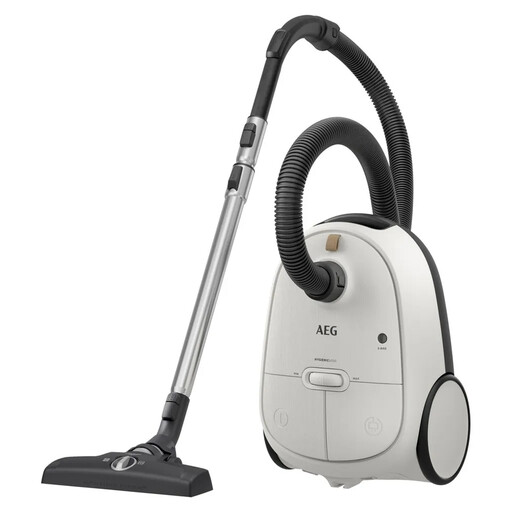
Bagged vacuum cleaners for cleaning crevices and then vacuuming other rooms.
 No image available
The flexible XL crevice tool mentioned in the description is useful for narrow gaps; the stated operating radius of 12 m may come in handy when cleaning several rooms.
The description lists a 3,5-l bag and a 3-in-1 multifunction nozzle. According to the description, the vacuum is intended for dry cleaning only; do not use it to vacuum liquids or wet materials.
 No image available
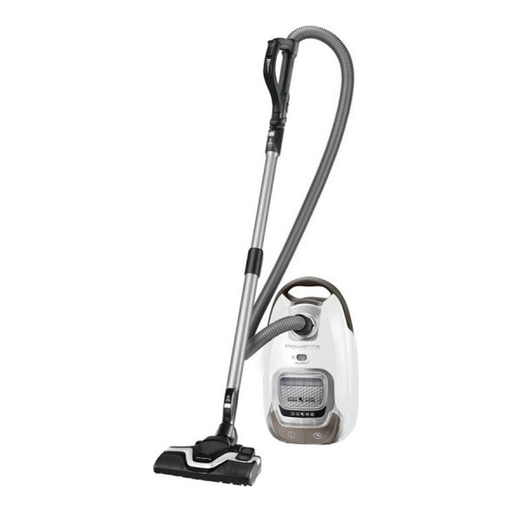
This corded, bagged model is listed with a telescopic nozzle. For skirting board crevices, check whether the specific variant also comes with a suitable crevice tool.
Use a suitable crevice tool for the narrow gap; for a delicate, visible surface, consider a soft brush. Check that each attachment is either supplied with your model variant or compatible with it.
Empty the dust container or replace a full bag, and maintain the filter according to the instructions for your vacuum. The European Commission points out that an overfull dust collector can affect performance.
For a bagged model, check the exact bag type it takes; for both types, the filter requirements of the specific model are important. Miele describes CO HyClean Pure as suitable for Guard M1 models, not all Miele vacuum cleaners.
No. According to the European Commission, there are currently no EU energy labelling rules in force for vacuum cleaners; the former Regulation (EU) 665/2013 no longer applies. Energy labelling and ecodesign requirements are separate regulations.
Electrical appliances should not go in household waste. The responsible federal ministry lists local collection points and authorised manufacturers and retailers as options for disposal; retailers' take-back obligations depend, among other things, on the retailer's size and whether you are buying a new appliance.