
Lieferung heute & morgen

Qualitätsgarantie

Willkommens-Angebote freischalten: KOSTENLOSE Lieferung | Bis zu 80 % RABATT | Kostenlose 30-Tage-JoyPlus-Testphase
App herunterladen
A 30 x 40 cm slate serving board provides ample space for cheese, tapas, sushi, fruit or small desserts, while fitting neatly on many dining tables. Its rectangular shape is particularly well suited to elongated arrangements and several separate portions.
However, product images and names alone are not always enough to assess how practical an item will be in everyday use. Focusing solely on appearance can mean overlooking conflicting dimensions, unsuitable cleaning requirements or a high net weight. The following criteria help you choose a suitable slate serving platter objectively.
Slate has a premium appearance thanks to its natural grey surface. However, the material should not be treated like glass or stainless steel. Depending on the finish, both the surface and edges may be more sensitive to impact. A slate board is also not automatically dishwasher-safe.
Before buying, check the following:
For the model considered here, cleaning with a damp cloth and mild soap is specified. Harsh cleaning agents should be avoided. According to the product information, the board is not intended for dishwasher cleaning.
A non-slip slate board may have small feet, a coated underside or a specialised base. The label alone does not explain how securely the board will sit on a particular table.
This is especially important on smooth surfaces such as glass or lacquered wood. Make sure that:
The reference product is described as “non-slip” and, according to the packaging information, includes a serving board with handles in grey and black. However, no precise description of the underside is provided. For more demanding use, an additional textile or silicone-based mat is therefore recommended.
For a rectangular serving board, the external dimensions are crucial. A measurement of 30 x 40 cm usually refers to the usable base area, but it may vary depending on the handle design or rim.
The product “Secret de Gourmet Slate Serving Board – Grey, 30 x 40 cm” is listed as 40 cm long and 30 cm wide. The detailed specifications state a product height of 0.7 cm. Elsewhere in the description, a height of 4 cm is given, which may refer to the packaging height. This discrepancy should be checked against the current product page before ordering.
A slate cheese board is typically suitable for cheese, cured meats, bread, fruit, pastries and other cold or room-temperature foods. The material briefly retains the ambient temperature and creates a matte grey presentation surface.
The following should not be assumed automatically:
For a long service life, very hot pots and pans should not be placed directly on the board. Cutting with substantial pressure can also put stress on the surface and the knife blade.
The 30 x 40 cm dimensions are practical for a household or a small to medium-sized gathering. They provide room for several types of cheese with accompaniments or a mixed tapas selection. Before buying, however, measure the intended storage space.
The slate board weighs approximately 1.5 kg. With food arranged on top, the total weight can be considerably higher. Integrated handles are useful when the board needs to be moved frequently. Even so, it should be carried with both hands, particularly when fully loaded.
After use, a slate platter should ideally be cleaned promptly with a damp cloth and mild soap. It should then be dried thoroughly. Avoid the following:
For storage, choose a dry, protected location. Several slate boards should not be stacked without protection, as their edges may knock against one another.
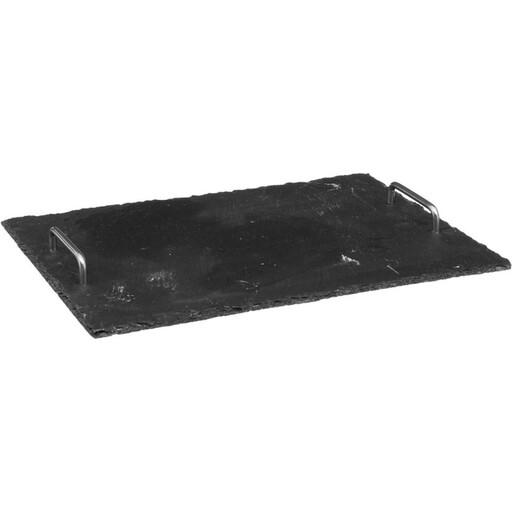
Why This Fits Their Persona: This rectangular slate board is suitable for households looking to arrange cheese, snacks or a simple tapas selection on a compact surface.
The product information lists the dimensions, weight, material and hand-cleaning requirements. This makes it easier to assess the space needed and care involved before purchase.
Slate construction, grey finish, rectangular shape, approximately 1.5 kg in weight and, according to the description, slip-resistant properties.
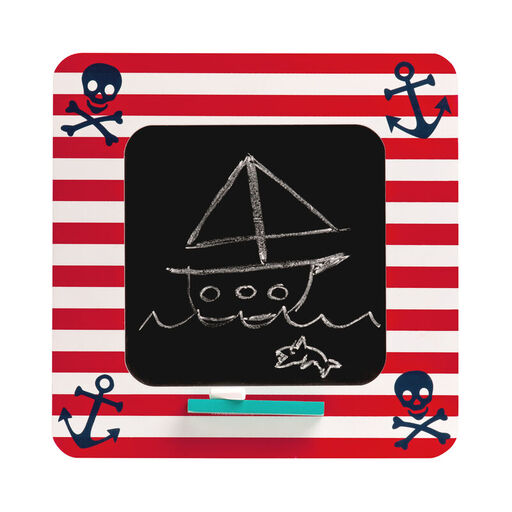
Why This Fits Their Persona: This product is an MDF wall-mounted chalkboard, not a serving platter. It is therefore only suitable for users also looking for a writable board for the kitchen, home or children’s room.
The clear material and product description prevents confusion with a slate cheese board. The product is not designated for contact with food.
MDF construction and wall mounting according to the product description. However, the required information for serving use is not provided.
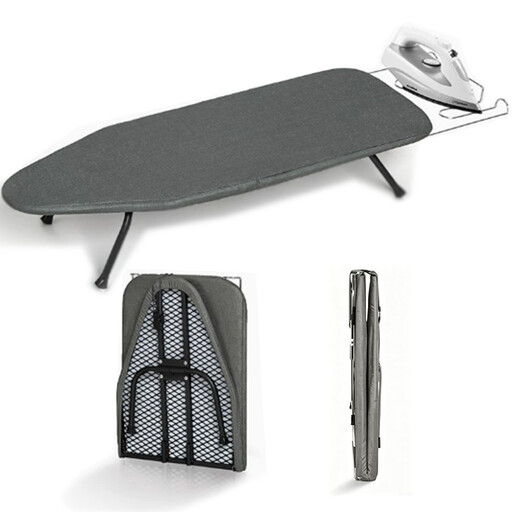
Why This Fits Their Persona: This product is a folding household ironing board, not a slate serving platter. It is therefore not a suitable alternative for intensive serving use.
Classifying products by their actual intended use helps prevent purchases driven solely by a grey finish or similar product imagery.
Folding household design according to the product name. No information is provided about slate, food contact or serving use.
Of the three products shown, only the Secret de Gourmet model is designated as a slate serving board. The other two products illustrate why the material and intended use should be checked before buying.
A broader selection can be compared by material, dimensions, cleaning instructions and actual intended use. The linked category contains additional household products.
Yes. Slate serving platters are commonly used for cold and room-temperature foods such as cheese, bread, cured meats, fruit and tapas. The key considerations are a suitable surface, a stable underside and the manufacturer’s usage instructions. Hot foods should only be placed directly on the board if this is expressly permitted.
The board should be washed by hand with a damp cloth and mild soap, then dried thoroughly. Harsh cleaners, prolonged soaking and the dishwasher should be avoided for the model described here. With strongly pigmented foods, prompt cleaning can help minimise residue on the surface.
In addition to the 30 x 40 cm base area, allow extra room for lifting and setting down the board. With a weight of approximately 1.5 kg plus its contents, a stable table surface is advisable. Handles can make carrying easier, but they do not replace safe handling with both hands.