
Lieferung heute & morgen

Qualitätsgarantie

Willkommens-Angebote freischalten: KOSTENLOSE Lieferung | Bis zu 80 % RABATT | Kostenlose 30-Tage-JoyPlus-Testphase
App herunterladen
A piece of furniture that serves as comfortable seating by day and a comfortable bed by night is a practical solution for many living situations. Whether for a guest room, a first apartment, or as a space-saving addition to the living room – a sleeper sofa combines functionality and design. However, given the variety of models, mechanisms, and materials, making a choice can be a challenge.
This guide is here to help. We will introduce different types of sleeper sofas and explain which features are relevant for various needs. The goal is to provide you with an objective basis for your purchasing decision.
To find the right model, it's helpful to consider a few basic criteria. These factors determine not only the comfort but also how well the piece of furniture integrates into your daily life.
The available space is crucial. Measure the intended area carefully, also taking into account the space required when it's unfolded.
Not every sleeper sofa is designed to replace a bed for daily use. The construction of the sleeping surface is the deciding factor here.
The durability and ease of use of a sleeper sofa depend heavily on the upholstery fabric and the conversion mechanism.
Here, we present a selection of models that stand out for their different functional strengths and cater to various needs.
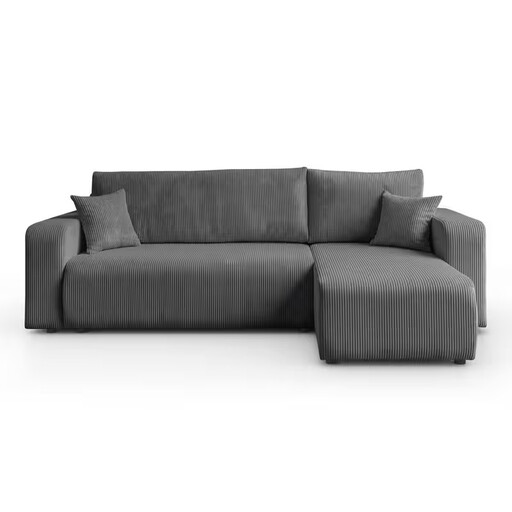
Why it stands out: The PRESTIGE sectional is a classic multifunctional sofa for the living room. It combines a generous seating area with an easy-to-use pull-out sleeper function and a spacious storage compartment. The reversible chaise makes it flexible for various room layouts.
Pros:
Who it's for: For families and anyone looking for a central, multifunctional sofa for their living room that regularly serves as a guest bed and also offers storage.
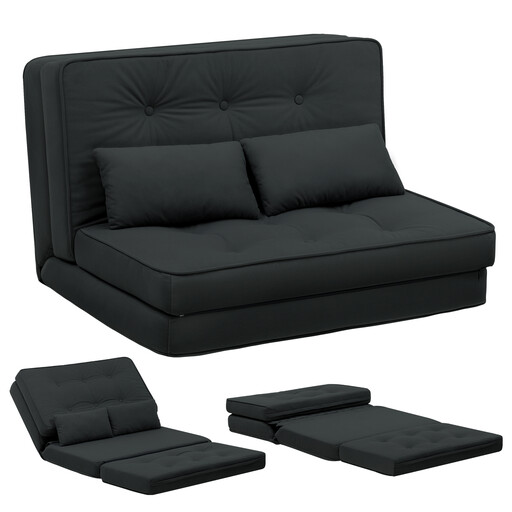
Why it stands out: This model redefines flexibility. Usable as a sofa, lounger, or mattress, it adapts to any situation thanks to its 6-position adjustable backrest. Its light weight and compact design make it extremely portable.
Pros:
Who it's for: Ideal for students, people in shared living spaces, or for a home office. It's a practical solution for anyone needing an extremely flexible and space-saving seating and sleeping option for small rooms.
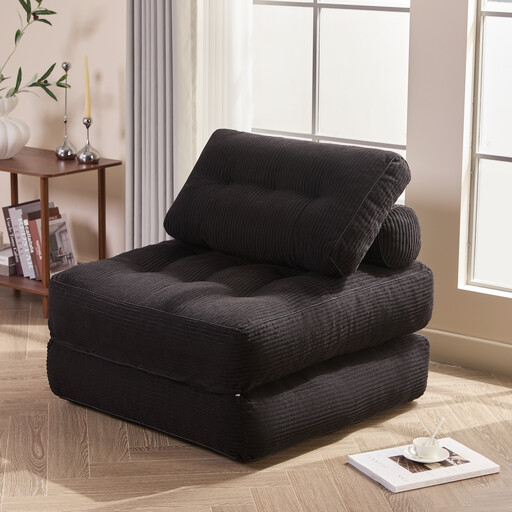
Why it stands out: This frameless sleeper sofa combines the casual comfort of a bean bag with the functionality of a guest bed. The 4-in-1 design effortlessly transforms from a couch to a lounger, a bed, or even two separate cushions, all without any assembly.
Pros:
Who it's for: For users seeking a hassle-free, informal, and highly adaptable furniture solution. It works perfectly as a small sleeper sofa in a teen's room or guest room.
The models presented already cover a wide spectrum. However, if you haven't found the right solution for your specific needs, there are many more variations to discover. Different sizes, fabrics, and mechanisms offer the right piece of furniture for almost any requirement.
Browse through an expanded selection of multifunctional sofas in our Ottomane Bett category to compare more models.
1. Can a sleeper sofa be used as an everyday bed? Yes, certain models designated as everyday sleepers are designed for daily use. These typically feature a higher-quality mattress and a more robust support structure (e.g., a slatted frame) that offer sleeping comfort comparable to a conventional bed. Look for product descriptions that highlight features like cold foam mattresses or high foam density.
2. What is the difference between a sleeper sofa and a multifunctional sofa? The term multifunctional sofa is a broad category for sofas with additional features. A sleeper sofa is a specific type of multifunctional sofa whose primary extra function is converting into a bed. Other multifunctional sofas might have features like adjustable headrests and armrests, built-in tables, USB ports, or reclining functions, without necessarily including a sleeping function.
3. How do I care for the upholstery on my sleeper sofa? Care depends on the material. Generally, it is recommended to regularly vacuum the upholstery with a brush attachment to remove dust and crumbs. Stains should be treated immediately with a slightly damp cloth and, if necessary, a mild cleaning agent. For removable covers, always follow the manufacturer's washing instructions.