
Lieferung heute & morgen

Qualitätsgarantie

Willkommens-Angebote freischalten: KOSTENLOSE Lieferung | Bis zu 80 % RABATT | Kostenlose 30-Tage-JoyPlus-Testphase
App herunterladen
As a Joybuy Product Recommendation Officer, I see parents every day searching for solutions to a common challenge: their child is very active, kicks off the covers at night and gets cold, or feels restricted in traditional sleeping bags. A sleeping bag with legs seems like the ideal solution, but the market can be overwhelming. Before you make a purchase, it's crucial to understand the common pitfalls that can lead to a bad buy.
This guide will help you identify the key features and make an informed choice that guarantees safety and comfort for your child.
Many products promise more than they deliver. Pay close attention to these three points to avoid disappointment:
To find the right sleeping bag with legs, you should focus on objective and verifiable features. These three parameters are non-negotiable for your child's safety and comfort.
The TOG rating is a standardised unit of measurement for the thermal resistance of textiles. Instead of relying on vague descriptions like "warm" or "light," the TOG rating provides clear guidance.
A 2.5 TOG sleeping bag offers a good balance and can be flexibly adapted to the respective room temperature by combining it with different nightwear (e.g., a long-sleeved or short-sleeved bodysuit).
A baby's skin is up to five times thinner than an adult's and reacts more sensitively to materials and chemical substances.
A sleeping bag for active babies needs to do more than just keep them warm. It must allow freedom of movement without compromising safety.
Here are some product recommendations that are aligned with the criteria above and are suitable for different user profiles.
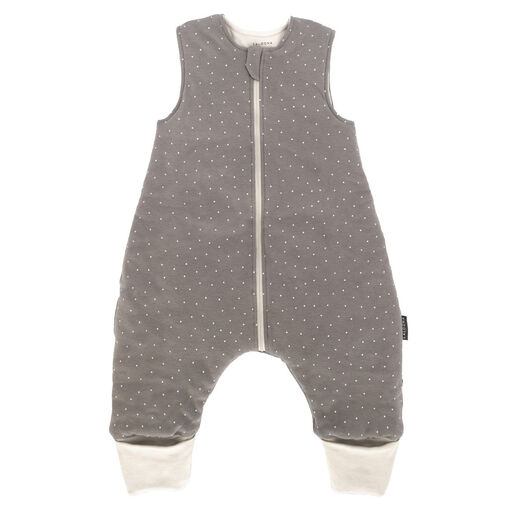
Why This Fits Their Persona: Ideal for babies (approx. 6-9 months) who are starting to turn over, scoot, and make their first attempts at crawling. The fit is tailored to the needs of this developmental stage.
The separate legs prevent the feeling of confinement that can cause restlessness in traditional sleeping bags, thus avoiding the pitfall of impractical design.
Combines the safety of a sleeping bag with the freedom of movement of trousers. Certified according to OEKO-TEX Standard 100.
Why This Fits Their Persona: Perfect for toddlers (approx. 18-24 months) who are already walking confidently, standing in their cot, and want to be mobile at night or in the early morning without tripping.
Solves the safety issue of traditional sleeping bags, which can be a tripping hazard. The fold-over cuffs offer flexibility that simpler designs lack.
Promotes the child's independence and ensures safety when they stand up. The long zip remains practical for potty training, even with older children.
Why This Fits Their Persona: For parents who want a cost-effective and straightforward solution for the whole year and prefer not to buy multiple sleeping bags for different seasons.
The 2.5 TOG rating is clearly defined, preventing the purchase of a sleeping bag with an unsuitable thermal rating that leads to either overheating or chilling.
Versatile for use on most nights of the year in the UK. The outer material made of 100% cotton is easy to care for and tumble dryer safe.
We have compiled a complete, real-time list of products that fully satisfy these strict selection criteria and UK safety regulations.
1. How do I choose the right size for a sleeping bag with legs? Measure your child's height from their shoulders to their feet. Manufacturers typically provide a recommended height for each sleeping bag size. The sleeping bag should fit well but leave enough room for kicking. Do not buy a size up for them to "grow into," as a sleeping bag that is too large can be a safety hazard.
2. What exactly does the TOG rating on a baby sleeping bag mean? The TOG rating is a scientific unit of measurement for the thermal resistance of textiles, originally developed in the UK. The higher the value, the warmer the sleeping bag. It helps you to objectively match your baby's clothing to the room temperature, thus preventing overheating or chilling. A 2.5 TOG sleeping bag is a good all-rounder for most UK households.
3. Can my child overheat in a sleeping bag with legs? Overheating is less about the type of sleeping bag and more about the correct combination of the sleeping bag (TOG rating) and nightwear, matched to the room temperature. Regularly feel the back of your child's neck. If it's warm and dry, everything is fine. If it's sweaty, your child is too warm. A baby sleeping bag with feet made from breathable materials like cotton helps to regulate temperature.