People who regularly make sandwiches
You buy packaged sliced bread for sandwiches and want to choose a pack size that suits your routine.


When you’re shopping for sandwiches on a budget, supermarket own-brand sliced bread is a sensible place to start. Consider the type of bread, pack size and how much you’ll actually use together. Wholemeal and butter toast have different recipes, so check the ingredients, nutritional information and allergens on the pack you’re buying. A larger pack only makes sense if you’ll use the bread in time or freeze it in portions.
You buy packaged sliced bread for sandwiches and want to choose a pack size that suits your routine.
You’re looking for bread that can be toasted and consider the wholegrain content, ingredients, fibre and salt listed on the pack.
You don’t get through sliced bread quickly, so you factor pack size, storage and freezing slices in portions into your decision.
First, decide which type of bread you want for your sandwiches. Then match the pack size to how much you use and check the information for the specific variety.
| What matters | What to look for | Who it matters to |
|---|---|---|
| Budget and pack size | Match the pack weight and number of slices to how much you use. | If I regularly make sandwiches, I only want to buy as much as I’ll eat. For around 42% of consumers, keeping their shopping within budget is the main priority. |
| Wholegrain and ingredients | Compare the wholegrain content in the ingredients list, as well as fibre and salt per 100 g; check the allergens on the pack. | I want to know what’s in my toast before using it every day for sandwiches. Around 33% of consumers prioritise comparing ingredients when making their choice. |
| How quickly you’ll use it and storage | Check the pack size and storage instructions, and freeze slices in portions if needed. | It takes me longer to get through a pack, and I want to avoid the bread going stale or mouldy. This is the most important reason for buying for around 25% of consumers. |
If slices are left uneaten, the bread can go stale or mouldy before you finish the pack.
Choose a quantity that suits how much bread you eat, or freeze slices in portions.
The ja! wholegrain toasts listed by REWE contain wheat. So the term ‘wholegrain’ tells you nothing about whether a product is suitable if you need gluten-free food.
If you have specific dietary requirements, check the clear labelling, ingredients and allergen information on every pack.
The recipes differ: REWE lists clarified butterfat in its Beste Wahl butter toast, while the ja! wholegrain toasts listed contain wholemeal wheat flour.
Choose the type of bread you want, then compare the nutritional information per 100 g for the specific products.
According to Verbraucherzentrale, mould can spread through bread beyond the area you can see.
Throw away all mouldy bread and clean the container it was stored in.
REWE sells, among other products under its ja! brand, wholegrain toast bread and wholemeal wheat sandwich bread.
This own-brand range includes butter toast and toast bread with rye.
EDEKA lists toast among the products in its entry-price brand range.
Lidl uses this name for its range of freshly baked bread and baked goods.
Lieken sells Golden Toast as a brand of toast and sandwich bread.
Schär offers Meisterbäckers Classic as sliced bread for people who specifically need gluten-free products.
RUF sells a product called Organic Spelt Toast Bread.
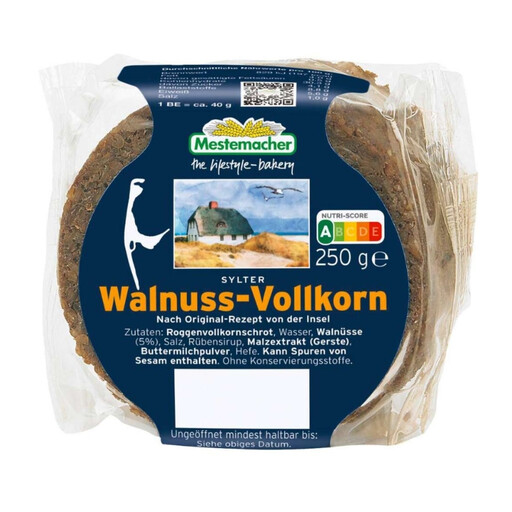
This walnut wholegrain bread could be an option if you’re looking for wholegrain bread for sandwiches. Check the specific pack to see whether the bread is pre-sliced.
 No image available
If you’re looking for walnut wholegrain bread for sandwiches, you can match the 250-g pack to how much you use. Before buying, check whether the bread is sliced and read the ingredients and allergen information on the pack.
No. The ja! wholegrain toasts listed by REWE contain wheat. If you specifically need gluten-free bread, check the relevant label and the ingredients on the specific pack.
Generally, no. Verbraucherzentrale recommends storing bread at room temperature, somewhere dry and away from light, as it can go stale more quickly in the fridge. In very warm, humid weather, keeping it in the fridge may be sensible as an exception. For longer storage, you can freeze bread in portions.
Not necessarily. If the pack is unopened and has been stored correctly, you can check its appearance, smell and texture. According to Verbraucherzentrale, any mouldy bread should be thrown away in its entirety.
Read the ingredients list on the specific pack. The German Federal Office of Consumer Protection and Food Safety explains that ingredients are listed in descending order by weight, and that important allergens are highlighted in the ingredients list.