Shopping for several festive meals
You’re planning toast, sandwiches or breakfasts and want to match the pack size to the number of portions you need. Before you shop, think about which meals you’ll actually serve the bread with.


When shopping for Christmas, choose sliced bread based on how you plan to use it and how much you expect to get through. Look for bread labelled for toast or sandwiches; if you want wholemeal or have specific ingredients in mind, check the individual product’s ingredients list rather than relying on the variety name alone. Freezing bread in portions can help you plan for several festive meals and avoid waste.
You’re planning toast, sandwiches or breakfasts and want to match the pack size to the number of portions you need. Before you shop, think about which meals you’ll actually serve the bread with.
You only need sliced bread for a few days over the festive period and don’t want an opened pack to go to waste. Choosing the right amount and freezing it in portions can be especially useful. The Verbraucherzentrale recommends storing bread at room temperature.
You’re looking for wholemeal, a particular type of grain or need to check for allergenic ingredients. The ingredients list, allergen labelling and nutritional information on the specific pack are more useful than the variety name alone.
First, decide which meals you need bread for. You can then choose the pack size, type of bread and ingredients to suit.
| What matters | What to check when buying | Who it matters to |
|---|---|---|
| Pack size | Compare the pack size with the number of portions you’ll need for your planned meals. | If I’m planning bread for several festive meals, I want to choose a pack I can use up. Getting the right amount is a priority for around 33% of consumers. |
| How you’ll use it | Check whether the type you’ve chosen is intended for toast, filled sandwiches or canapés. | For breakfast and festive snacks, I want to choose bread that suits the food I’m planning to serve. Around 27% of consumers put this first. |
| Storage and leftovers | Consider when you’ll eat it, the storage instructions and whether you can freeze it in portions. | If I only need bread on certain days, I want to be able to store the rest. This is the main consideration for around 20% of consumers. |
| Ingredients and wholemeal | Read the ingredients list, highlighted allergens, wholemeal labelling and nutritional information. | If I’m looking for a particular type of grain or wholemeal bread, or need to avoid certain ingredients, the information on the specific pack matters to me. Around 20% of consumers focus on these details. |
If you only need bread for a few meals, you could be left with an opened pack after the festive period.
Plan how many portions you’ll need before you shop. According to the Verbraucherzentrale, you can freeze any bread you won’t use soon in portions.
A variety name doesn’t necessarily describe the full recipe: according to its product page, the rye toast listed by REWE contains 5% rye flour.
If you want wholemeal bread, check the product description and ingredients list on the pack you’re considering.
Mould can spread through bread beyond the part you can see. If you spot mould, the Verbraucherzentrale advises throwing away the whole loaf.
Don’t taste mouldy bread or eat any of the other slices.
These examples can help you tell toast, sliced bread and toast rolls apart. The details on the specific product are what matter when making your choice.
REWE sells various types of toast under these own-label brands, including butter toast and rye toast.
The wheat toast rolls come pre-portioned in a 335-g twin pack and can be toasted. They’re a different product from classic sliced bread.
The Grafschafter range includes different types of toast, including wheat, butter and wholemeal toast.
Ölz Meisterbäcker describes its range as including toast and sandwich products.
Wendeln is mentioned here as a historical manufacturer reference: Lieken describes the Wendeln industrial bakery as the former distributor of GOLDEN TOAST.
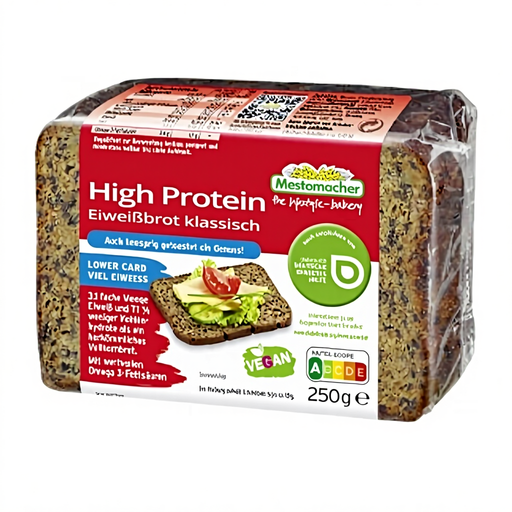
This selection features a loaf in a 250-g pack. Check the information on the specific pack to see whether the type, ingredients and quantity suit your planned festive meals.
 No image available
The 250-g pack may be a good fit for festive meals planned individually. If you’re specifically looking for wholemeal bread or need to avoid certain ingredients, check the ingredients and allergen information on the pack.
Choose a pack size based on the portions you’ll need and whether you plan to freeze any leftover bread. A larger pack isn’t automatically more practical if you only need sliced bread on certain days.
No. According to the Verbraucherzentrale, packaged bread may still be fine after its best-before date. Check it before eating, and throw away the whole loaf if you see any mould.
As a rule, store bread in a dry, dark place at room temperature, or freeze it in portions. The Verbraucherzentrale points out that bread usually goes stale more quickly in the fridge. In very warm, damp weather, it makes an exception for white bread, which may be better protected from mould when refrigerated.
Read the ingredients list and highlighted allergens on the specific pack. The Lebensmittelverband Deutschland explains allergen labelling. Butter toast, for example, may contain milk ingredients, but recipes vary by product.
Check the latest notices on the official food alerts portal run by the German federal states and the Federal Office of Consumer Protection and Food Safety. Have the product name, brand and, if applicable, the batch number from your pack ready to check.