For preparing several wholemeal sandwiches
If you take sandwiches to work on several days, pre-sliced wholemeal sandwich bread could fit your meal-prep routine. Compare the wholegrain claim and slice size on the packaging of each product.


If you regularly prepare sandwiches to take to work, pre-sliced wholemeal sandwich bread is an obvious choice. Check the slice size and the specific wholegrain claim. For a smaller portion that can be toasted, consider toast rolls. If the type of grain or flavour matters more to you, compare spelt, multigrain and butter toast by looking at their ingredients. Check the allergen information on the packaging for every option.
If you take sandwiches to work on several days, pre-sliced wholemeal sandwich bread could fit your meal-prep routine. Compare the wholegrain claim and slice size on the packaging of each product.
If you prefer a toast roll to large sandwich slices, compare the ingredients in the protein or seeded varieties. Allergen information is particularly important for products containing soya or seeds.
If you’re choosing between spelt, multigrain and butter toast, look beyond the variety name and check the types of grain, other ingredients and nutritional information. The names alone don’t tell you whether a product is suitable for people with allergies.
First decide what matters most for your office lunch: the grain base, a format that’s easy to fill, ingredient labelling or flavour. Then compare the products that fit the bill.
| Criterion | What to check when buying | Who it matters to |
|---|---|---|
| Wholegrain content | Compare the product name and ingredients list. For similar breads, also check the fibre content per 100 g. | If I’m preparing several packed lunches, I want to know what grain base I’m actually buying rather than relying on the product name. Around 36 % of consumers put wholegrain content first. |
| Easy-to-fill format | Check the slice size and pack size. For toast rolls, check how they’re intended to be prepared. | If I make my sandwich before work and take it with me, I want a format that suits my portion and prep routine. Around 29 % of consumers prioritise this everyday convenience. |
| Ingredients and allergens | Check the specific pack for declared allergens, may-contain warnings and ingredients. | If I need to avoid certain ingredients, I want to be clear about the labelling on the exact bread before I buy it. Around 21 % of consumers care most about this. |
| Type of grain and flavour | Compare the types of grain and ingredients such as butter or seeds, and check the nutritional information if needed. | For a variety of fillings, I want to choose between different types of toast without assuming the name tells me about the other ingredients. This variety is the main reason for around 14 % of consumers. |
According to the Federal Ministry of Agriculture, Food and Regional Identity, spelt is a gluten-containing grain and is listed as wheat for allergen labelling. So “spelt toast” does not mean “gluten-free”.
Check the allergen information and, if required, the gluten-free label on the specific pack.
A multigrain label doesn’t specify a set wholegrain content. Claims also vary between sandwich breads: EDEKA describes its Herzstücke wholemeal sandwich as “100 % wholegrain”, while its GUT&GÜNSTIG wholemeal sandwich toast lists 60 % wholemeal wheat flour.
If wholegrain content is a deciding factor, compare the product name and ingredients list.
For food products, the information on the packaging may differ from the product listing in an online shop. So when deciding based on ingredients or allergens, always refer to the specific pack.
Before buying, check the ingredients, allergen information, best-before date and slice size on the product.
A larger pack is only suitable for packed lunches if you can use the slices in time and store them according to the instructions on the packaging.
The Verbraucherzentrale recommends storing bread at room temperature in a dry place away from light. For longer-term storage, you can freeze portions.
If slices are left for too long, they can dry out or go stale.
The toast range includes spelt, multigrain and butter varieties to suit different ingredient and flavour preferences.
The toast rolls featured here are a portion-sized alternative to large sandwich slices.
Both own-label ranges featured here include pre-sliced wholemeal sandwich breads.
The own-label range includes spelt toast rolls, among other options, as an alternative to sliced sandwich bread.
The bakery brand offers rye, seeded and spelt breads, among other options, as alternatives to packaged toast.
Lidl says its bakery range includes spelt, multigrain and sourdough breads, among other varieties.
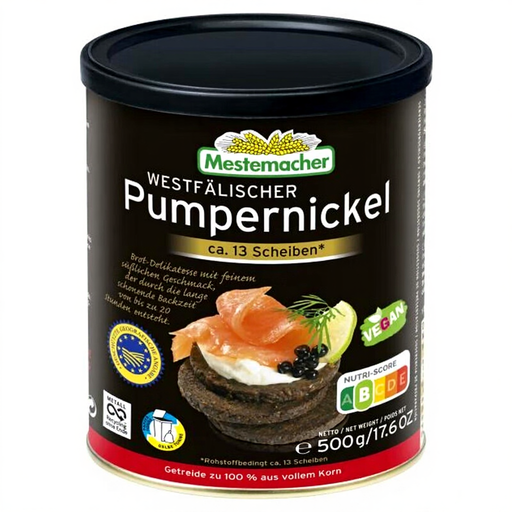
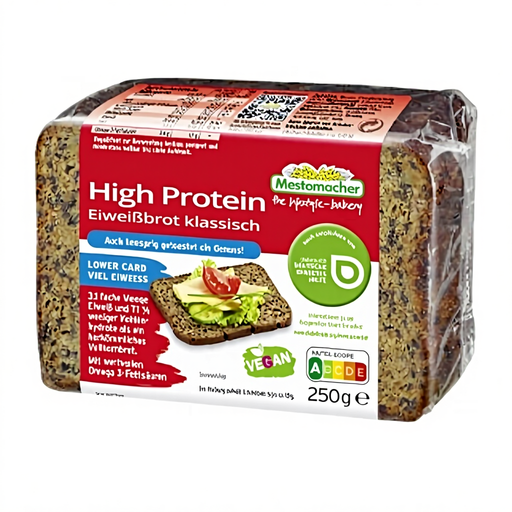
These two Mestemacher breads are worth considering for packed office lunches if you’re looking for pumpernickel or a protein bread. They are loaves, not the toast rolls described above.
 No image available
A good option for packed lunches if you prefer pumpernickel to toast.
Pack size: 500 g. If milk and sesame are important to your choice, check the information on the specific pack.
 No image available
A good option for a packed lunch if you’re looking for protein bread rather than a toast roll.
Pack size: 250 g. Product information lists wheat, rye, soya, sesame and milk as ingredients. Check the labelling on the pack before buying.
No. The Federal Ministry of Agriculture, Food and Regional Identity lists spelt as a type of wheat among gluten-containing grains. If you need bread labelled gluten-free, check the specific pack rather than assuming it is based on the type of grain.
Compare the product name with the ingredients list and any quantity stated explicitly. For example, EDEKA labels its Herzstücke wholemeal sandwich “100 % wholegrain”, while its GUT&GÜNSTIG wholemeal sandwich toast lists 60 % wholemeal wheat flour. These two figures are not based on the same measure.
Store bread at room temperature in a dry place away from light, and follow any additional instructions on the packaging. The Verbraucherzentrale suggests freezing individual portions as a way to keep bread for longer.
No. “Vegan” doesn’t tell you everything about allergen labelling: REWE lists oats for Mestemacher Bio-Hafertoastbrötchen and says it may contain traces of soya and sesame. If you have a specific intolerance, check the information on the pack.