Households keeping an eye on fibre
If you’re looking for wholemeal bread for breakfast or days out, compare the wholemeal labelling and fibre content per 100 g across different packs.


When choosing sliced bread for the summer holidays, first look for an explicit wholemeal label, then compare fibre content, allergens and pack sizes. If you only need a few slices, a smaller pack is easier to plan for. A large pack of sandwich bread is better suited to regular use and needs particular care when storing it after opening. A dark colour or the words ‘multigrain’ on their own don’t prove that a bread is wholemeal.
If you’re looking for wholemeal bread for breakfast or days out, compare the wholemeal labelling and fibre content per 100 g across different packs.
If you’re making several filled sandwiches during the holidays, choose a slice size and pack size that suit how much you plan to use after opening.
If you need to avoid particular ingredients or allergens, read the ingredients list and any ‘may contain’ warnings on each specific pack. For the toast and sandwich breads covered here, pay particular attention to wheat and other cereals containing gluten.
When choosing sliced wholemeal bread for the summer holidays, first decide what matters most for your household. Then check the labelling, how much you’ll use, allergens and slice size as needed.
| Criterion | What to check when buying | Who it matters to |
|---|---|---|
| Wholemeal and fibre | Look for an explicit wholemeal label and compare the fibre content per 100 g. | For breakfast and days out, I want to be able to check that the bread matches my wholemeal choice. Around 36% of consumers prioritise wholemeal labelling and fibre content. |
| Pack size and storage | Choose a pack size to suit how many slices you plan to use, and follow the storage instructions after opening. | If we’re only going away for a short time, I don’t want to leave an opened pack behind. Around 29% of consumers focus on choosing the right amount and storing it properly. |
| Ingredients and allergens | Check the ingredients list, highlighted allergens and any ‘may contain’ warnings on the specific pack. | If someone in our household needs to avoid wheat or other allergens, the pack’s labelling determines what we choose. For around 21% of consumers, these checks come first. |
| Slice size | Check that the type of bread is suitable for the toast or cold sandwiches you’re planning to make. | When preparing sandwiches, I’m mainly interested in whether the slices suit the way I plan to use them. Around 14% of consumers prioritise slice size. |
Colour and visible grains alone don’t tell you whether a bread is labelled as wholemeal. The German Nutrition Society advises shoppers not to be misled by the colour.
Look for an explicit wholemeal label, then compare the ingredients list and fibre content per 100 g.
A large pack is only suitable for your holiday needs if you’ll use the slices in time. For Lieken Urkorn Vollkorn Sandwich 750 g, REWE advises using the bread within a few days of opening.
Before you shop, work out how many slices you’ll need and compare the available pack sizes.
If you have slices left over after your trip, you’ll need to plan how to store and use them.
According to their product information, the wholemeal toast and sandwich breads covered here contain wheat or other cereals containing gluten. Other ingredients and ‘may contain’ warnings vary by product.
If you need to avoid an allergen, check the ingredients and allergen information on the specific pack every time.
EDEKA describes its 500 g pack of wholemeal toast as wheat wholemeal toast, with 90% wholemeal flour in the cereal content.
The wholemeal sandwich bread described by REWE comes in a 375 g pack and contains 7.7 g of fibre per 100 g.
The wholemeal toast described by REWE comes in a 250 g pack, which could be a good size if you only need a few slices.
The 750 g pack of wholemeal sandwich bread described by REWE may suit households that use bread regularly.
Lidl describes its bakery range as including various types of bread. Only consider a loaf from this range for this selection if it is explicitly labelled as wholemeal and comes in the slice size you want.
This selection includes pumpernickel and a wholemeal bread in different pack sizes for planned holiday meals. The key things to consider are how many slices you’ll use and the information on the specific pack.
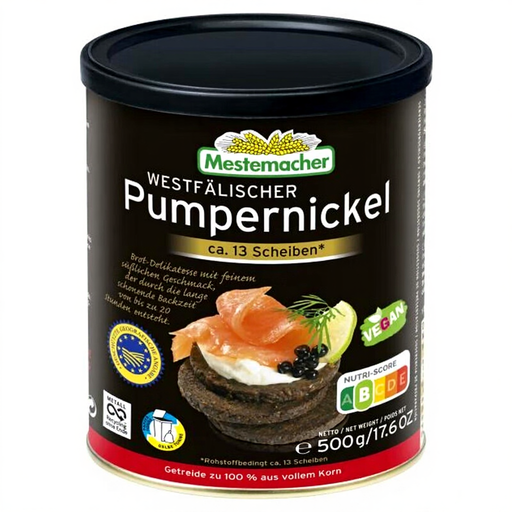 No image available
The 500 g pack could be a good choice if you’re planning to serve pumpernickel at several holiday meals.
If you have allergies, check the information about milk and sesame on the specific pack. Once opened, it should be stored in a cool place.
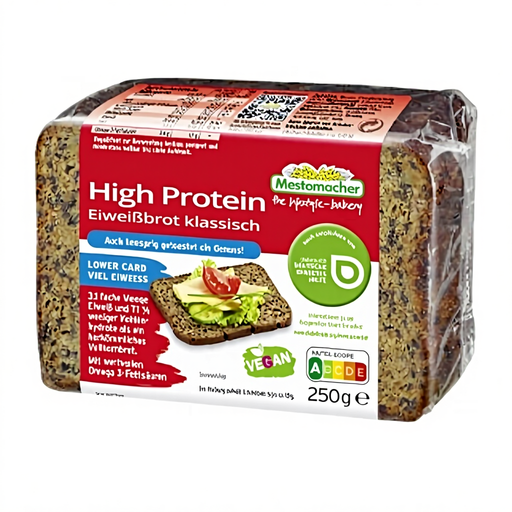 No image available
The 250 g pack is an option if you’re only planning to eat a little bread during a short stay.
If fibre content is important to your choice, compare the value on the pack. If you have allergies, always check the ingredients and allergen information on the specific pack.
Look for the explicit word ‘wholemeal’ rather than relying on colour, seeds or the word ‘multigrain’ in the name. The German Nutrition Society points out that a dark colour isn’t a reliable way to identify wholemeal bread. You can also compare the ingredients and fibre content per 100 g on different packs.
No. Wholemeal doesn’t mean gluten-free. According to their product information, the wholemeal toast and wholemeal sandwich products covered here contain wheat or other cereals containing gluten. If this is relevant to you, check the labelling on each specific pack.
Follow the storage instructions for the specific product. REWE advises storing Golden Toast wholemeal toast somewhere dry and out of direct sunlight. Lieken Urkorn wholemeal sandwich bread should be resealed after opening and used within a few days.
Choose a size based on how many people will be eating the bread and how much you plan to use before your next shop. A 250 g pack may be easier to plan for if you only need a little, compared with a 750 g pack. For larger packs, pay particular attention to the storage and use-by instructions after opening.