
Lieferung heute & morgen

Qualitätsgarantie

Willkommens-Angebote freischalten: KOSTENLOSE Lieferung | Bis zu 80 % RABATT | Kostenlose 30-Tage-JoyPlus-Testphase
App herunterladen
A small bathroom or a compact guest powder room presents a common challenge: where do you store towels, toiletries, and cleaning supplies when space is limited? A slim bathroom cabinet can be a functional solution, turning unused corners and niches into valuable storage. However, the selection process has potential pitfalls that can quickly turn a clever idea into a purchase you'll regret.
This guide will show you which pitfalls to avoid and what objective criteria to focus on, helping you find a durable and suitable solution for your home.
The search for the right bathroom furniture for niches can be frustrating. Marketing promises often mask quality defects that only become apparent with daily use. Pay close attention to these three points:
To avoid these problems, base your decision on verifiable product features. The following three parameters are crucial for the durability and functionality of your new bathroom furniture.
The most critical factor for bathroom furniture is its resistance to moisture. A good choice is furniture made from MDF (Medium-Density Fibreboard) panels that meet at least the E1 standard. However, the surface treatment is key. A high-quality lacquer or a melamine resin coating seals the material, effectively protecting it from water vapour penetration. Check the product description for details on the material and surface finish.
Before choosing a model, precisely measure the available space: width, height, and depth. Remember to account for baseboards or protruding pipes. Based on these measurements, you can select the right type:
A well-chosen cabinet for small bathrooms creates storage in a small bathroom without visually cluttering the space.
For any narrow cabinet that is taller than it is wide, stability is a key factor. Ensure that anti-tip hardware for securing it to the wall is included. This is especially important in households with children. For wall-mounted models like vanity units, the wall's load-bearing capacity must be sufficient, and the mounting hardware must be suitable for your wall type.
Instead of an overwhelming list, we present a few models tailored to specific needs and room situations.
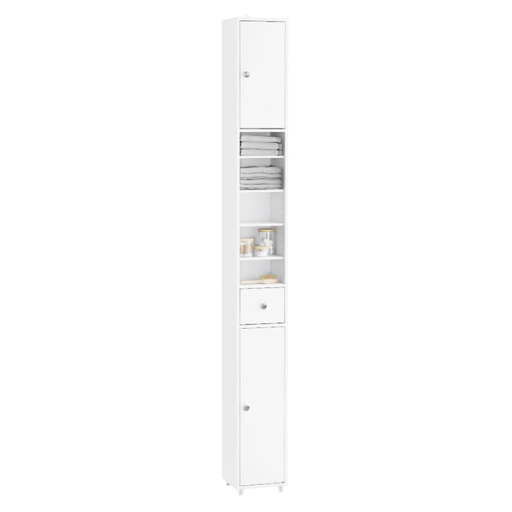
Why it's a good fit: Ideal for those looking to utilise an extremely narrow gap (e.g., between a wall and a sink) with maximum height. Its slim 20 cm width makes it a true niche specialist.
The included wall-mounting hardware prevents instability. Thanks to six height-adjustable shelves, the interior can be flexibly adapted to different bottle sizes, avoiding impractical layouts.
Maximum vertical space utilisation with a minimal footprint (20 cm wide). The matte lacquer finish is also resistant to fingerprints.
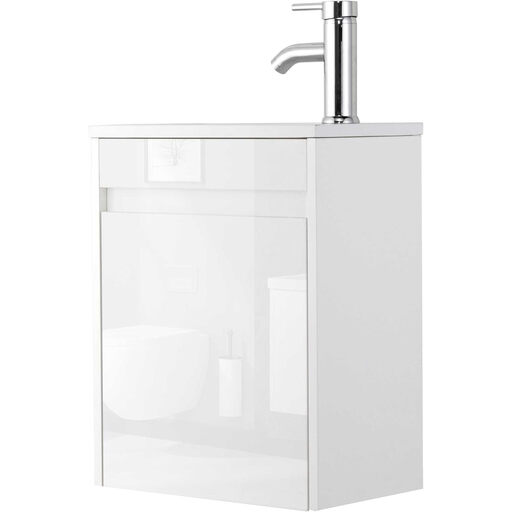
Why it's a good fit: For anyone needing to combine a sink and storage in a very small guest bathroom. The wall-mounted design keeps the floor clear, making the room feel larger.
According to the manufacturer, the washbasin is made of high-quality resin with a smooth surface that reduces dirt build-up. The wall-mounted installation ensures a stable, floor-free setup, bypassing the problem of wobbly freestanding furniture.
A space-saving 2-in-1 solution that combines a wash station and storage. The smooth surface of the basin and cabinet makes cleaning easier.
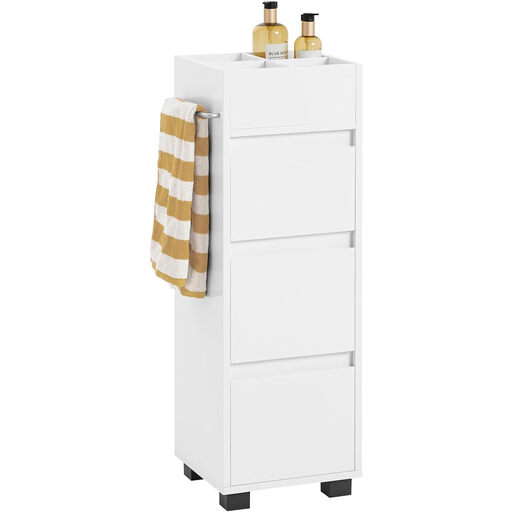
Why it's a good fit: Perfect for users seeking a flexible, freestanding solution with a mix of open and closed storage. It fits well next to the toilet or in a small corner.
The combination of drawers and open shelves solves the problem of impractical layouts. The material is lacquered MDF (E1), making it resistant to moisture. Wall mounting is recommended for safety.
Versatile storage with 3 drawers and 4 open shelves. The towel holder, which can be mounted on either side, is an added practical detail.
We have compiled a complete, up-to-date list of products that meet these strict selection criteria and safety requirements.
The safest method is wall mounting. When purchasing, make sure anti-tip hardware is included. This connects the top of the cabinet to the wall and prevents it from tipping forward. Additionally, always place heavy items on the lower shelves to lower the centre of gravity.
Materials with a sealed surface are crucial. Look for MDF panels with a high-quality lacquer or a melamine resin coating. These surfaces are water-repellent and easy to clean. Avoid uncoated particleboard or solid wood without a special bathroom-grade sealant.
Measure the width at three different points (bottom, middle, top) and note the smallest measurement. Do the same for the depth and height. This ensures the cabinet will fit even if the walls are not perfectly straight. Also, allow for a few millimetres of clearance for easier installation.