
Lieferung heute & morgen

Qualitätsgarantie

Willkommens-Angebote freischalten: KOSTENLOSE Lieferung | Bis zu 80 % RABATT | Kostenlose 30-Tage-JoyPlus-Testphase
App herunterladen
A small bathroom, guest cloakroom or unused alcove presents particular challenges when choosing furniture. A slim bathroom cabinet should take up as little floor space as possible while still holding towels, toiletries and cleaning products. However, many unsuitable purchases are not caused by the design, but by overlooked details concerning dimensions, materials and tip-over safety.
A bathroom cabinet just 20 or 30 cm wide may initially seem space-saving. However, depth is also crucial. A deep model can block walkways or get in the way in front of the toilet or washbasin. Before buying, measure the entire footprint and allow additional space for doors, drawers or a towel rail.
Lacquered MDF or chipboard surfaces are generally easy to wipe clean and may be suitable for normal bathroom conditions. However, standing water, wet towels or poorly ventilated corners can still put strain on the material. A white bathroom cabinet with a smooth coating should therefore not be placed directly in an area that regularly gets wet.
A bathroom cabinet with shelves offers quick access and is suitable for frequently used towels or personal-care products. Drawers provide greater protection from view and dust. If you choose exclusively open storage, you may need additional baskets or boxes to keep small items organised.
First, measure:
For a guest cloakroom, a narrow bathroom alcove cabinet with a small width may be a sensible choice. A tall bathroom storage cabinet, on the other hand, makes use of vertical space but requires secure, tip-resistant installation.
Before buying, make a rough list of what you want to store. Toilet paper and cleaning products require different shelf heights from folded towels. A toilet cabinet with enclosed compartments may be suitable for storing supplies, while a bathroom cabinet with drawers keeps smaller products neatly separated.
Also check the stated load capacity. The total load capacity is not automatically the same as the load capacity of individual shelves. If you plan to store heavy bottles, you should observe the manufacturer’s specifications for each compartment.
MDF boards are often marked E1. This describes a formaldehyde emissions class and is a technical indication of the material, but it does not replace the manufacturer’s care and assembly instructions. A lacquered surface can make cleaning easier, but splashed water should still be removed promptly.
For tall or slim furniture, wall fixing to prevent tipping is particularly important. Even a low cabinet should stand on a level surface. Children should not climb or hang from doors, drawers or an integrated bathroom cabinet with towel rail.
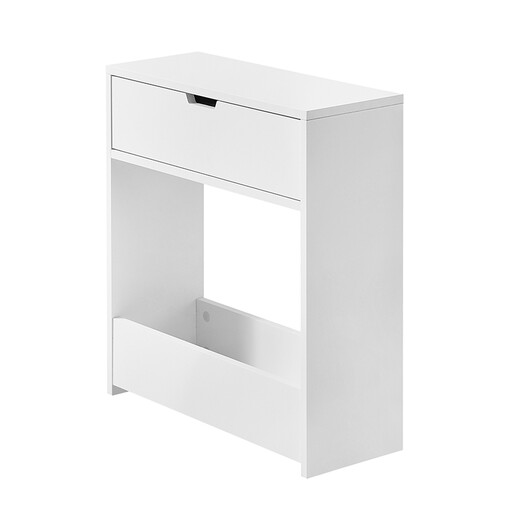
Why this product suits this profile: With a width of 20 cm, this model is suitable for tight spaces, such as beside a toilet or against a narrow wall.
The compact width is supported by precise dimensions. A load capacity of up to 20 kg also sets a clear limit for what can be stored inside.
MDF (E1), lacquered surface, 20 × 60 × 55 cm and storage space for smaller bathroom essentials.
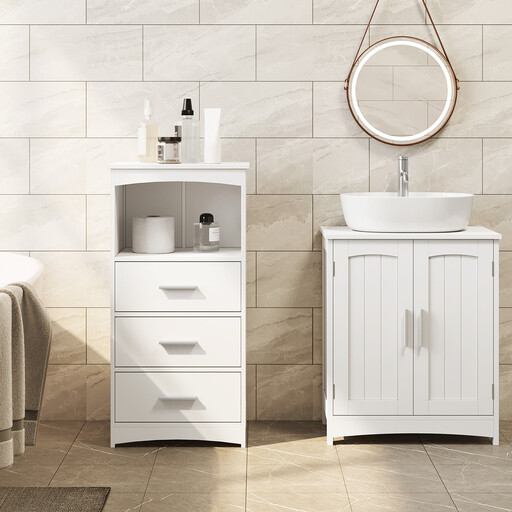
Why this product suits this profile: If you are looking for enclosed storage and a dedicated surface, this cabinet provides three drawers and an open compartment at a medium height.
The product details specify both a total load capacity of 30 kg and a capacity of 20 kg for the top shelf. This makes realistic planning easier.
Water-repellent coating, three drawers, anti-tip protection and a depth of 26.5 cm.
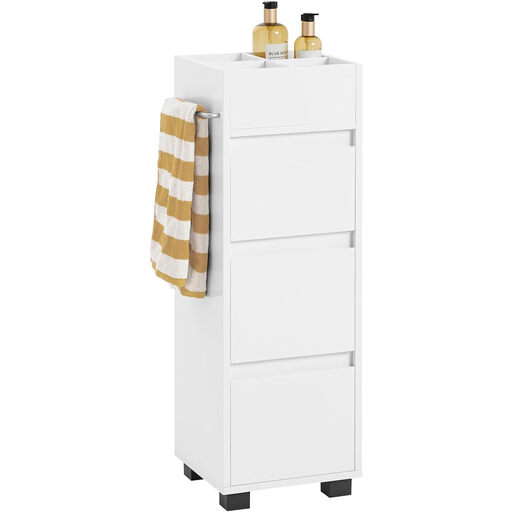
Why this product suits this profile: This model combines open and enclosed storage, making it a practical choice for households that want different bathroom items close at hand.
The cabinet is 30 cm deep and 30 cm wide. According to the product details, the towel rail can be fitted on either the left or right, allowing you to adapt it to the layout of the room.
Three drawers, four open shelves, 30 × 90 × 30 cm and a stated total load capacity of 40 kg.
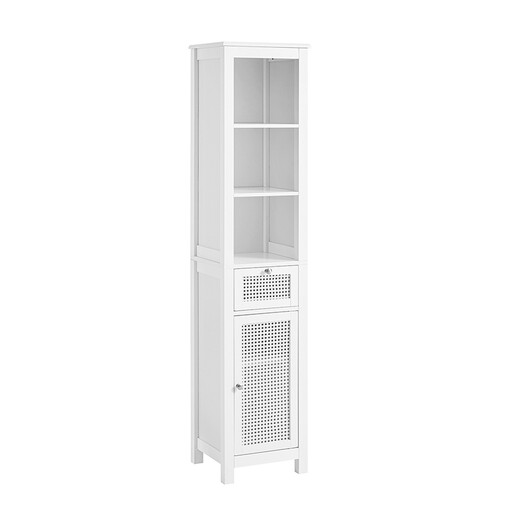
Why this product suits this profile: The slim tall cabinet makes use of its 161 cm height and requires a footprint of 35 × 32 cm. This makes it a practical option for small homes and guest cloakrooms with limited floor space.
The product description explicitly states that wall fixing is required. Ventilation slots in the door and drawer base are incorporated into the design.
Three open shelves, one drawer, a slatted door and a stated load capacity of up to 55 kg.
We have put together a complete, regularly updated list of products that fully meet these strict selection criteria and the safety regulations applicable in the EU.
Before assembly, check all parts against the assembly instructions. A slim bathroom cabinet must stand on a level floor; for tall models, use the anti-tip fitting supplied. Drawers and doors should not be overloaded for extended periods.
A soft, dry or slightly damp cloth is generally sufficient for care. Harsh cleaners, abrasive products and prolonged exposure to standing moisture can damage the surface. If towels are heavily soaked, do not leave them directly over furniture edges for extended periods.
The ideal width depends on the alcove and how you intend to use the cabinet. Models around 20 cm wide are suitable for very tight spaces, but naturally offer less internal capacity. Before buying, you must take skirting boards, door movement and the actual depth into account.
A tall bathroom storage cabinet can move storage upwards, helping to free up floor space. The taller and slimmer the furniture, the more important it is to ensure a level base, suitable wall fixing and compliance with the stated load limits.
There is no reliable one-size-fits-all answer. Its lifespan depends, among other things, on humidity, assembly, load and care. Regular ventilation, removing splashed water and following the manufacturer’s instructions can help keep the surface and fittings working properly for longer.