
Lieferung heute & morgen

Qualitätsgarantie

Willkommens-Angebote freischalten: KOSTENLOSE Lieferung | Bis zu 80 % RABATT | Kostenlose 30-Tage-JoyPlus-Testphase
App herunterladen
A slim bedside table is often the only solution for small bedrooms, tight alcoves next to the bed, or when furnishing student dorms. However, the search for the right model can quickly become a problem. Many products that look appealing online prove to be impractical in reality. Before you make a decision, it's important to know the most common pitfalls that lead to disappointment and wasted money.
As a Joybuy Product Recommendation Officer, I analyse market data daily to provide you with objective and practical shopping advice. In this guide, I'll show you what to look for to find a functional and durable piece of furniture and introduce you to some suitable options.
The 3 Most Common Flaws in Slim Bedside Tables:
To avoid these problems, you should focus on a few crucial technical features. These objective criteria will help you separate the wheat from the chaff.
Measure the available space precisely before you start your search. For extremely tight gaps, a 20 cm wide bedside table is often the only option. Remember to account for skirting boards or power outlets.
Even more important is the height. A nightstand for a box spring bed should ideally be level with or a few centimetres above the top of the mattress. The sleeping height of box spring beds is typically between 55 cm and 70 cm. A table at this height allows you to comfortably reach your alarm clock, lamp, or book without having to strain yourself.
The stability of a narrow piece of furniture depends directly on its material and design.
Think carefully about what you need to store next to your bed. Do you just need a surface for a lamp and your phone, or do you also want to store books, medication, and personal items out of sight? A niche table with drawers or closed compartments creates order and protects the contents from dust. Sometimes, an unconventional solution like a narrow shelf or a corner stand can be a better choice for making the most of space-saving furniture.
Based on the criteria above, we have identified several products that are particularly well-suited for specific user profiles and room situations.
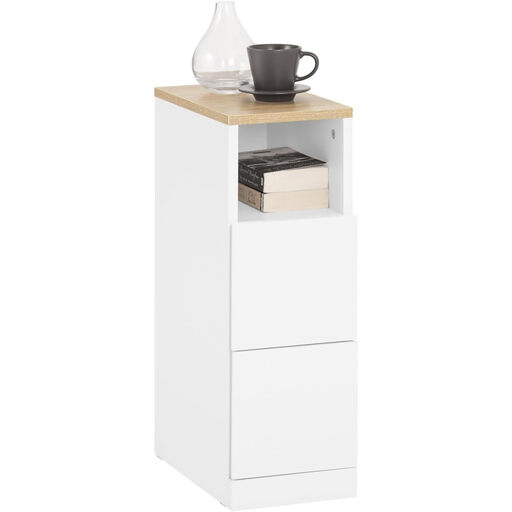
Why this model is a great fit: Specifically designed for extremely tight gaps between the bed and the wall. Its 20 cm width makes it a solution for a common problem in urban apartments, while the 60 cm height is a good match for most box spring beds.
Solves the "lack of storage" problem with two drawers and an open compartment. The MDF (E1) construction and the included anti-tip kit also address the stability issue.
Maximum space efficiency thanks to its 20 cm width and organised storage. Felt pads protect your flooring.
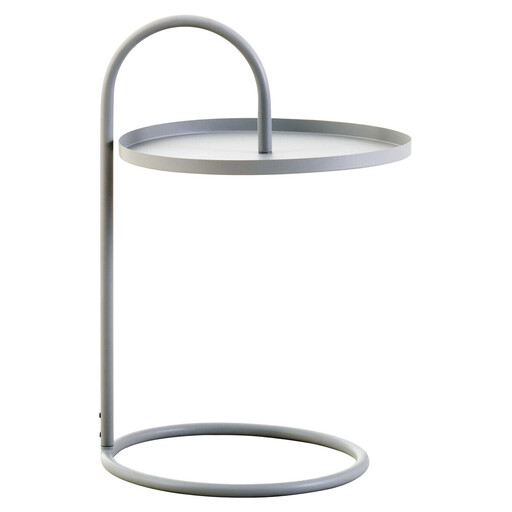
Why this model is a great fit: For users who prioritise aesthetics. The slender iron frame and the visually "floating" tabletop make a clear design statement and pair well with modern or industrial-style rooms.
The "unstable construction" issue is bypassed with a solid, round iron base that ensures a secure footing despite the delicate design. Its 60 cm height is suitable for many beds, avoiding the "wrong height" problem.
Striking, modern design made of 100% iron. The raised edges of the tabletop prevent items from easily rolling off.
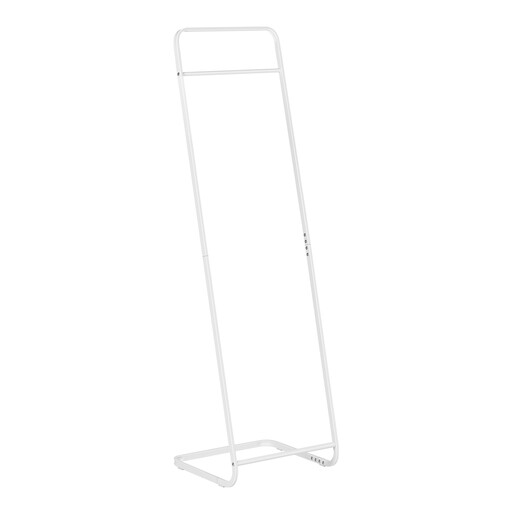
Why this model is a great fit: An unconventional but highly functional solution for students or those in studio apartments. This piece is more than a bedside table—it utilises an empty corner to hang clothes while also providing a surface.
Redefines the solution to "lack of storage" by creating vertical hanging space. The L-shape and a horizontal brace at the bottom actively counteract "unstable construction".
A smart corner solution that functions as a corner coat rack and requires only a 0.16 m? footprint. The metal tubes (20x10x0.7 mm) are painted, making them corrosion-resistant.
We've compiled a complete, up-to-date list of products that meet these strict selection criteria.
The ideal height for a nightstand for a box spring bed is level with the mattress surface or a few centimetres above it. Since most box spring beds have a sleeping height between 55 cm and 70 cm, you should measure the height of your bed before buying to ensure comfortable access.
Stability depends more on the design and material than on the width alone. Look for models with a solid, deep base, a construction from heavier materials like MDF or metal, and additional stability features such as an anti-tip kit or floor bracing. A 20 cm wide bedside table can be very stable if it is well-designed.
Yes, absolutely. A slim side table or a niche table is extremely versatile. In a narrow hallway, it can serve as a drop-off point for keys and mail. In the bathroom, it can hold towels or cosmetics. Their compact size makes them ideal problem-solvers for many unused small corners in the home.