
Lieferung heute & morgen

Qualitätsgarantie

Willkommens-Angebote freischalten: KOSTENLOSE Lieferung | Bis zu 80 % RABATT | Kostenlose 30-Tage-JoyPlus-Testphase
App herunterladen
Anyone living in a small bedroom or a city apartment knows the challenge: every square inch counts. A conventional nightstand is often too bulky, taking up valuable space. Yet, you don't want to give up a convenient spot for your smartphone, a glass of water, or your nightly read. A slim nightstand is the perfect solution.
This guide presents a selection of functional and space-saving nightstands. Our goal is to provide you with objective information to help you find a model that perfectly suits your space and needs.
Before you make a decision, a few practical considerations can be helpful. These criteria can help you identify the right model for your bedroom.
The most crucial factor is the available floor space. Precisely measure the area between your bed and the wall or other furniture. A slim nightstand is typically under 40 cm wide, with ultra-compact models measuring as little as 20 cm. Also, consider the height: ideally, the top of the nightstand should be level with the top of your mattress for easy access. Sometimes, a narrow slim side table can also be a flexible alternative.
Think about what you need to store by your bed. Do you just need a surface, or do you also require enclosed storage?
In many homes, the nightstand also serves as a charging station for tech devices. A nightstand with a power outlet and USB ports is an extremely practical solution to avoid cable clutter. These integrated features allow you to charge your smartphone, tablet, and smartwatch simultaneously right by your bed, eliminating the need for extra power strips.
Here is a curated selection of models that stand out for their compact dimensions and functionality.
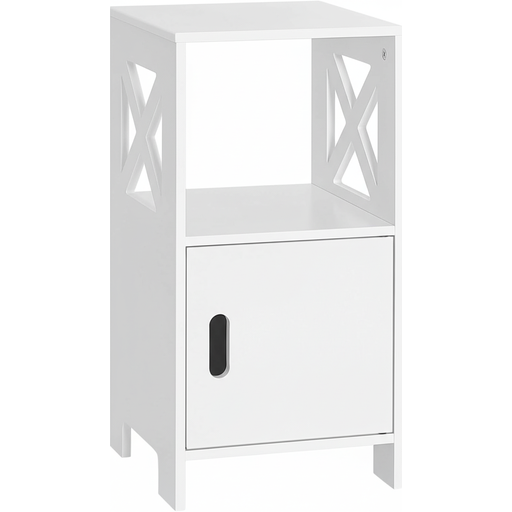
Why This Model Stands Out This set of 2 nightstands offers a symmetrical and harmonious solution for double beds. The design combines an open shelf for quick access with a closed compartment behind a door, ensuring an uncluttered look.
Advantages
Who It's For This set is ideal for couples or individuals who prefer a uniform and organised look in their bedroom. It's well-suited for anyone needing both quick-access and concealed storage options.
View Product: Woltu Set of 2 Nightstands
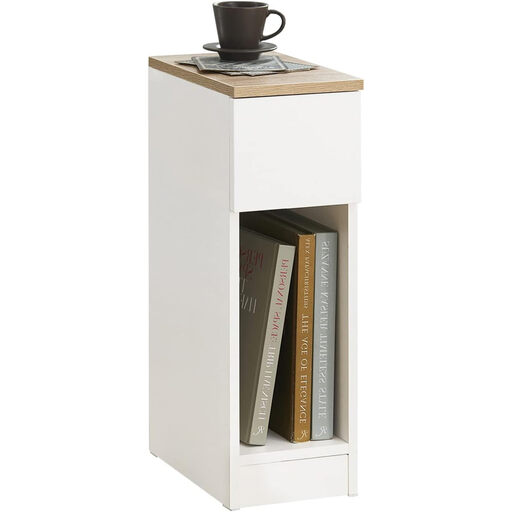
Why This Model Stands Out With an extremely narrow width of just 20 cm, this small bedside cabinet is one of the most space-saving options on the market. It was specifically designed for very tight gaps between the bed and the wall.
Advantages
Who It's For This model is the top choice for residents of dorm rooms, micro-apartments, or bedrooms where literally every inch counts. It's perfect for anyone who needs a functional surface in a minimal amount of space.
View Product: SoBuy Slim Nightstand
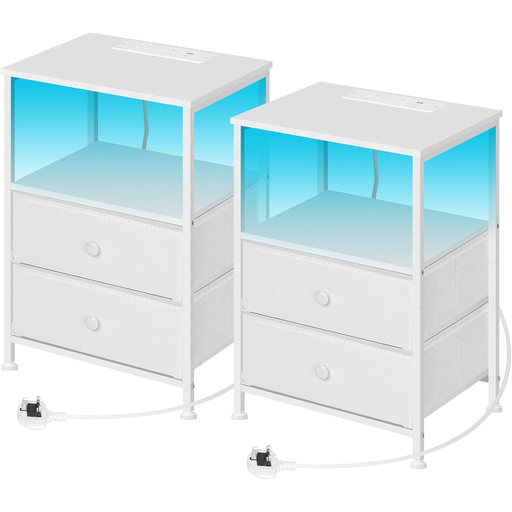
Why This Model Stands Out This set integrates modern technology directly into the furniture. Each nightstand with a power outlet and USB ports, along with customisable LED lighting, meets the demands of a digital lifestyle.
Advantages
Who It's For Ideal for tech-savvy users looking for an all-in-one solution for charging their devices and creating ambient lighting. The set is well-suited for modern bedrooms where convenience and functionality are a priority.
View Product: Woltu Nightstand Set with Charging Station
The models featured here cover specific needs, but the selection of compact furniture is even broader. If you need a wider range of storage options that can be used flexibly, explore our Side Tables with Storage category. There you'll find various models that also make excellent alternatives to a classic nightstand.
1. How high should a nightstand be? As a rule of thumb, the top of the nightstand should be roughly level with the top of your mattress. A height between 50 and 65 cm is common and allows you to comfortably reach items from bed without having to stretch or bend too much.
2. What is the difference between a bedside cabinet and a bedside console? The terms are often used interchangeably today. Traditionally, a bedside cabinet refers to a piece of furniture with more storage, typically in the form of drawers. A bedside console can be simpler and more open in design, sometimes just a top on legs. In practice, the lines are blurred, and function is the main focus.