
Lieferung heute & morgen

Qualitätsgarantie

Willkommens-Angebote freischalten: KOSTENLOSE Lieferung | Bis zu 80 % RABATT | Kostenlose 30-Tage-JoyPlus-Testphase
App herunterladen
By a Joybuy Product Recommendation Officer, August 29, 2026
A narrow hallway or a small entryway is a reality in many homes. The daily shoe clutter that quickly accumulates there is not only an eyesore but also a tripping hazard. A slim shoe cabinet promises an elegant solution for creating order without sacrificing valuable walkway space. However, the selection is vast, and not every model lives up to its promise.
Before you make a purchasing decision, it's crucial to know the typical pitfalls that can quickly turn a supposed organisational aid into a source of frustration.
Common Problems When Choosing a Slim Shoe Cabinet:
To avoid a bad investment, focus on three core aspects that determine the functionality and longevity of your new piece of furniture.
Depth is the most critical measurement for a slim shoe cabinet. Models with a depth of under 25 cm are ideal for narrow passages. However, with such a shallow depth, stability is inherently limited.
Therefore, always look for included anti-tip hardware. This is usually a simple bracket or strap used to anchor the cabinet to the wall. Installation is straightforward and essential for safe use. A securely mounted cabinet provides the necessary stability for everyday life.
The stated number of shoe pairs is only a guideline. The crucial factor is whether your shoes will actually fit.
The material affects not only the look but also the durability and maintenance requirements.
Here are some models tailored to different needs and living situations that specifically avoid the pitfalls mentioned.
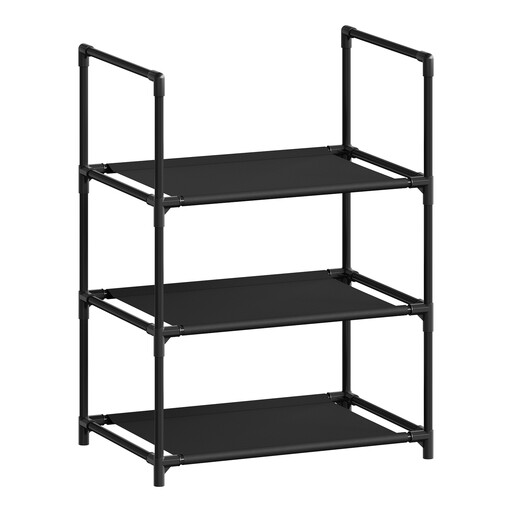
Why This Fits Their Persona: Ideal for students, first-time flat owners, or as a quick, straightforward solution for the basement or utility room. It provides space for essential shoes without a high cost or complicated assembly.
Thanks to its open design and low height, the rack is inherently stable and resistant to tipping. The problem of inadequate internal dimensions is eliminated, as taller shoes or boots can easily fit by simply removing a shelf.
Extremely space-saving and flexible with tool-free assembly. The coated metal tubes and non-woven fabric are easy to maintain.
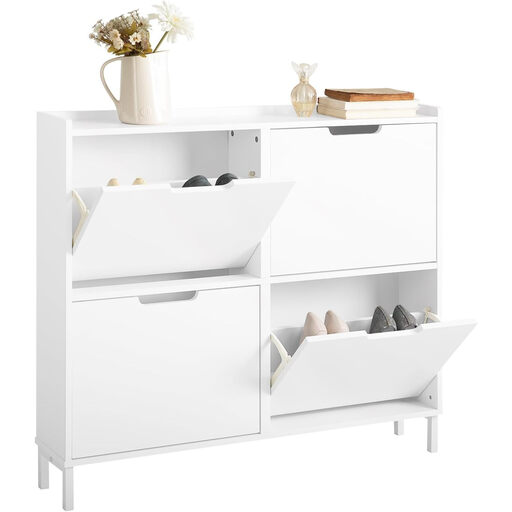
Why This Fits Their Persona: Families need plenty of storage to tame the shoe chaos in the entryway. With four flip drawers, this model offers high capacity and ensures a consistently tidy appearance with its closed front. The simple white finish complements many interior design styles.
At just 19 cm deep, it's extremely slim. The included anti-tip hardware provides the necessary stability against the wall. The flip-down drawers make optimal use of vertical space, and the top shelf offers additional practical surface area.
High capacity with a minimal footprint. The closed design protects shoes from dust and creates a clean, uncluttered look in the hallway.
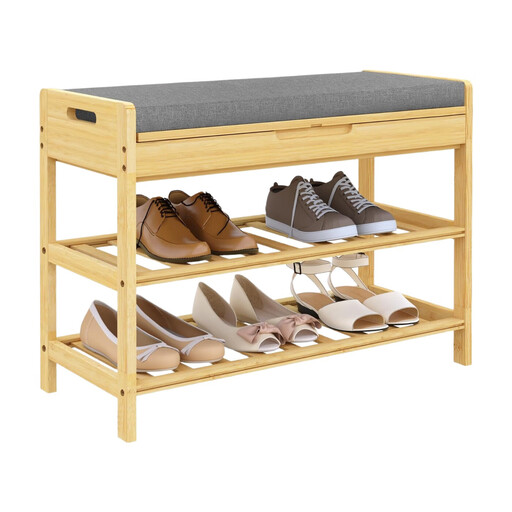
Why This Fits Their Persona: For those who want more than just storage. A shoe cabinet with a bench is perfect for the entryway, allowing you to comfortably put on and take off your shoes. This model combines seating, open shoe shelves, and a hidden compartment.
As a low bench, this piece of furniture is naturally tip-resistant. The open shelves are suitable for all types of shoes, and the bamboo material is robust and moisture-resistant—ideal for a hallway. The seat's load capacity is a solid 150 kg, according to the manufacturer.
Combines three functions: seating, open shoe storage, and hidden storage for accessories like shoe horns or care products. The natural bamboo design creates a welcoming atmosphere.
We have compiled a complete, up-to-date list of products that fully meet these strict selection criteria and safety standards.
This largely depends on the specific model. For tip-out cabinets, it's advisable to check the internal dimensions of the compartments. Some models offer adjustable dividers that can create more space. Open shoe racks are often the more flexible choice here, as they don't have fixed compartment divisions. Read the product description carefully or measure the length of your largest shoes to be sure.
Most slim shoe cabinets come with anti-tip hardware. This typically consists of one or two plastic or metal brackets and the corresponding screws. The cabinet is placed in the desired location and then secured to the wall using the hardware. This step is essential for stability and safety and should never be skipped.
A tip-out cabinet is a closed unit with flip-down drawers where shoes are stored at an angle or vertically. This creates a very tidy, clean look and protects shoes from dust. A shoe rack is an open shelving system. It provides better ventilation for shoes and quicker access, but leaves the shoes visible, which can make a hallway look more cluttered.