
Lieferung heute & morgen

Qualitätsgarantie

Willkommens-Angebote freischalten: KOSTENLOSE Lieferung | Bis zu 80 % RABATT | Kostenlose 30-Tage-JoyPlus-Testphase
App herunterladen
A cluttered entryway with scattered shoes is not only an eyesore but also an everyday tripping hazard. A slim shoe cabinet is designed to bring order to the smallest of spaces. However, not every solution delivers on its promise. Many models only reveal their weaknesses after purchase—from wobbly construction to an impractical interior layout.
As your Joybuy Product Recommendation Officer, I'm here to help you identify the crucial features. This guide will show you what to look for to find functional and durable entryway shoe storage that perfectly fits your needs.
Before you make a decision, it's important to know the three most common problems that arise with many space-saving shoe cabinets:
To avoid buyer's remorse, focus on three objective criteria. These will determine whether a space-saving shoe cabinet truly delivers in everyday use.
For narrow hallways, depth is the most critical measurement. A shoe cabinet with a shallow depth—ideally under 25 cm—ensures that enough walkway space is preserved. Slim tip-out shoe cabinets are particularly efficient here, often with a depth of just 17 to 24 cm. Pay attention to the material: models made of MDF (E1 standard) are generally more dimensionally stable than those made from simple particle board. A solid anti-tip device for wall mounting is essential for stability and safety and should always be included.
The shoe capacity stated by the manufacturer is just a guideline. Check the internal dimensions of the compartments to ensure your shoes will actually fit. A good hallway shoe chest offers adjustable or removable dividers. This allows you to flexibly adapt the space to different shoe types—from flat sandals to ankle-high boots. This is the key to making the most of the available storage.
The material affects not only the look but also the functionality. A slim white shoe cabinet can look modern, but the surface finish should be robust and easy to clean. To prevent odours, models with integrated ventilation are advantageous. Open slats, rattan inserts, or discreet ventilation slits on the back panel promote air circulation and create a better environment for your shoes.
Here are a few models tailored to specific needs and living situations that successfully avoid the common pitfalls mentioned.
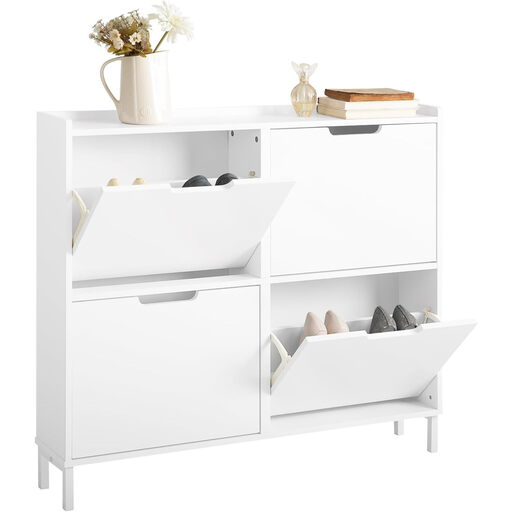
Why This Fits Their Persona: Ideal for households that need to store many shoes in a minimal footprint. The 100 cm width and four separate tip-out compartments allow for clear organization for multiple people.
The model is made of sturdy E1-MDF and comes with an anti-tip device, which counteracts instability. The closed front protects shoes from dust.
Very high storage capacity with an extremely shallow depth of just 19 cm. The top shelf provides additional space for keys or decor.
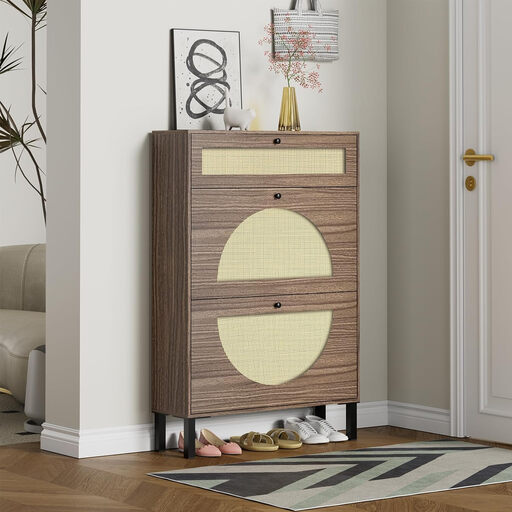
Why This Fits Their Persona: For anyone looking for a piece of furniture that combines functionality with an appealing design. The combination of rattan, engineered wood, and metal feet fits seamlessly into modern or nature-inspired interiors.
The rattan weave provides excellent air circulation, thus preventing odour build-up. The adjustable dividers in the compartments solve the problem of inflexible storage spaces.
Combines stylish design with practical ventilation. The raised metal legs make it easier to clean the floor underneath and protect the cabinet from moisture.
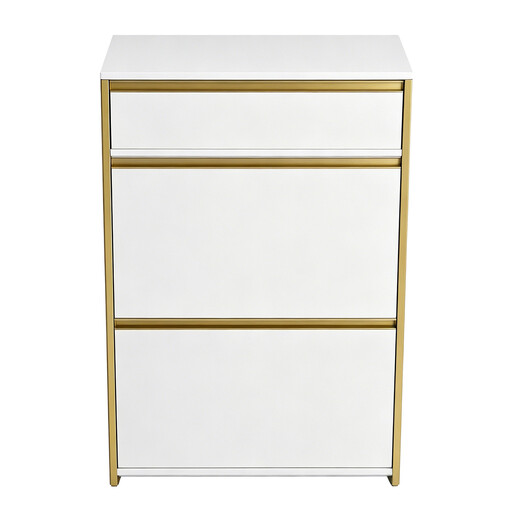
Why This Fits Their Persona: Perfect for users seeking a versatile storage solution that goes beyond just storing shoes. It also works well as a sideboard in the living room or an additional chest in the hallway.
The internal shelves are height-adjustable and removable. This offers maximum flexibility and bypasses the trap of rigid compartments that are unsuitable for boots or larger shoes.
Multifunctional thanks to the combination of hinged doors, a drawer, and a top shelf. The customizable interior structure allows for storing shoes, boxes, or books.
We have compiled a complete, up-to-date list of products that fully meet these strict selection criteria and safety standards.
For most narrow hallways, a shoe cabinet with a depth of less than 25 cm is a good choice. Tip-out models are often the most space-efficient and can have a depth of just 17 to 24 cm. Be sure to measure your hallway before buying and plan for at least 80 cm of passage width to ensure comfortable movement.
The capacity stated by manufacturers is often based on smaller women's shoe sizes (around EU 37-38). For larger shoe sizes (EU 43 and up) or bulkier shoes like hiking boots or high-top sneakers, the actual capacity is reduced. Therefore, check the internal dimensions of the compartments and opt for models with adjustable dividers to best adapt the space to your shoe collection.
Yes, wall mounting is strongly recommended. Due to their design (tall and narrow), these cabinets have a high centre of gravity and can easily tip over, especially when opening the flaps or doors. An anti-tip device, which is usually included, should always be installed for safety. This is especially important in households with children or pets.