
Lieferung heute & morgen

Qualitätsgarantie

Willkommens-Angebote freischalten: KOSTENLOSE Lieferung | Bis zu 80 % RABATT | Kostenlose 30-Tage-JoyPlus-Testphase
App herunterladen
A narrow hallway doesn't have to be an obstacle to staying organised. A well-chosen, space-saving shoe cabinet can transform your entryway and create an uncluttered atmosphere. However, the search for the perfect model has a few common pitfalls that can quickly turn a clever solution into a purchase you'll regret. Before you decide, it's important to know the most frequent problems so you can avoid them.
Author: Joybuy Product Recommendation Officer
Our Mission: We filter market information to provide objective, practical shopping advice that helps you see through the marketing hype.
Many buyers focus on design and overlook functional flaws that only become apparent in daily use. Pay close attention to these three points:
To avoid these problems, you should check three key technical features before buying. These are what define the real-world usability of a slim shoe cabinet.
For a typical hallway, depth is the most important criterion. A slim shoe cabinet should not exceed a depth of 25 cm to avoid obstructing the walkway.
The stability of a cabinet depends directly on its material and construction.
A good space-saving shoe cabinet adapts to your shoe collection—not the other way around.
We have identified products that meet the above criteria and are suitable for various needs and living situations.
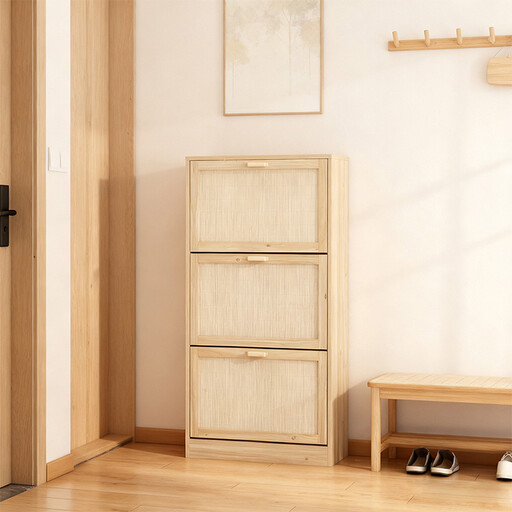
Why This Fits Their Persona: The classic tilt-out solution for extremely narrow passages where every centimetre counts and a polished look is essential.
The woven bamboo doors provide natural air circulation, preventing the ventilation dilemma. The included anti-tip kit ensures it stands securely against the wall.
Very slim depth of 24 cm. Ventilated design with woven bamboo. Adjustable shelves for flexible shoe storage.
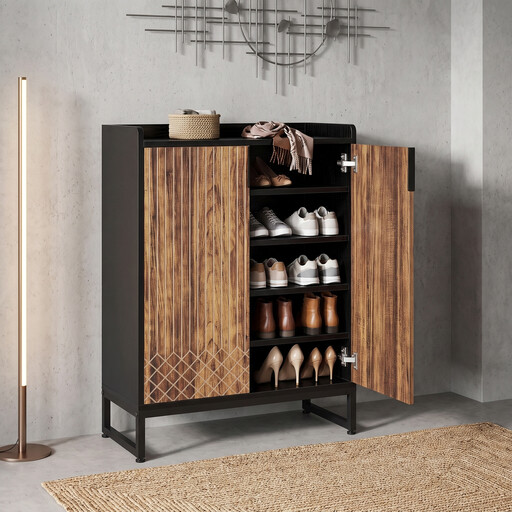
Why This Fits Their Persona: Perfect for families or individuals with a larger shoe collection who need a robust, stylish storage solution that doubles as a modern piece of furniture.
The sturdy metal frame prevents wobbling, even when fully loaded. With space for up to 25 pairs of shoes, its capacity claim is realistic even for larger collections.
High capacity (up to 25 pairs). Durable construction with a metal frame. Modern design with a closed front for a clean look.
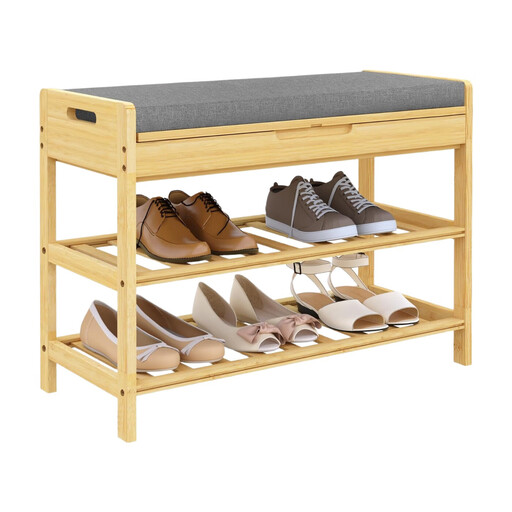
Why This Fits Their Persona: A 2-in-1 solution for entryways where you want to sit comfortably while putting on shoes and prefer open, airy shoe storage.
Designed as a bench, stability is a core feature (load capacity of up to 150 kg, according to the manufacturer). The open-shelf design prevents any odour or mould build-up.
Combines shoe storage with a padded seat. The bamboo material is robust and moisture-resistant.
We've compiled a complete, up-to-date list of products that fully meet these strict selection criteria and European safety standards.
For most narrow hallways, a depth of 25 cm or less is ideal. Models like tilt-out cabinets are often only 17 to 24 cm deep and barely protrude into the walkway. Measure your hallway at its narrowest point and ensure you leave enough space to walk past comfortably.
Look for models with ventilation holes, slatted doors, or materials like rattan or woven bamboo that allow for air circulation. As a general rule, only place completely dry shoes into a closed cabinet. Airing out the cabinet regularly also helps.
It depends on the specific model. Many modern tilt-out cabinets feature adjustable or removable dividers within the compartments. This allows two smaller sections to be combined into one larger one, which can accommodate shoes up to a size UK 11 or 12. Check the product description for explicit details on adjustable compartments or the maximum shoe size.