
Lieferung heute & morgen

Qualitätsgarantie

Willkommens-Angebote freischalten: KOSTENLOSE Lieferung | Bis zu 80 % RABATT | Kostenlose 30-Tage-JoyPlus-Testphase
App herunterladen
A slim shoe cabinet can keep a narrow hallway tidy without unnecessarily restricting the walkway. However, many models look roomier in product photos than they are in everyday use. So it’s not just the colour and design that matter: depth, interior layout and anti-tip features are important too.
A particularly shallow slim shoe rack takes up less space, but the usable interior may be too small for larger trainers, men’s shoes or ankle boots. Check that the internal dimensions will accommodate your shoe size. The external dimensions alone don’t tell you how much space there is for each pair.
A shoe cabinet with doors looks neat, but can be impractical if the compartments are designed only for flat shoes. Removable or height-adjustable shelves make it easier to store trainers, heels and short boots. A shoe cabinet with adjustable shelves lets you adapt the layout to different shoe shapes.
Tall, narrow furniture has a small footprint and can tip over if the load isn’t evenly distributed. Make sure you have a level surface to place it on, and check whether wall fixings or anti-tip fittings are included. Children shouldn’t climb on the furniture or play with it. A tilt-out shoe cabinet with several folding compartments also needs to be securely fitted, even though it takes up little floor space.
For hallway shoe storage, start by measuring the available alcove. As well as the width of the furniture, allow for doorways, skirting boards and the remaining walkway. A model around 24 to 28 cm deep may suit a narrow space, provided the internal compartments are large enough.
This checklist may help:
A shoe rack for small spaces makes use of vertical space, while a low cabinet can often double as a place to put keys, bags or decorations. A shoe cabinet with drawers adds storage for laces, shoe-care products or small everyday items alongside its enclosed compartments.
Treat the manufacturer’s capacity figures as a guide. The actual number of pairs will depend on shoe size, style and arrangement. High-top trainers and shoes with heels need more height than flat slippers.
MDF and coated chipboard are common materials for compact furniture. Look for neatly sealed edges, clear assembly instructions and suitable fittings. For metal frames with fabric or non-woven shelves, clean them with a dry or slightly damp cloth. Too much water or abrasive cleaners can damage coated surfaces.
Wall fixings are particularly useful for tall, narrow cabinets. Once assembled, check that the unit is stable and tighten any connections if needed. The stated maximum load is also important for long-term use.
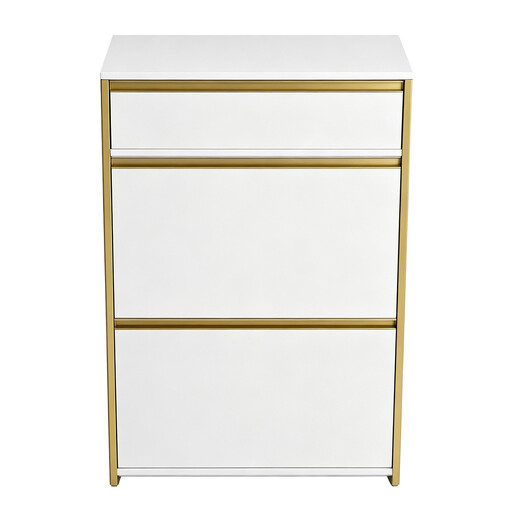
Why this product suits this profile: This white cabinet with gold-tone accents combines enclosed shoe storage with a drawer and a top shelf. Its dimensions make it a good fit for hallways where depth is limited.
The four height-adjustable or removable shelves let you change the layout. An anti-tip fitting helps secure the cabinet firmly to the wall.
The stated features include space for up to 12 pairs of shoes, a drawer and a wipe-clean surface made from high-density chipboard.
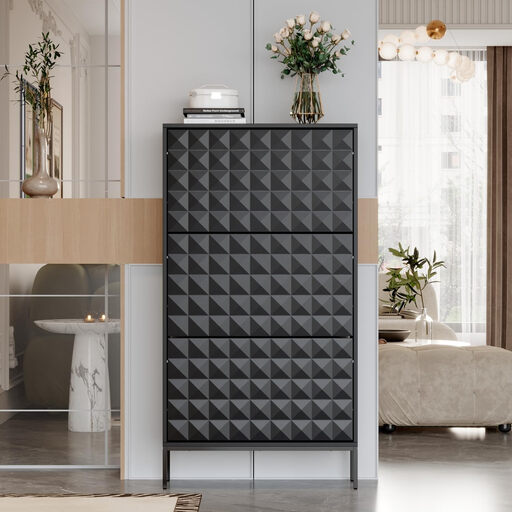
Why this product suits this profile: This black MDF cabinet has three enclosed compartments and a slim depth. It’s designed for households with several people or a larger shoe collection.
The middle dividers can be removed or adjusted. This lets you adapt the compartments for trainers, heels or short boots.
The manufacturer states that it can hold up to 24 pairs of shoes and features three doors, a maximum load of 23 kg and 15 cm-high feet.
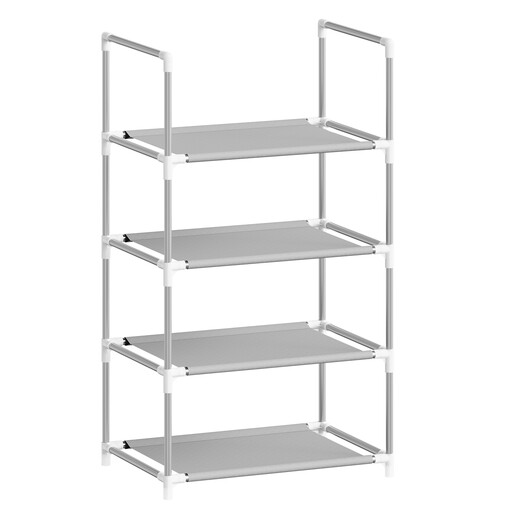
Why this product suits this profile: This open metal frame is ideal for households that want quick access to their shoes, and works well in a hallway, living room or corridor. It’s easy to move if your needs change.
The open design means the interior height isn’t restricted by fixed doors or small tilt-out compartments. The shelves are removable, and wall fixings are recommended for added stability.
Four tiers and a metal frame, with compact dimensions of 41 × 28 × 72 cm, provide flexible shoe storage for your entrance.
We’ve put together a complete, regularly updated list of products that meet these strict selection criteria and fully comply with the safety regulations applicable in the EU.
The right depth depends on the shoes you need to store. Around 24 to 28 cm may be enough for flat shoes. Larger trainers, heels and ankle boots need more interior space. So compare the internal dimensions with your longest pair of shoes, not just the external measurements.
A tilt-out shoe cabinet with doors keeps shoes out of sight and can make your entrance look tidier. An open shoe rack, on the other hand, gives you quick access and works well for shoes you wear often. If dust or pets are a concern, a shoe cabinet with doors may be more practical; if you regularly change the shoes you wear, an open rack offers greater flexibility.
Load shelves and drawers only within the manufacturer’s stated limits. Wipe away moisture and dirt promptly, avoid harsh cleaning products, and check the screws and wall fixings from time to time. A dry, level surface helps protect the materials and structure in everyday use.