
Lieferung heute & morgen

Qualitätsgarantie

Willkommens-Angebote freischalten: KOSTENLOSE Lieferung | Bis zu 80 % RABATT | Kostenlose 30-Tage-JoyPlus-Testphase
App herunterladen
A narrow hallway presents a common challenge: where to store shoes without blocking the walkway and creating constant clutter? A slim, tilt-out shoe cabinet is often the ideal solution. It utilises vertical space, keeps shoes dust-free, and ensures an uncluttered look. However, there are several pitfalls in the selection process that can quickly turn a practical purchase into one you'll regret.
As your Joybuy Product Recommendation Officer, I'll help you identify the critical features and avoid common problems.
Many products promise more than they deliver. Pay close attention to these three points to avoid disappointment:
To make the right decision, focus on objective, measurable criteria. These three parameters are crucial for a slim shoe cabinet.
The most important factor for a shoe cabinet for a narrow hallway is its depth. Measure your available space accurately and plan for enough clearance to move around.
The number of flip-drawers determines the basic organisation. However, a shoe rack with flip-drawers should also be flexible on the inside.
Durable hallway shoe storage depends on the quality of the materials and construction.
Here are some models tailored to specific needs that meet the quality criteria mentioned above.
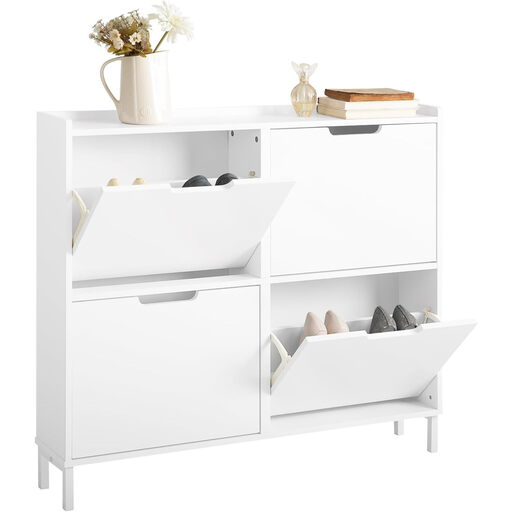
Why This Fits Their Persona: Ideal for long, narrow hallways where every centimetre counts. This model offers high capacity with four flip-drawers without obstructing the walkway.
With an ultra-slim depth of just 19 cm, this model solves the core problem of tight corridors. The solid MDF construction and included anti-tip kit prevent instability.
Maximum capacity with a minimal footprint. The four separate flip-drawers allow for easy shoe organisation.
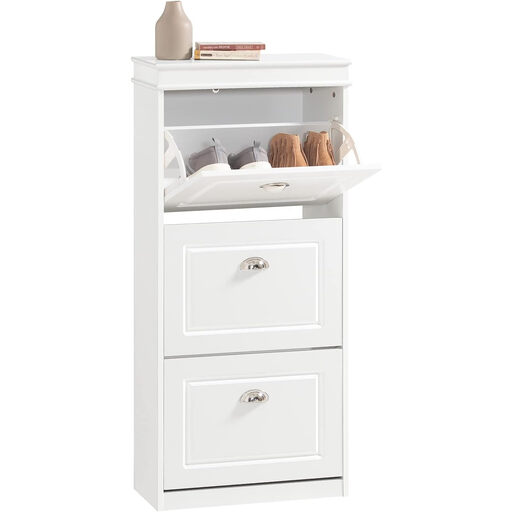
Why This Fits Their Persona: Perfect for small alcoves or shorter hallway walls. This model makes optimal use of vertical space, offering ample storage on a small footprint.
The FSC-certified MDF (E1 grade) construction and the included anti-tip kit provide necessary stability. The internal compartments are designed for various shoe sizes.
Excellent use of vertical space with a narrow width (53 cm). The simple white design blends discreetly into many interior styles.
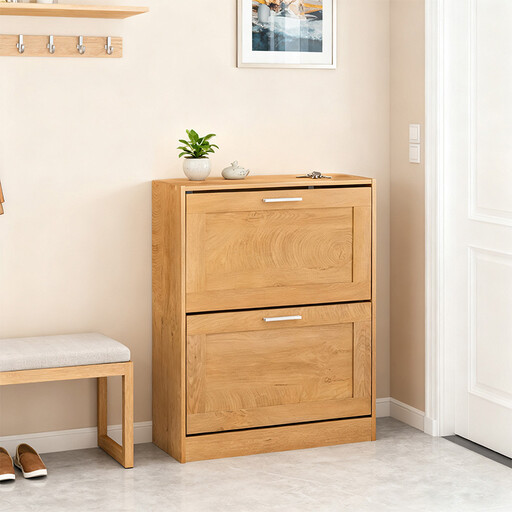
Why This Fits Their Persona: A functional and affordable solution for a first home or smaller shoe collections. It provides essential organisation without breaking the bank.
This model features adjustable shelves. This overcomes the common issue of larger shoes not fitting—a frequent drawback in budget-friendly models.
Solid core functionality with flexible compartments. The top surface provides extra space for keys or decor.
We've compiled a complete, up-to-date list of products that meet these strict selection criteria.
This depends on the specific model. The crucial factor is not just the external depth of the cabinet, but the usable internal depth of the flip-down compartments. Models with adjustable or removable dividers offer the most flexibility here. It is advisable to check the product description for details on the internal dimensions of the compartments.
Although many models are designed to be freestanding, using the included anti-tip kit to secure the unit to the wall is highly recommended. Due to their shallow depth and tall design, slim shoe cabinets have a higher centre of gravity. Wall mounting ensures stability and prevents tipping, which is especially important on uneven floors or in households with children.
A tilt-out shoe cabinet has enclosed, flip-down compartments where shoes are stored at an angle. This protects them from dust and creates a very tidy, enclosed look. An open shoe rack offers quicker access and better ventilation for shoes, but it can quickly look messy and is not a dust-free solution.