
Lieferung heute & morgen

Qualitätsgarantie

Willkommens-Angebote freischalten: KOSTENLOSE Lieferung | Bis zu 80 % RABATT | Kostenlose 30-Tage-JoyPlus-Testphase
App herunterladen
A narrow hallway presents a challenge for many households: where to put shoes without making the entryway look cluttered or blocking the path? A messy entrance can negatively impact the overall impression of a home. The right shoe storage is therefore crucial for creating order and a welcoming atmosphere.
This article serves as a practical guide. We will introduce different types of slim shoe cabinets and explain their specific features. Our goal is to provide you with the information you need to make an informed decision and find the perfect solution for your hallway.
Before you decide on a model, there are a few key aspects to consider. These will help you narrow down the selection to products that are a functional and aesthetic match for your home.
The most important step is to accurately measure the available space. Note the maximum width, height, and depth the piece of furniture can have. Remember to account for doors or flaps that need to open and ensure there is enough room to walk by. A small shoe cabinet can create significant storage space in your hallway if it is perfectly adapted to the conditions. Depth is especially critical in a narrow hallway.
The type of storage affects both the look and functionality:
The material determines not only the durability but also the style of the furniture. Models made from engineered wood with veneer or lacquer finishes are common and available in many designs. A modern shoe chest can add stylish accents with metal elements or high-gloss surfaces. Ensure the cabinet's design harmonizes with your existing decor to create a cohesive overall look.
Based on functionality, design, and space efficiency, we have compiled a selection of models suitable for narrow hallways.
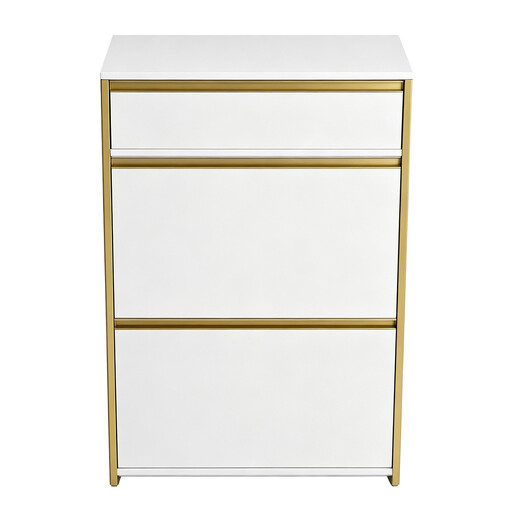
Why it stands out This model combines closed shoe storage with an additional drawer and a top shelf. With a depth of just 24 cm, it is exceptionally space-saving. The white design with gold accents gives it a modern yet elegant touch, elevating it from a purely functional piece of furniture to a decorative element.
Advantages
Who is it for? This model is ideal for those looking for a stylish, closed storage solution. It's perfect for anyone who wants to neatly store not only shoes but also keys, mail, and other small items while adding a visual accent to their entryway.
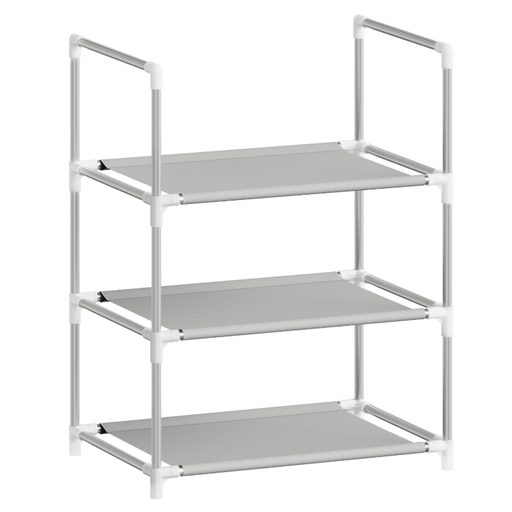
Why it stands out This open rack is a straightforward and highly compact solution. Its small dimensions of 41 x 28 x 55 cm allow it to fit into the smallest nook. Assembly is tool-free thanks to a simple interlocking system, making setup quick and easy. The open structure ensures good ventilation for your shoes.
Advantages
Who is it for? Perfect for students, small households, or as a secondary rack in the basement or storage room. Anyone looking for a quick, functional, and budget-friendly solution for a manageable number of shoes (up to 6 pairs) will find this product to be a great fit.
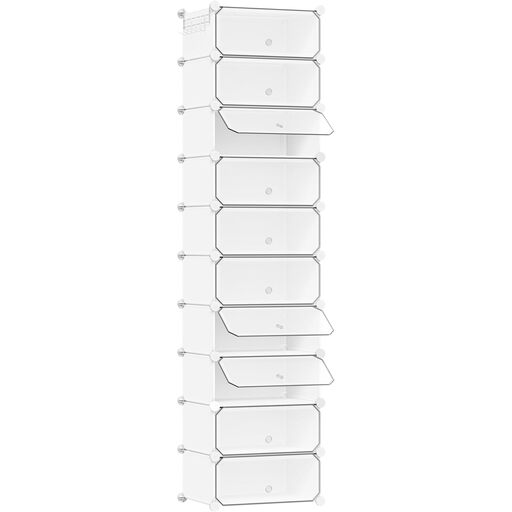
Why it stands out This system stands out for its modularity. The individual cubes, made of PP plastic, can be flexibly assembled—tall, wide, or stepped—to fit your space and needs. With 10 compartments, it offers space for up to 20 pairs of shoes and protects them from dust with doors. The doors feature small eyelets that serve as handles and aid ventilation.
Advantages
Who is it for? This shelving system is the right choice for families or individuals with a larger shoe collection. It is ideal for anyone who needs an adaptable and expandable storage solution that can also be used for other purposes around the home.
If the models presented here don't quite meet your expectations, or if you simply want to compare a wider selection of designs and sizes, you can find more solutions in our category. Discover our entire range of hallway shoe racks now.
The capacity largely depends on the model and shoe size. A slim tip-out cabinet often holds 6 to 8 pairs of shoes. A taller shoe cabinet with doors can accommodate 12 pairs or more. Modular systems or open racks are often flexible and can store a varying number of shoes depending on their configuration.
A classic shoe cabinet has horizontal shelves on which the shoes sit. A tip-out cabinet, on the other hand, has pivoting compartments where shoes are stored at a slight angle or vertically. This allows a tip-out cabinet to have a very shallow depth, often under 25 cm, making it an especially space-saving solution for narrow hallways.
To be considered a slim shoe cabinet, its depth should ideally be under 35 cm. Tip-out cabinets are the shallowest models, with a depth of about 17 to 25 cm. Slim cabinets with doors typically have a depth of 24 to 35 cm. Measure your hallway accurately and plan for enough clearance in front of the cabinet.