
Lieferung heute & morgen

Qualitätsgarantie

Willkommens-Angebote freischalten: KOSTENLOSE Lieferung | Bis zu 80 % RABATT | Kostenlose 30-Tage-JoyPlus-Testphase
App herunterladen
A narrow hallway and shoe clutter are a common challenge in many homes. Your entryway makes the first impression, but it often lacks the space for storage that is both functional and appealing. A slim shoe cabinet can be the perfect solution. It makes optimal use of limited depth, creating order without obstructing the walkway.
This article introduces a selection of space-saving shoe cabinets and provides practical advice on what to consider when choosing the right one for your entryway.
Before making a decision, there are several functional aspects to consider. These will help you find a model that not only looks great but also perfectly suits your practical needs.
Depth is the crucial measurement for a shoe cabinet for hallways and entryways. Models with a depth of under 30 cm are considered especially space-saving. A shoe cabinet with a 24 cm depth is a common size that offers sufficient storage without protruding far into the room. When it comes to storage type, there are two main systems:
The material determines not only the durability but also the atmosphere the piece of furniture creates.
Consider how many pairs of shoes you need to store. The manufacturer's capacity specifications are usually estimates based on average shoe sizes. Adjustable or removable shelves in a slim shoe chest offer the flexibility to neatly store everything from flat sneakers to taller ankle boots.
Here is a selection of models that are well-suited for tight spaces due to their shallow depth and smart design.
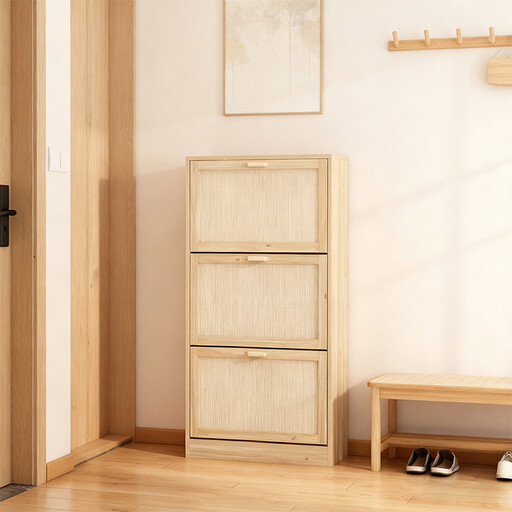
Why it stands out: This model combines a warm wood-look finish with bamboo-weave doors. This choice of material not only gives it a natural elegance, but the weave also promotes air circulation, which can help prevent odours and mould. With a depth of just 24 cm, it is an ideal space-saving shoe cabinet.
Advantages:
Who is it for? This model is an excellent choice for those who appreciate natural materials and are looking for a compact yet stylish solution for a small to medium-sized shoe collection in a narrow hallway.
View details for the SoBuy Shoe Cabinet
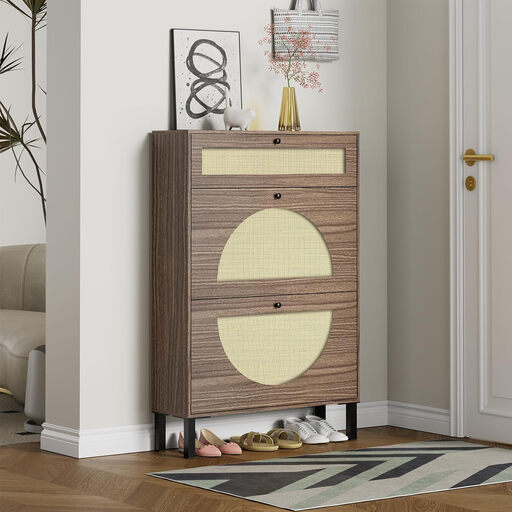
Why it stands out: This tip-out cabinet impresses with its modern design featuring rattan elements that ensure excellent ventilation. An additional drawer at the top provides practical storage for small items like keys or shoe care products. The elevated stand on metal feet makes it easy to clean the floor underneath.
Advantages:
Who is it for? Ideal for users who prioritise good ventilation for their shoes and want a piece of furniture with a modern, airy design that fits into vintage, boho, or contemporary interiors.
View details for the UEV Tip-Out Cabinet
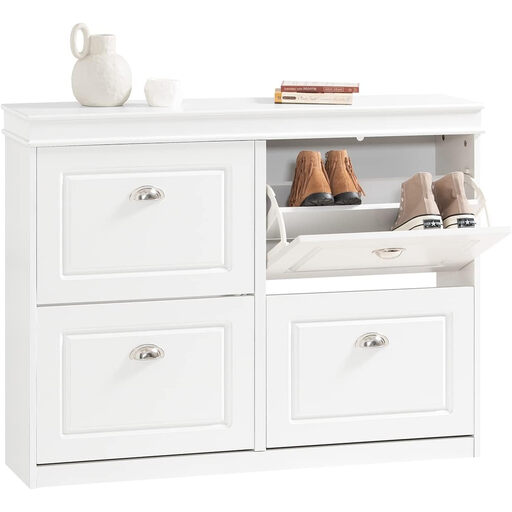
Why it stands out: At 105 cm wide, this white shoe cabinet offers exceptional storage capacity while remaining very slim with a 24 cm depth. The four separate flaps allow for organised storage of a large shoe collection, making it a great solution for families or couples.
Advantages:
Who is it for? Perfect for households with a high demand for shoe storage who are looking for a wide yet shallow solution to make the most of a hallway wall.
View details for the SoBuy 4-Flap Shoe Cabinet
Requirements for size, colour, and style are highly individual. If the models presented here don't exactly match what you're looking for, you might find the perfect alternative in our broader selection.
Discover More Shoe Furniture on Joybuy.de
1. How deep should a slim shoe cabinet be? A space-saving shoe cabinet typically has a depth between 17 cm and 25 cm. Models around 24 cm deep are a good compromise, offering a small footprint with enough storage space for most common shoe sizes.
2. What is the advantage of a tip-out shoe cabinet? A tip-out cabinet stores shoes at an angle or vertically in tilting compartments. This requires significantly less depth than a conventional shoe rack, making it the top choice for particularly narrow hallways and alcoves.
3. How many shoes fit in a slim shoe cabinet? The capacity largely depends on the specific model and the size of the shoes. Compact models often hold 8 to 12 pairs, while wider versions can offer space for 16, 20, or more pairs. Product descriptions usually include a capacity estimate.