
Lieferung heute & morgen

Qualitätsgarantie

Willkommens-Angebote freischalten: KOSTENLOSE Lieferung | Bis zu 80 % RABATT | Kostenlose 30-Tage-JoyPlus-Testphase
App herunterladen
Unused corners, narrow gaps next to the refrigerator, or awkward niches in the bathroom—many homes, especially in cities, have areas that seem like wasted space. A slim storage shelf promises to transform these very gaps into valuable storage. However, the selection is vast, and not every model delivers on its promise. Before you make a hasty purchasing decision, it's crucial to recognise common defects and exaggerated marketing claims that often lead to frustration and a poor investment.
This guide focuses on the objective criteria that define a functional and durable slim storage shelf. We will highlight the three most common pitfalls to avoid when buying and show you what to look for to find the right solution for your home.
The 3 Most Common Pitfalls When Buying Slim Storage Shelves:
To avoid these pitfalls, you should base your selection on three objective parameters. These will help you find a product that not only fits but also serves its purpose for years to come.
The most crucial step is to measure the niche precisely. Measure the width at three different points (bottom, middle, and top), as walls are rarely perfectly straight. Use the smallest measurement you record as your maximum width. Additionally, plan for about 1-2 cm of clearance to allow a slim shelf with casters to move easily. Also, consider baseboards, door frames, or power outlets that might restrict the available space. The height and depth are just as important to ensure the shelf doesn't stick out over countertops or block a walkway.
The material affects not only the look but also the suitability for different rooms and the load capacity.
A rolling kitchen cart offers flexibility. You can easily pull it out for cleaning or move it to another location if needed. Be sure to look for casters with locking brakes. These prevent the cart from rolling away when you're removing items and ensure it stands securely. For purely storing rarely used items or as a static freestanding spice rack, a model without casters may be the more stable solution.
Based on the criteria above, we have identified several models that are well-suited for specific user profiles and living situations.
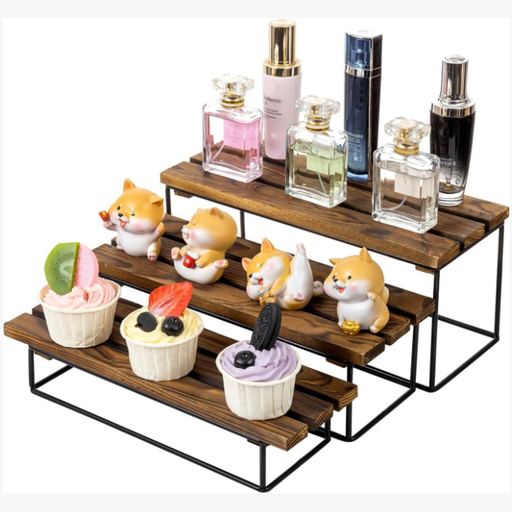
Why This Fits Their Persona: Ideal for those seeking a fixed, aesthetic solution for countertops or wider shelves. It's perfect for displaying spices, cosmetics, or small collectibles in a stylish and organised way, without needing a mobile solution.
This model bypasses the pitfall of unstable casters as it is designed as a fixed, tiered stand. The solid wood construction ensures a secure footing.
The 3-tier design offers optimal visibility and quick access to all items. The torched wood finish blends well with rustic or modern interior styles.
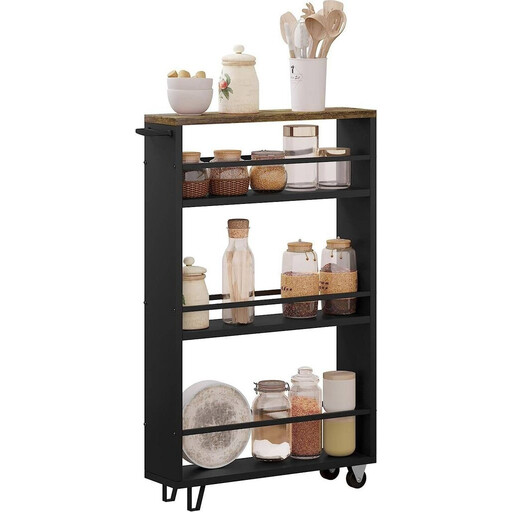
Why This Fits Their Persona: Designed for individuals who want to make the most of an extremely narrow gap (e.g., between the refrigerator and the wall). The focus here is clearly on functionality and space optimisation.
With a specified width of just 13 cm, this model directly addresses the problem of inaccurate dimensions. The casters with locking brakes counteract the pitfall of instability.
The ultra-slim design is its main advantage. Metal side rails prevent items from falling off, and the load capacity per shelf is 5 kg, according to the manufacturer.
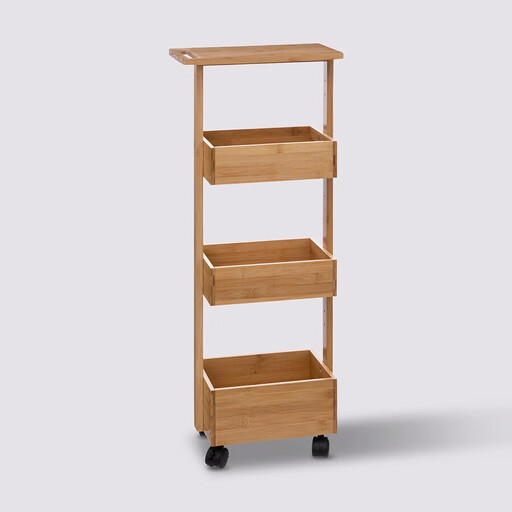
Why This Fits Their Persona: Suitable for users looking for a space-saving solution for the bathroom who also value natural materials. Its 18 cm width fits into many standard niches next to a sink or toilet.
This model avoids the pitfall of using the wrong material by utilising bamboo, which has higher moisture resistance than conventional engineered woods, making it suitable for the bathroom environment.
The material is FSC-certified, indicating responsible sourcing. The wheel locking system ensures a secure stand when the cart is not being moved.
A well-considered choice can be the difference between daily annoyance and lasting order. If you'd like to compare more models selected based on objective criteria, you can find a broader overview here.
Measure the width at a minimum of three points: at the bottom (near the floor), in the middle, and at the top. Use the smallest measurement as your reference. Subtract 1-2 cm from this to ensure a rolling cart has enough clearance. Don't forget to measure the depth and height and to account for any obstacles like baseboards, pipes, or light switches.
For humid environments like the bathroom, materials such as stainless steel, powder-coated metal, plastic, or bamboo are most suitable. They are water-resistant and not prone to swelling or mould. Untreated wood or basic particleboard should be avoided.
Stability depends on the construction, material, and how it's loaded. Look for a solid frame, ideally with cross-braces for reinforcement. Models with locking brakes on the casters offer additional safety. Always check the manufacturer's specified maximum load capacity per shelf and distribute the weight evenly, placing heavier items on the lower levels.