What should you look for when buying?
First, check the available space and appliance style, then make sure your cups will fit, and finally compare capacity, Eco consumption and noise levels. This helps you assess a slimline appliance based on your kitchen and your usual weekly load, rather than choosing by width or place-setting capacity alone.
| Consideration |
What to check when buying |
Who considers this important? |
| Cups and loading |
Check the height and width of your cups, the basket layout and clearance for the spray arms on the specific model. |
When I load several cups with the rest of the dishes after the weekly shop, I want to know they’ll fit safely in the upper basket. Around 36% of consumers prioritise cup fit. |
| Style and kitchen fit |
Measure the available space or recess for height, width and depth; check the furniture door, plinth and connections. |
If space in my kitchen is limited, the appliance style and dimensions need to suit the space I have. Around 29% of consumers put kitchen fit first. |
| Capacity and Eco consumption |
Compare place settings, kWh per 100 Eco cycles and litres per Eco cycle on a like-for-like basis. |
If I wait until I have a suitable weekly load, I want to consider capacity and Eco consumption in relation to my washing-up routine. Around 21% of consumers prioritise load size and running costs. |
| Noise and everyday use |
Check the dB(A) rating, noise emission class and the programmes you’re actually likely to use. |
If the appliance is close to my living area, I want to take its noise level during a wash into account. Around 14% of consumers prioritise quiet operation. |
Joybuy models for slimline kitchens
The models below are slimline freestanding dishwashers for kitchens with a suitable space for them.
 No image available
Gorenje GS520E15W
Described as a freestanding 45-cm model; check its dimensions against the space in your kitchen.
9 place settings and 5 programmes, according to the product name.
An adjustable-height basket is listed; check that your cups fit in the specific appliance.
View at Joybuy
 No image available
Beko BDFS26040XQ
Described as a freestanding 45-cm model for a small space.
10 place settings and energy class C, according to the product name.
An adjustable-height upper basket is listed. Check that your cups fit and that there’s enough room underneath.
View at Joybuy
 No image available
Exquisit EGSP52109-E-030E
Described as a slimline freestanding appliance for smaller weekly loads.
45 cm, 9 place settings and 6 programmes, according to the product name.
An adjustable-height upper basket is listed; measure your cups and check the actual basket layout.
View at Joybuy
 No image available
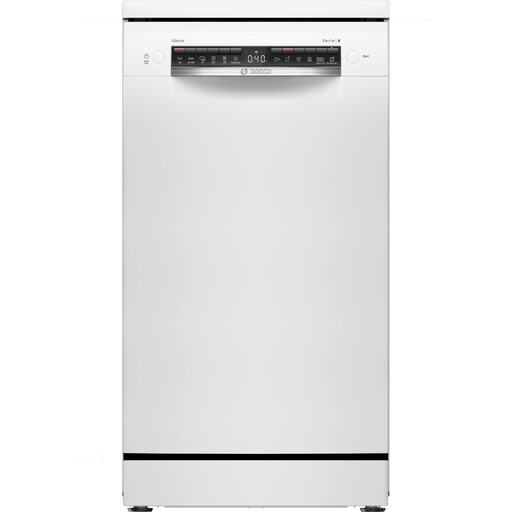
Bosch SPS4HKW49E Serie 4
Described as a freestanding 45-cm model; compare its dimensions with the space in your kitchen.
The product lists a Vario-Flex basket system and energy class E.
Check the basket layout against the height and shape of your usual cups.
View at Joybuy
 No image available
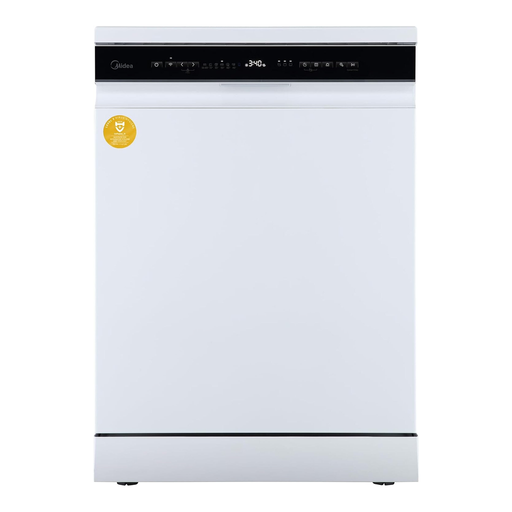
Midea MDWEF1034DW-WE
Described as a freestanding 45-cm model with 10 place settings.
An adjustable-height upper basket is mentioned in the product name; check that your cups fit in the specific appliance.
Before buying, check the product information to confirm which cutlery features this model includes.
View at Joybuy
Frequently asked questions
Does the glass-and-fork symbol mean my cups are dishwasher-safe?
No. According to the Consumer Advice Centre, the symbol indicates that an item is suitable for food contact, not that it is dishwasher-safe. Check the care instructions for each cup.
Do I need to rinse cups before using the Eco programme?
No. The Federal Environment Agency advises against pre-rinsing and recommends using the Eco programme with a full load. Load your cups so that water can reach them, and follow your appliance’s loading instructions.
What should I bear in mind about installation and maintenance?
Before buying, check that the space and connections are suitable, and find out which installation services are available. Follow the instructions for your specific appliance for maintenance and filter cleaning; they don’t provide a universal maintenance interval.
How do I compare running costs?
Compare kWh per 100 Eco cycles and litres per Eco cycle using the energy label. The Consumer Advice Centre lists electricity consumption per 100 programme cycles as a useful comparison; to estimate your own costs, you’ll also need to consider how often you expect to run the appliance and your electricity tariff.
Which labelling and take-back rules should I know about?
Since 1 March 2021, the European Commission has used the EU energy efficiency scale from A to G for household dishwashers. The Federal Ministry for the Environment points out that online retailers must also take back old appliances; check the arrangements with the retailer before buying.


