Households with limited kitchen space
If you have limited space for an appliance or a small built-in recess, the height and depth must also suit the specific model, as well as its width and installation requirements.


First, choose between a freestanding, semi-integrated or fully integrated model to suit your available space, recess and connections. Then measure your cups and check that they fit in the baskets with enough space around them for water to drain freely. Place settings alone won’t tell you how many of your cups will fit.
If you have limited space for an appliance or a small built-in recess, the height and depth must also suit the specific model, as well as its width and installation requirements.
If you want to wash cups alongside other dishes, check their shape and size against the basket layout, and leave enough room for water to drain.
If you run the dishwasher frequently, compare the model-specific Eco figures for electricity, water and programme duration on a like-for-like basis. The Verbraucherzentrale and the EU energy label explain which consumption figures are used.
A good fit if: you have a suitable space with the right connections and don’t want to use a built-in recess with a kitchen unit door.
Things to consider: Height, depth and the space needed to open the door vary by model. Your cups must fit in the specific basket.
A good fit if: you have a suitable built-in recess and a matching kitchen unit door.
Things to consider: The recess dimensions, door and installation must all suit the appliance. A cutlery drawer or adjustable baskets don’t guarantee space for a particular number of cups.
A good fit if: a built-in design with visible appliance controls suits your kitchen.
Things to consider: You’ll still need to check the recess and kitchen unit door. An adjustable basket height is no substitute for a trial load using your own cups.
| What matters when buying | What to check | Who is this especially important to? |
|---|---|---|
| Design and space required | Check the appliance’s full dimensions, installation type, recess, connections and the space needed to open the door. | If space is limited, the appliance must fit in its intended position, including the installation and door clearance. Around 36% of consumers put having enough space first. |
| Space for several cups | Compare your cups’ dimensions with the basket, cup racks and any basket adjustment options. Keep the spray arms clear and allow water to drain. | If I want to wash several cups with the rest of the dishes in one load, I need to be able to arrange them properly and leave room for water to drain. Around 29% of consumers prioritise cup capacity. |
| Eco consumption and duration | Compare kWh per 100 Eco cycles, litres per Eco cycle and the Eco programme duration on the same basis. | If I run the dishwasher regularly, I want to understand the Eco consumption and cycle time in relation to how I use it. Around 21% of consumers give particular importance to running costs. |
| Noise and getting started | Check the noise rating for the specific model, as well as the water hardness and instructions in the appliance manual. | If the dishwasher is near living areas, I look for a suitable noise rating and clear instructions for getting started. Around 14% of consumers prioritise noise and care. |
Slimline models can vary in height and depth. A suitable width alone doesn’t tell you whether the appliance, connections and door clearance will fit the intended space.
Before ordering, check the appliance’s full dimensions, design, recess, kitchen unit door, connections and the space needed to open the door.
Examples from the manufacturer of slimline freestanding and fully integrated models.
An example from the manufacturer of a slimline fully integrated model; Siemens also publishes loading advice.
Examples from the manufacturer of slimline freestanding and semi-integrated models.
Examples of slimline built-in models in semi-integrated and fully integrated designs.
An example from the manufacturer of a slimline freestanding model.
The models below are slimline freestanding dishwashers. Check the design and basket layout against your available space and your cups.
 No image available
For a compact space; check how your cups fit in this model’s basket layout.
9 place settings; 5 programmes; stainless steel interior.
 No image available
An option for a compact space; check your cups’ dimensions against the available basket space.
10 place settings; energy class C; stainless steel look.
 No image available
For a compact space; check whether your cups will fit in the basket alongside the rest of your dishes.
9 place settings; 6 programmes; silver-coloured.
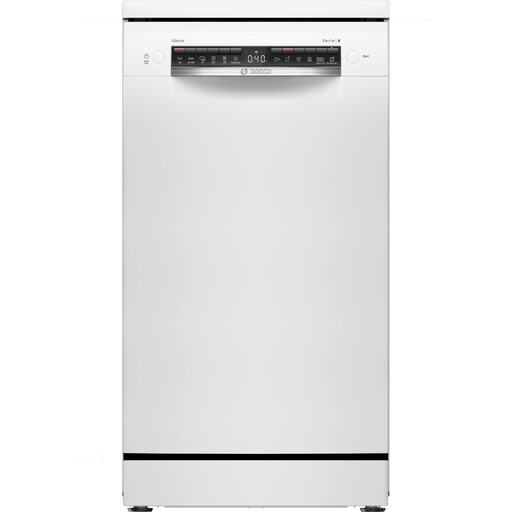 No image available
For a compact space; check how your cups and dishes fit with this model’s basket features.
10 place settings; energy class E.
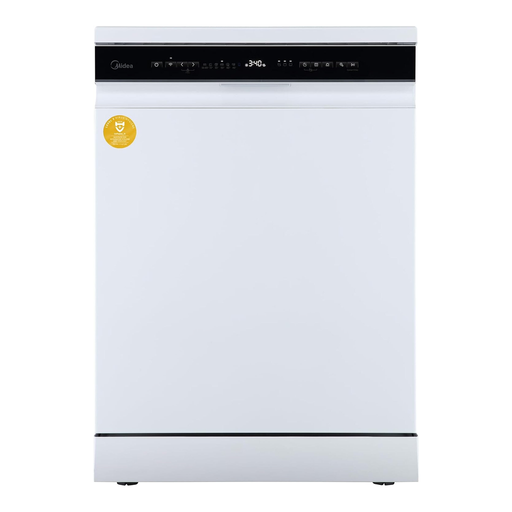 No image available
An option for a compact space; check whether your cups fit using the basket layout as a guide.
10 place settings; energy class C; adjustable upper basket.
Measure your cups and check the basket layout on the specific appliance. Load hollow items so water can drain, don’t stack them, and keep the spray arms clear. The place setting figure alone doesn’t give a reliable indication of how many cups will fit.
Compare the electricity consumption per 100 Eco cycles, water consumption per Eco cycle and Eco programme duration on the EU energy label. To estimate your own electricity costs, multiply the kWh figure per 100 cycles by your expected annual cycles divided by 100, then multiply by your electricity price per kWh. Other programmes may differ.
No. The glass-and-fork symbol indicates that an item is suitable for contact with food. On its own, it doesn’t tell you whether a cup can go in the dishwasher. Check the cup’s care and use instructions.
Find out your local water hardness and set any water softener according to the instructions for your specific appliance. Bosch also explains how to fill the designated salt and rinse aid compartments when setting up the appliance.
Under the legal conditions set out in § 437 BGB, remedies include repair or replacement, as well as further rights in the event of defects. Under § 438 BGB, the relevant claims generally become time-barred two years after delivery. A voluntary manufacturer’s warranty is separate.