Batch preppers with lots of cups
If you want to wash several dishwasher-safe cups before portioning, the actual rack layout matters more than the number of place settings alone.


A slimline dishwasher can handle a larger batch of cups, provided its design and full dimensions suit your kitchen and your cups fit sensibly in the racks. If you need the cups again soon, compare the programme duration and drying method of the specific model. The European Commission’s label figures describe the Eco programme, not necessarily the consumption of a quick programme.
If you want to wash several dishwasher-safe cups before portioning, the actual rack layout matters more than the number of place settings alone.
If you’re choosing between a freestanding and an integrated model, check the appliance’s full dimensions against the available space or housing unit.
If you’ll need the cups again soon, compare the programme duration and drying method of the specific model rather than relying on its Eco energy efficiency class alone.
First decide which design suits your kitchen, then assess capacity, time and Eco consumption as separate considerations.
A good fit if: you have a suitable space and the necessary connections, and don’t need a furniture door.
Check: the height and depth as well as the width; features and rack layouts vary by model.
A good fit if: you have a suitable housing unit and a matching furniture door planned.
Check: the housing unit dimensions and door fitting; the features of one model won’t necessarily apply to all integrated dishwashers.
A good fit if: you want an integrated dishwasher with a visible control panel.
Check: whether an adjustable upper basket can make room for your cups without leaving the space below unusable for other dishes.
| Priority | What to check before buying | Who is this important to? |
|---|---|---|
| Usable space for cups | Compare the rack layout and cup shelves with the height, width and handles of your cups. | If I want to wash as many of my cups as possible in one load, usable rack space matters more to me than the number of place settings. Around 36% of consumers put space for their own cups first. |
| Design and external dimensions | Check whether it’s freestanding, semi-integrated or fully integrated, and confirm its height, width and depth. | With limited space in my kitchen, the appliance needs to fit the available space or housing unit. Around 29% of consumers prioritise the right design and full dimensions. |
| Programme duration and drying | Check the duration and drying method of the specific model; don’t assume Eco figures apply to a quick programme. | If I want to fill the cups again soon, I consider the timings and how they can be handled after washing. Around 21% of consumers put time and drying first. |
| Eco programme consumption | Compare kWh per 100 Eco cycles and litres per Eco cycle on the same label basis. | If I wash dishes regularly, I want to compare Eco consumption figures on a like-for-like basis. Around 14% of consumers prioritise Eco performance. |
The place-setting capacity doesn’t tell you how many of your cups will fit in the rack with their particular shapes, handles and lids.
Compare your cups’ dimensions with the rack layout and cup shelves of the specific appliance. If they don’t all fit in one load, you may need to run extra cycles.
Freestanding and integrated models also differ in height, depth and design. With integrated models, you’ll also need to consider the planned furniture door and housing unit.
Check all the external dimensions against the available space or housing unit. For integrated models, also check how the furniture door will be fitted.
If the appliance doesn’t fit, you may need to make additional adjustments or arrange installation work.
The label figures relate to the Eco programme and don’t necessarily describe the consumption of a shorter programme.
Compare Eco figures on the same basis, and check the duration and details of other programmes separately in the model documentation.
Being suitable for a dishwasher cycle doesn’t confirm that a cup is intended for food contact or freezer storage.
Follow the cup manufacturer’s instructions on food contact and freezing.
Bosch offers freestanding 45 cm models; the details below refer to the SPS4EMW02D.
The fully integrated 45 cm SR63EX25KE is an option for a suitable housing unit and furniture door.
The semi-integrated 45 cm DSS28021X has an adjustable upper basket.
The fully integrated G 5790 SCVi SL is a 45 cm model with a cutlery drawer and AutoOpen.
The MDWEF1034DW-WE is a freestanding 45 cm model with a stated capacity of 10 place settings.
This selection features slimline freestanding dishwashers. Compare the stated capacities with the dimensions of your cups and the space available in your kitchen.
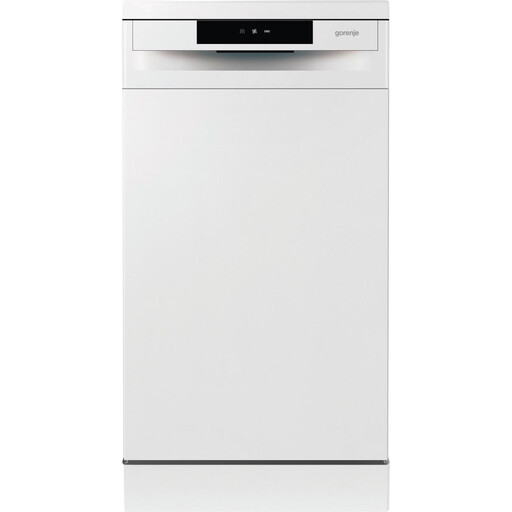 No image available
The 45 cm-wide freestanding design may suit a suitable space; also check how your cups fit in the racks.
9 place settings; 5 programmes.
 No image available
The stated capacity can help you plan each load, but the number of cups that will actually fit depends on their dimensions and the rack layout.
10 place settings; energy efficiency class C.
 No image available
This slimline freestanding model is an option if it fits your space; check the rack layout against your cups.
9 place settings; 6 programmes; 45 cm.
 No image available
The height-adjustable upper basket and cup shelves can be useful for items of different heights; check how adjusting the basket affects the space below.
10 place settings; energy efficiency class E; Extra Dry.
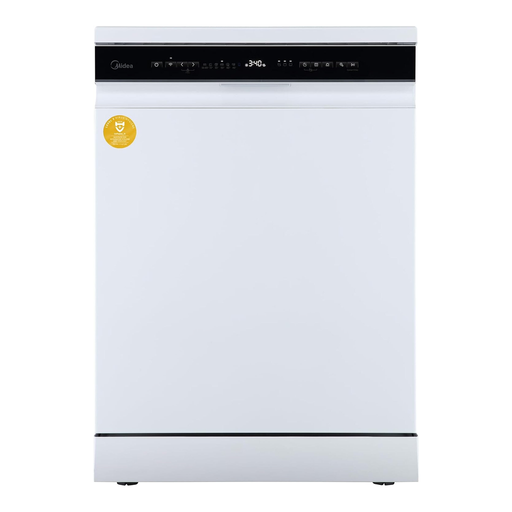 No image available
The slimline freestanding design and stated capacity may make it easier to find a model for a suitable space; check the specific version against the room available.
10 place settings; energy efficiency class C. Midea lists a height of 850 mm and a cutlery drawer; the Joybuy product listing gives 84,5 cm and a cutlery basket. Check the version on offer before buying.
No. Being suitable for a dishwasher cycle doesn’t confirm that the cup is intended for food contact or freezer storage. Check the manufacturer’s instructions for that specific cup before using it for frozen food.
Compare the height, width and handles of your cups with the rack layout and cup shelves of the specific appliance. The place-setting capacity alone won’t tell you how many of your cups will fit in one load.
No. The label figures relate to the Eco programme. Check the duration and consumption figures for other programmes separately in the model documentation.
For the same comparison basis, check electricity consumption in kWh per 100 Eco cycles and water consumption per Eco cycle. To estimate your own costs, you’ll also need your expected number of cycles and your electricity and water rates.
Check the instructions for your specific appliance. Bosch recommends checking your local water hardness and setting the water softener according to the appliance instructions. This is the manufacturer’s recommendation, not a general legal requirement.