What should you look for when buying?
First decide whether a freestanding appliance or an integrated solution will suit your kitchen. Then compare the cutlery layout and Eco label figures for the specific model.
The German Federal Institute for Risk Assessment recommends preventing pathogens from spreading from raw food to other foods. The buying considerations below are about choosing an appliance; hygienic food preparation and whether your cutlery is suitable for the dishwasher are separate considerations.
| What matters |
What to check before buying |
Who is it particularly relevant to? |
| Hygiene during food preparation |
Check the programmes and manufacturer’s instructions; load cutlery according to the guidance. |
If I want to keep raw and ready-to-eat foods separate while preparing food, careful handling matters more than a marketing claim about a wash cycle; around 36% of consumers put hygiene first. |
| The right design |
Check the available space or recess, as well as the height, width, depth and clearance for the door. |
If space is limited, you first need to establish whether a freestanding appliance or an integrated solution will fit in your kitchen; around 29% of consumers prioritise space and design. |
| Room for cutlery and dishes |
Compare the cutlery basket or drawer and the remaining basket height on the specific model. |
If a larger cooking or freezer batch leaves you with lots of cutlery, the interior layout matters; around 21% of consumers prioritise cutlery capacity. |
| Consumption and programme duration |
Compare kWh per 100 Eco cycles, litres per Eco cycle and Eco programme duration using the same label basis. |
If you run the dishwasher regularly, you’ll want to understand the energy and water use and time for each cycle; around 14% of consumers prioritise running costs. |
Slimline freestanding dishwashers at Joybuy
The models below are slimline freestanding dishwashers. Compare the space they require, their cutlery layout and the programme and Eco details that matter for the way you use your appliance.
 No image available
Gorenje GS520E15W
A slimline freestanding design for a suitable spot in your kitchen. Check that the interior layout works for your cutlery load.
45 cm wide; 9 place settings; 5 programmes; 9 l of water per Eco cycle.
View at Joybuy
 No image available
Beko BDFS26040XQ
A slimline freestanding option if you want to compare several programmes. Check the features of the specific variant.
45 cm wide; 10 place settings; 8,9 l of water per cycle; 59 kWh per 100 cycles. Eco, Intensive and Hygiene Intense programmes are listed.
View at Joybuy
 No image available
Exquisit EGSP52109-E-030E
The listed cutlery holder could be useful for a larger cutlery load. Check how much room will be left for your other dishes too.
9 place settings; 6 programmes; cutlery holder; 9 l of water per Eco cycle; dimensions 81,5 × 44,8 × 55 cm.
View at Joybuy
 No image available
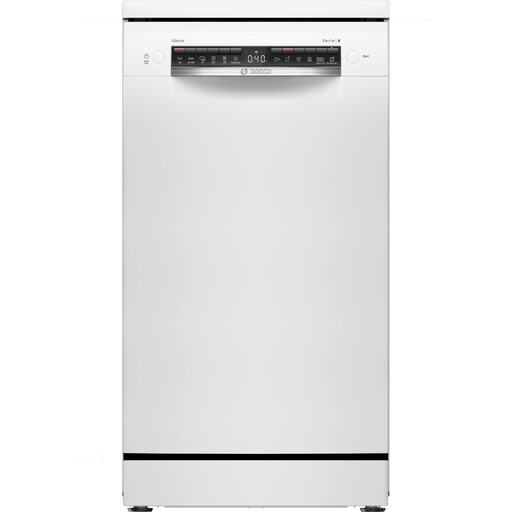
Bosch SPS4HKW49E Series 4
The Vario cutlery system listed for this model is relevant when arranging cutlery and other dishes. Check that the interior layout works for your load.
45 cm wide; 10 place settings; 8,9 l of water per Eco cycle; dimensions 84,5 × 45 × 60 cm.
View at Joybuy
 No image available
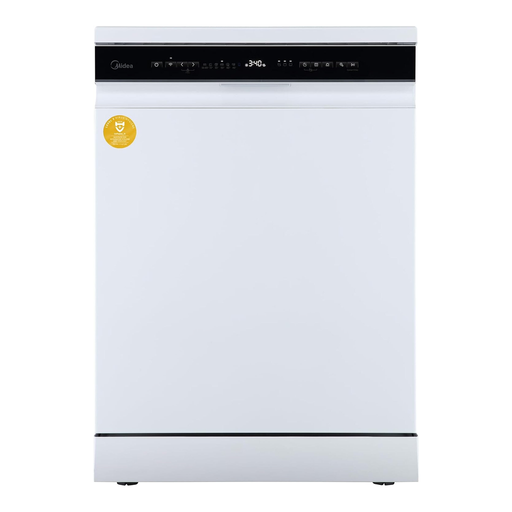
Midea MDWEF1034DW-WE
The product listing includes a cutlery basket and an adjustable upper basket. As details about the cutlery features for this model differ, check the specific variant before ordering.
45 cm wide; 10 place settings; freestanding design; dimensions 60 × 45 × 84,5 cm.
View at Joybuy
Frequently asked questions
Does ‘dishwasher-safe’ also mean ‘safe for food contact’?
No. According to the Verbraucherzentrale, the glass-and-fork symbol indicates that an item is suitable for food contact. Dishwasher cleaning instructions should be checked separately. Check the details for the specific cutlery.
Can a hygiene programme replace safe handling when preparing portions for the freezer?
No. The German Federal Institute for Risk Assessment recommends preventing pathogens from spreading from raw food to other foods. Manufacturer claims about germ reduction apply only to the relevant model and programme, and under the conditions specified.
What should I know about installation and care?
Before buying, check that your chosen location and connections meet the manufacturer’s requirements. For appliances with a water softener, the correct setting depends on the appliance and your local water hardness. The German Environment Agency also explains why dishwasher salt is important for maintenance.
How can I compare energy and water use with programme duration?
Compare electricity consumption per 100 Eco cycles, water consumption per Eco cycle and Eco programme duration using the same label basis. The Verbraucherzentrale and the German Environment Agency list these as useful comparison points. Estimate the figures for your own use based on how many cycles you expect to run.
What energy label and old-appliance collection rules apply in Germany?
Household dishwashers use the EU energy label, with a scale from A to G. Under section 17 of the German Electrical and Electronic Equipment Act (ElektroG), retailers that meet the stated requirements must accept an old appliance of the same type free of charge when a new one is bought, subject to the legal conditions. For home deliveries, the legislation also covers free collection; whether this applies in a particular case depends on the legal requirements.


